
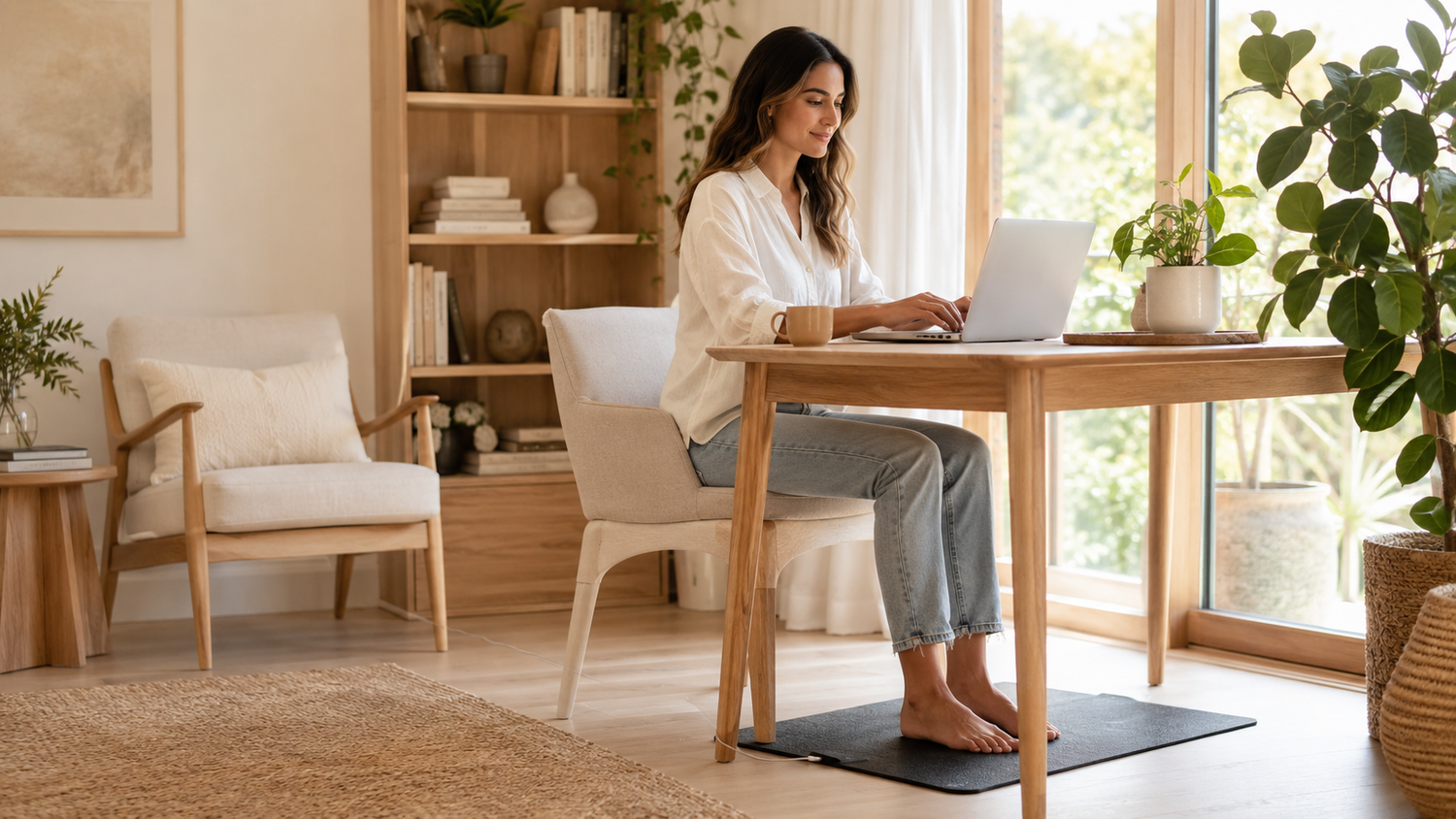
If you have heard about grounding, you may picture walking barefoot on grass, standing on sand or sitting outside with your feet on the earth. While outdoor grounding is one of the simplest ways to connect with the Earth’s natural electrical charge, it is not always practical.
Many people spend most of their day indoors. You may work from home, live in an apartment, sleep above ground level, wear shoes most of the day or simply not have easy access to grass, soil or the beach. This is where indoor grounding products can be helpful.
So, can you ground yourself indoors? Yes, you can. Indoor grounding products such as grounding sheets, grounding mats and grounding wristbands are designed to help you connect to the Earth’s grounding system from inside your home, using the grounding port of a properly grounded outlet.
In this guide, we explain how indoor grounding works, the different ways to ground yourself at home, what products may suit your routine, and how Organic Earthing can help you create a calmer, more grounded daily environment.
Key Takeaways
- You can ground yourself indoors using grounding products such as sheets, mats and wristbands.
- Indoor grounding products connect to the grounding port of a properly grounded outlet.
- Grounding products do not use electricity and do not connect to the live electrical current.
- A grounding sheet is ideal if you want to ground while sleeping.
- A grounding mat or wristband can be useful for working, relaxing, reading or sitting indoors.
- Indoor grounding can be especially helpful for people who spend long hours inside or live in apartments.
- Organic Earthing offers grounding sheets, starter bundles, sleep bundles and organic silk sleep accessories designed to support a calmer daily routine.
Indoor Grounding at a Glance
| Indoor Grounding Option | Best For | How It Fits Into Your Routine |
|---|---|---|
| Grounding sheet | Overnight grounding and sleep routines | Use while sleeping or resting in bed |
| Grounding mat | Working from home, relaxing or daytime use | Place under your feet, hands or body while indoors |
| Grounding wristband | Targeted contact while working or sitting | Wear while at your desk, on the couch or during quiet time |
| Starter bundle | Beginners wanting an easy introduction | Includes key items to help you start grounding indoors |
| Sleep bundle | People wanting a complete sleep-focused setup | Combines grounding with organic silk sleep comfort |
What Does It Mean to Ground Yourself Indoors?
Grounding, also called earthing, is the practice of connecting your body with the Earth’s natural electrical field. Outdoors, this usually happens through direct skin contact with natural surfaces such as grass, soil, sand or unsealed ground.
Indoor grounding uses the same general principle, but instead of standing outside barefoot, you use a conductive product that connects to the grounding port of a properly grounded wall outlet.
This might be a grounding sheet on your bed, a mat under your feet while you work, or a wristband worn while sitting at your desk. These products are designed to create a connection to the Earth’s grounding system from inside your home.
For many people, indoor grounding is appealing because it makes grounding more consistent. You do not have to rely on the weather, your outdoor space or your daily schedule. You can build grounding into the places you already spend time.
How Does Indoor Grounding Work?
Indoor grounding products are made with conductive materials. Depending on the product, this may include conductive fabric, silver fibres or a conductive surface. The product connects to a grounding cord, which then connects to the grounding port of a properly grounded wall outlet.
This is not the same as plugging in an electrical appliance. Grounding products do not use electricity to operate. They are not powered, heated or charged.
The purpose of the cord is to connect the product to the outlet’s earth connection only. When your skin touches the conductive product, your body makes contact with the grounded surface.
This is why correct setup matters. Before using indoor grounding products, it is important to confirm that your outlet is properly grounded. Many products include or recommend an outlet tester for this reason.
Why Would Someone Want to Ground Indoors?
Modern life can make direct contact with the Earth surprisingly rare. Many of us live and work indoors, wear rubber-soled shoes, sleep on raised beds and move between cars, offices, shops and homes without touching natural ground.
Indoor grounding gives people a practical way to reconnect without needing to change their whole lifestyle.
People often look into indoor grounding because they want to:
- Make grounding easier to do every day
- Create a calmer night-time routine
- Support relaxation while working from home
- Ground while living in an apartment or multi-storey home
- Spend less time relying on perfect outdoor conditions
- Bring a more natural wellness practice into the home
- Use grounding while sleeping, reading, working or relaxing
Indoor grounding is best understood as a wellness practice. It may help support a calmer daily routine, but it is not a medical treatment and should not be used as a replacement for professional healthcare advice.
Can You Ground Yourself Indoors While Sleeping?
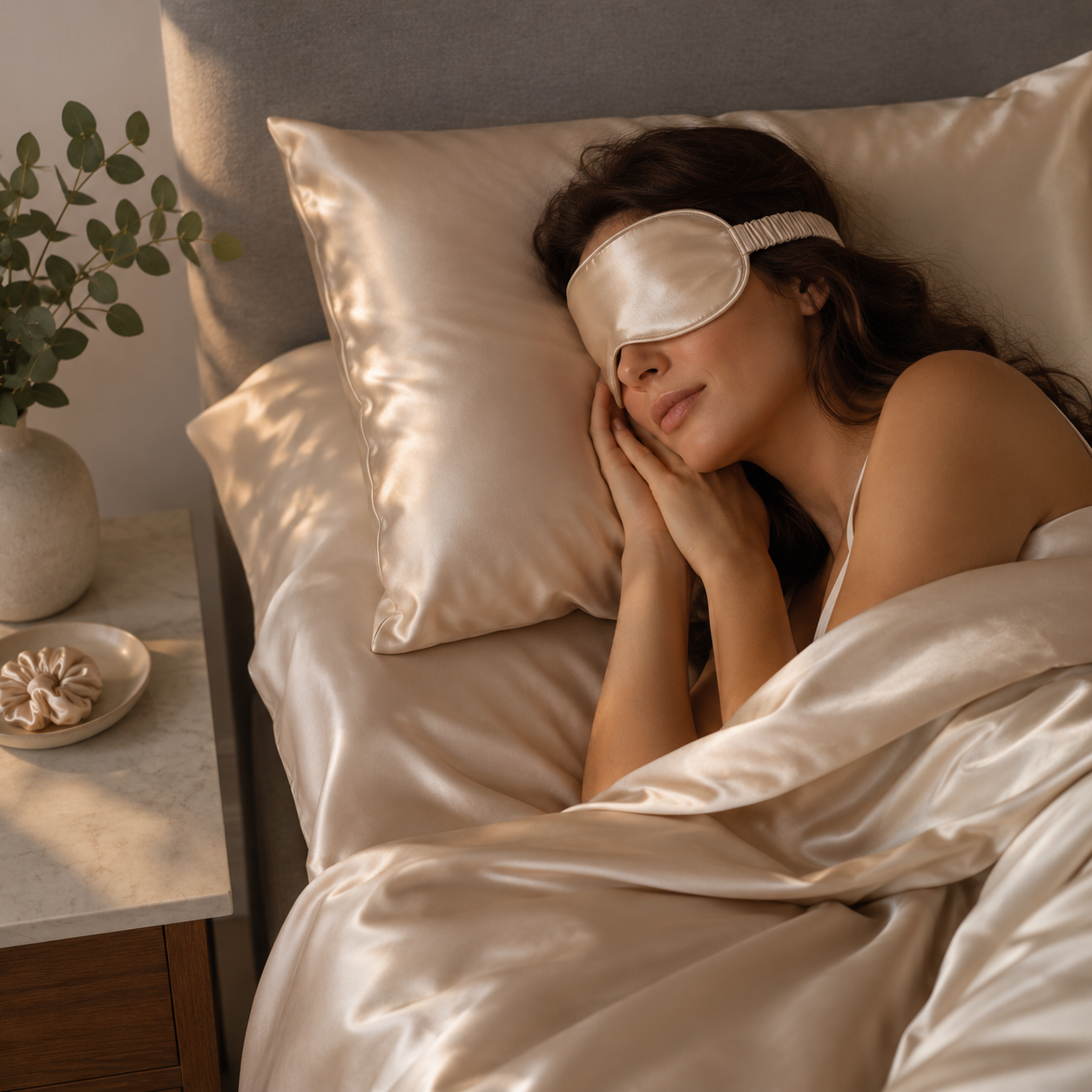
Yes. One of the most popular ways to ground indoors is while sleeping.
A grounding sheet is designed to sit on your bed and connect to the grounding port of a properly grounded outlet. When your skin touches the conductive surface of the sheet, you can ground while you sleep or rest.
This is a practical option for people who want grounding to become part of their night-time routine without adding another task to the day. You do not need to remember to sit outside, take your shoes off or schedule a grounding session. You simply get into bed as usual.
If your main interest is sleep, the Organic Earthing Grounded Sleep Bundle is a strong starting point. It combines full-body grounding with organic silk sleep accessories, making it suitable for people who want a more complete sleep-focused setup.
Can You Ground Yourself Indoors While Working From Home?
Yes. If you spend long hours at a desk, a grounding mat can be one of the easiest ways to ground indoors during the day.
A grounding mat can be placed under your feet while you work, or positioned under your hands depending on the product and setup. This allows you to stay connected while answering emails, writing, working at your laptop or sitting through meetings.
This can be especially useful for people who feel physically or mentally overstimulated after long screen-heavy days. Rather than waiting until bedtime to slow down, a mat can help you build grounding into your workday.
For beginners, the Organic Grounding Starter Bundle is a practical option because it includes key grounding items, including a grounding mat, wristband, cord, plug and tester. This makes it easier to start grounding indoors without needing to choose every accessory separately.
Can You Ground Yourself Indoors in an Apartment?
Yes, indoor grounding can be suitable for apartment living, provided you have access to a properly grounded outlet.
This is one of the main reasons people choose indoor grounding products. If you live several floors above ground level, do not have a backyard, or cannot easily walk barefoot outside, grounding sheets and mats can make the practice more accessible.
The most important step is checking the outlet. A grounding product needs a properly grounded outlet to work as intended. If you are not sure whether your apartment outlets are grounded, use an outlet tester or ask a licensed electrician to check.
Once confirmed, you can use a grounding sheet in the bedroom, a grounding mat near your desk or couch, or a wristband while sitting indoors.
Grounding Sheet vs Grounding Mat: Which Is Better for Indoor Use?
The best indoor grounding product depends on when and where you want to use it.
If you want grounding to support your sleep routine, a grounding sheet is usually the best option. It gives you a larger contact area and works while you are already resting in bed.
If you want to ground during the day, a grounding mat is usually more flexible. You can use it under your feet at your desk, near the couch or in a quiet relaxation space.
If you are not sure where to begin, think about your main goal:
- For sleep: choose a grounding sheet or Grounded Sleep Bundle.
- For work: choose a grounding mat or starter bundle.
- For relaxation: choose a grounding mat, wristband or sleep bundle depending on the setting.
- For beginners: choose the Organic Grounding Starter Bundle.
How to Set Up Indoor Grounding Products
Every grounding product should be set up according to the manufacturer’s instructions, but the general process is usually simple.
1. Choose Where You Want to Ground
Start by deciding where grounding will fit most naturally into your day. This could be your bed, desk, couch, reading chair or meditation space.
2. Check the Outlet
Use an outlet tester to confirm the outlet is properly grounded. This is an important step because the product needs a grounded outlet to work correctly.
3. Connect the Product
Attach the grounding cord to your sheet, mat or wristband, then connect the other end to the grounding port using the correct plug or adapter.
4. Make Skin Contact
Grounding works best when your bare skin touches the conductive surface. This might be your feet on a mat, your hands on a mat, your wrist in a wristband, or your legs and body touching a grounding sheet.
5. Use It Consistently
Grounding is easiest when it becomes part of something you already do. For example, sleep on your grounding sheet each night, place your feet on a mat while working, or use your wristband while reading.
Do Indoor Grounding Products Use Electricity?
No. Indoor grounding products do not use electricity to operate.
This is one of the biggest questions people have when they first hear about grounding sheets or mats. While the product connects to a wall outlet, it connects to the grounding port only. It does not connect to the live electrical current.
Organic Earthing explains that grounding products are designed to connect to the Earth connection, not to power. This is why outlet testing and correct setup are important.
If a cord, plug or product appears damaged, do not use it. Contact the supplier for guidance.
How Long Should You Ground Indoors Each Day?
There is no single perfect amount of time that suits everyone. Some people begin with short sessions, such as 20 to 30 minutes during the day. Others use a grounding sheet overnight as part of their regular sleep routine.
The best approach is to choose a routine that feels realistic and comfortable.
If you are new to grounding, you may want to start gradually. Try using a grounding mat while working for part of the day, or sleeping on a grounding sheet for a few hours before building up to longer use.
Consistency is often more useful than intensity. A simple daily habit is easier to maintain than a routine that feels too complicated.
Who Is Indoor Grounding Best Suited For?
Indoor grounding may be a good fit for people who want a simple and natural wellness habit they can use at home.
It may be especially useful for:
- People who work from home
- Apartment dwellers
- People who spend most of the day indoors
- Light sleepers wanting a calmer bedtime routine
- People who cannot easily walk barefoot outside every day
- Wellness-focused shoppers interested in grounding and organic sleep products
- People who want a passive routine that does not require extra time or effort
If you have a medical condition, are pregnant, nursing, use prescription medication, have a pacemaker or take blood-thinning medication, speak with a healthcare professional before beginning grounding.
How Organic Earthing Products Support Indoor Grounding
Organic Earthing creates grounding and organic sleep products designed to make indoor grounding simple, comfortable and practical. The range includes grounding sheets, grounding mats, wristbands, starter bundles, sleep bundles and organic silk sleep accessories.
Different products suit different routines:
- The Grounded Sleep Bundle: ideal for customers who want a complete grounding and sleep setup.
- Organic Grounding Starter Bundle: a practical beginner-friendly choice for daytime grounding with a mat and wristband.
- Grounding sheets: best for people who want to ground while sleeping.
- Grounding mats: best for desk work, couch time and flexible daytime use.
- Organic silk sleep accessories: useful for creating a softer, cooler and more comfortable sleep environment.
Organic Earthing also offers a 90-day risk-free trial and free shipping over $200, which can be helpful if you are new to grounding and want time to experience it for yourself.
You can explore the full range here: shop Organic Earthing grounding and sleep products.
Common Mistakes With Indoor Grounding
1. Not Checking the Outlet First
Indoor grounding relies on a properly grounded outlet. If the outlet is not grounded, the product cannot work as intended. Always test the outlet before use.
2. Using the Product Without Skin Contact
Grounding products work through contact with the conductive surface. If there is no skin contact, the connection may be reduced.
3. Choosing the Wrong Product for Your Routine
A sheet is best for sleep. A mat is best for daytime use. A wristband may suit people who want targeted contact while sitting. Choosing the product that fits your routine makes it easier to use consistently.
4. Expecting It to Replace Healthy Sleep Habits
Grounding can be part of a calming routine, but it works best alongside other habits such as reducing screen time, keeping your room cool and using comfortable bedding.
5. Treating Grounding as Medical Treatment
Grounding products are wellness products, not medical devices. They are not intended to diagnose, treat, cure or prevent disease.
Final Thoughts
Yes, you can ground yourself indoors. For many people, indoor grounding is the most realistic way to make grounding part of everyday life.
If you want to ground while sleeping, a grounding sheet or sleep bundle may be the best choice. If you want to ground while working, reading or relaxing, a grounding mat or wristband may be more practical. If you are new and want a simple starting point, a starter bundle can make the process easier.
Indoor grounding should be viewed as a gentle wellness practice that may support a calmer routine and a stronger connection to nature from within your home.
Ready to start grounding indoors? Explore the Grounded Sleep Bundle, browse the Organic Grounding Starter Bundle, or shop the full Organic Earthing grounding range.
FAQs Answered
Can you ground yourself indoors?
Yes, you can ground yourself indoors using grounding products such as sheets, mats and wristbands. These products connect to the grounding port of a properly grounded outlet and are designed for use inside the home.
How do you ground yourself indoors without going outside?
You can ground indoors by using a grounding sheet while sleeping, a grounding mat while working or relaxing, or a grounding wristband while sitting. The product must be connected correctly to a properly grounded outlet.
Can you ground yourself in an apartment?
Yes, you can ground yourself in an apartment if your outlet is properly grounded. Use an outlet tester or ask a licensed electrician if you are unsure.
What is the best indoor grounding product?
The best indoor grounding product depends on your routine. A grounding sheet is best for sleep, while a grounding mat or wristband is better for daytime use. Organic Earthing’s starter bundle is a good option for beginners.
Can I use a grounding mat while working from home?
Yes, a grounding mat can be placed under your feet or hands while working from home. This is one of the easiest ways to add indoor grounding to your workday.
Do indoor grounding products need a grounded outlet?
Yes. Indoor grounding products are designed to connect to the grounding port of a properly grounded outlet. If the outlet is not grounded, the product may not work as intended.
Is a grounding sheet better than a grounding mat for indoor use?
A grounding sheet is better if you want to ground while sleeping. A grounding mat is better if you want to ground while working, sitting or relaxing during the day.
Can I ground indoors every day?
Many people use indoor grounding products daily. You can start gradually and build up to a routine that feels comfortable, such as using a mat during work hours or a grounding sheet overnight.
Where can I buy indoor grounding products?
You can buy indoor grounding products from Organic Earthing, including grounding sheets, mats, wristbands, starter bundles and sleep bundles designed for everyday home use.

Leave a comment
This site is protected by hCaptcha and the hCaptcha Privacy Policy and Terms of Service apply.