

Why Winter Makes Grounding Harder - And Why It Matters More
In summer, grounding is easy. Bare feet on grass, sand, or soil - your body connects to the Earth's natural electric charge effortlessly. But in winter? Cold ground, wet weather, and the instinct to stay rugged up indoors means most people lose their grounding practice entirely for months at a time.
Here's the thing: winter is actually when grounding matters most for sleep. Shorter days, less sunlight, disrupted circadian rhythms, and increased indoor heating all conspire to elevate cortisol, suppress melatonin, and fragment sleep. The very season that drives you indoors is the season your body most needs the stabilising effect of Earth's electrons.
The good news? You don't need to go outside. Indoor grounding works - and works well.
How Indoor Grounding Works
Your home's electrical system includes a ground wire that connects directly to the Earth via a grounding rod buried outside. The round bottom hole in a standard Australian power outlet is that ground connection.
Grounding products - sheets, wristbands, pillowcases - plug into this ground port via a cord with a built-in safety resistor. When you sleep on or wear these products, your body connects to the Earth's charge just as effectively as standing barefoot on grass. The season, the weather, and the temperature outside are completely irrelevant.
The Winter Sleep Problem - And How Grounding Helps
Winter disrupts sleep in several compounding ways:
- Reduced daylight suppresses serotonin production, which is the precursor to melatonin
- Indoor heating dries the air and raises core body temperature, making it harder to fall and stay asleep
- Less physical activity means lower sleep pressure at night
- Increased stress hormones - cortisol tends to run higher in winter months
Research on grounding consistently shows it helps regulate the cortisol rhythm, reduce inflammation, and improve sleep quality - precisely the mechanisms disrupted by winter. A 2004 study in the Journal of Alternative and Complementary Medicine found that grounded sleepers showed significantly improved cortisol synchronisation with the natural 24-hour cycle compared to ungrounded controls.
Build Your Winter Grounding Sleep Stack
The most effective indoor grounding setup for winter combines multiple touchpoints for maximum skin contact throughout the night.
1. Grounding Sheet - Your Foundation
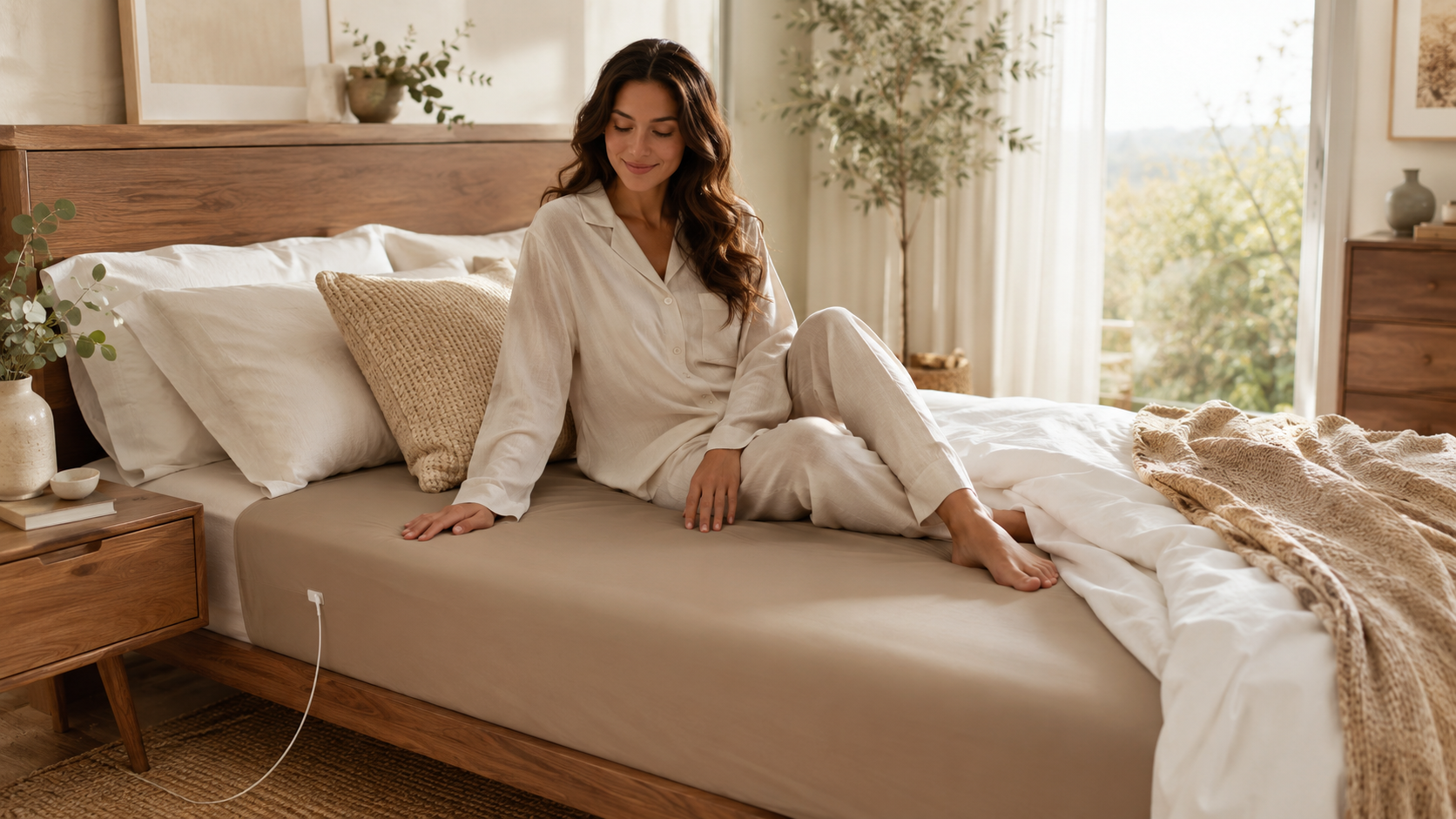
A grounding sheet is the cornerstone of any sleep grounding practice. Placed on your bed and connected to the ground port, it provides continuous full-body grounding for the entire night — 6 to 8 hours of passive electron flow while you sleep.
Our organic bamboo and silver grounding sheets are warm, breathable, and soft enough for year-round use. The bamboo fibre naturally regulates temperature, keeping you comfortable in both summer and winter.
👉 Shop the Fitted Grounding Sheet — Single, Queen & King
👉 Shop the Flat Grounding Sheet — Half Queen & King
2. Silk Eye Mask - Block Light, Deepen Sleep
Winter mornings bring early light (especially heading into spring), and even small amounts of light exposure can suppress melatonin and cause early waking. A silk eye mask blocks light completely while the smooth surface reduces friction and pressure on the delicate eye area.
👉 Shop the Organic Silk Sleep Bundle — Pillowcase & Eye Mask
3. Grounding Wristband - Daytime Top-Up
On short winter days when you're spending most of your time indoors, a grounding wristband lets you top up your grounding during the day - while working, reading, or relaxing. Pair it with your overnight sheet for maximum daily grounded time.
👉 Shop the Grounding Wristband
What Our Customers Say About Winter Grounding
"I was worried grounding wouldn't work as well in winter since I couldn't go outside barefoot. The sheet completely solved that — I actually sleep better in winter now than I did in summer." — Natalie B., Canberra
"The combination of the grounding sheet and silk pillowcase has been a game changer for my winter sleep. I fall asleep faster and wake up less. My partner noticed the difference before I did." — Tom H., Melbourne
Frequently Asked Questions
Does grounding work the same indoors as outdoors?
Yes - when connected to a properly grounded outlet, indoor grounding products deliver the same electron flow as direct contact with the Earth. The ground port in your power outlet is physically connected to the Earth via a buried grounding rod.
Do I need to change anything about my grounding setup in winter?
No changes needed. Simply continue using your grounding sheet and/or wristband as normal. If anything, consider adding a grounding pillowcase for additional contact points during the longer nights.
Can I use a grounding sheet with an electric blanket?
We recommend not using an electric blanket on top of your grounding sheet, as the heat can degrade the silver threads over time. Instead, pre-warm your bed with the electric blanket, remove it before sleep, then sleep on the grounding sheet.
Is the bamboo grounding sheet warm enough for winter?
Yes - organic bamboo is naturally thermoregulating. It retains warmth in cooler temperatures while remaining breathable enough to prevent overheating. Most customers use it year-round without needing to swap sheets seasonally.
Don't Let Winter Break Your Grounding Practice
The Earth's healing charge doesn't switch off in winter — and neither should your connection to it. With the right indoor setup, you can ground deeply every single night, regardless of the season.
Shop Fitted Grounding Sheets →
Shop Flat Grounding Sheets →
Shop the Full Grounding Sleep Bundle →


Leave a comment
This site is protected by hCaptcha and the hCaptcha Privacy Policy and Terms of Service apply.