

If you have been hearing more about grounding, earthing, grounding sheets or grounding mats, you may be wondering what it actually means and whether it is something worth adding to your daily routine.
At its simplest, grounding is the practice of reconnecting the body with the Earth’s natural electrical charge. Traditionally, this might mean walking barefoot on grass, sand or soil. Today, many people also use indoor grounding products, such as grounding sheets and grounding mats, to bring that same principle into the home.
For people who feel overstimulated, restless at night or disconnected from nature, grounding has become a simple wellness ritual that can fit into everyday life without needing a complicated routine. It is not about doing more. It is about creating a calmer environment and giving your body a chance to unwind.
In this beginner’s guide, we explain what grounding is, how earthing products work, why people use grounding for sleep and relaxation, and how to choose the right starting point if you are looking to try it for yourself.
Key Takeaways
- Grounding, also called earthing, is the practice of connecting the body to the Earth’s natural electrical charge.
- You can ground outdoors through direct skin contact with grass, soil, sand or natural ground surfaces.
- Indoor grounding products, such as grounding sheets and mats, are designed to help you stay connected while sleeping, relaxing or working.
- Many people use grounding as part of a calming sleep routine, especially if they want a more natural way to unwind at night.
- Grounding products do not use electricity. They connect to the grounding port of a properly grounded outlet.
- Organic Earthing offers certified organic grounding sheets, grounding mats and sleep bundles designed for daily indoor use.
- Grounding should be viewed as a wellness practice, not a medical treatment. If you have a medical condition, are pregnant, nursing or taking medication, speak with a healthcare professional first.
Grounding at a Glance
| Topic | What It Means | Why It Matters |
|---|---|---|
| Grounding or earthing | Connecting the body with the Earth’s natural electrical field | Often used as a simple wellness practice for relaxation, balance and sleep support |
| Outdoor grounding | Bare skin contact with grass, soil, sand or natural surfaces | A free and natural way to practise grounding when conditions allow |
| Indoor grounding | Using a grounding sheet, mat or wristband connected to a grounded outlet | Useful for people who want to ground while sleeping, working or relaxing indoors |
| Grounding sheets | Conductive bedding designed for overnight grounding | Popular for people wanting to make grounding part of their sleep routine |
| Grounding mats | Conductive mats used under the feet, hands or body | A practical option for desks, lounges, reading areas or shorter daily sessions |
| Best starting point | A grounding sheet, mat or starter bundle | Depends on whether you want full-body sleep support or simple daily use |
What Is Grounding?
Grounding is based on the idea that direct contact with the Earth allows the body to reconnect with the planet’s natural electrical charge. The Earth’s surface carries a subtle electrical energy, and grounding practices are designed to help your body make contact with it.
For most of human history, this kind of contact was part of daily life. People walked barefoot, slept closer to the ground and spent more time outdoors. Modern life looks very different. Many of us spend long hours indoors, wear rubber-soled shoes, sleep elevated from the ground and move from one screen-heavy environment to another.
Grounding is one way people try to reintroduce that connection in a simple, intentional way.
Outdoors, grounding can be as easy as standing barefoot on grass, walking along the beach or sitting with your feet on natural soil. Indoors, grounding products are designed to recreate that connection through conductive materials connected to a properly grounded outlet.
Is There a Difference Between Grounding and Earthing?
Grounding and earthing usually refer to the same wellness practice. Some people use “earthing” when talking about direct connection with the Earth outdoors, while “grounding” is often used when discussing indoor products like grounding sheets, mats and wristbands.
In practical terms, the goal is the same: to help the body reconnect with the Earth’s natural electrical field.
For shoppers, the wording can sometimes be confusing. A grounding sheet may also be called an earthing sheet. A grounding mat may also be called an earthing mat. Both terms generally describe products designed to help you ground indoors.
How Does Grounding Work?
Indoor grounding products use conductive materials, such as silver fibres or conductive surfaces, connected to the grounding port of a properly grounded wall outlet. This connection is not the same as plugging in an electrical device. Grounding products do not use electricity to operate.
Instead, the product connects to the outlet’s earth connection. When your skin touches the conductive surface, your body can make contact with that grounded connection.
With a grounding sheet, this usually happens while you sleep. With a grounding mat, it may happen while your feet rest on the mat at your desk, while your hands touch it, or while you relax on the couch.
For best results, grounding products are usually used with direct skin contact or light natural fabrics. The more consistent the contact, the easier it is to make grounding part of your routine.
Why Are People Interested in Grounding?
Many people come to grounding because they are looking for a more natural way to support their wellbeing. Common reasons include wanting to feel calmer at night, create a more restorative sleep environment, reduce the feeling of being constantly switched on, or build a simple ritual that helps them reconnect with nature.
Grounding is especially appealing because it is low effort. You do not need to learn a complex method, buy multiple devices or change your entire lifestyle. For some people, it may be as simple as walking barefoot outside for a few minutes. For others, it may mean sleeping on a grounding sheet every night.
That simplicity is part of the appeal. Grounding can sit quietly in the background of your routine.
What Does the Research Say About Grounding?
Grounding research is still developing, and it is important to speak about it carefully. Some studies and reviews have explored grounding in relation to sleep, stress, inflammation, pain, mood and recovery. However, much of the research is still early, and more large-scale studies are needed.
A review published in the Journal of Inflammation Research discussed grounding in relation to inflammation, immune response and wound healing, while noting the need for more attention in research settings. You can read the study here: The effects of grounding on inflammation, immune response and wound healing.
A pilot study on grounding during sleep also explored cortisol patterns and subjective reports of sleep, pain and stress. You can read that study here: The biologic effects of grounding the human body during sleep.
For everyday readers, the most balanced way to view grounding is as a wellness practice that may support relaxation and a calmer routine. It should not be treated as a cure, treatment or replacement for medical care.
Can Grounding Help Support Better Sleep?
Sleep is one of the most common reasons people look into grounding. Modern evenings are often filled with artificial light, phone scrolling, work stress and mental overstimulation. Even when your body is tired, your mind may not feel ready to switch off.
Grounding is not a magic fix for poor sleep, but many people use it as part of a calming nighttime routine. A grounding sheet can be especially practical because it allows you to ground while you are already in bed.
Instead of adding another step to your evening, it becomes part of the sleep environment itself. You get into bed, make contact with the sheet and allow the routine to happen naturally.
This is where grounding fits well alongside other sleep-supporting habits, such as reducing screen time before bed, keeping the room cool, using breathable bedding, dimming lights and creating a consistent wind-down routine.
Outdoor Grounding vs Indoor Grounding
Outdoor grounding is the most direct and natural form of earthing. Walking barefoot on the beach, standing on grass or sitting on natural ground can all create direct contact with the Earth.
The challenge is consistency. Weather, urban living, cold seasons, busy schedules and access to natural spaces can make outdoor grounding difficult to maintain every day.
Indoor grounding products are designed to make the practice more convenient. They are useful for people who want to ground while sleeping, working, reading or relaxing at home.
Neither option has to replace the other. You may enjoy barefoot time outdoors when you can, then use a grounding sheet or mat indoors to make the routine easier to continue.
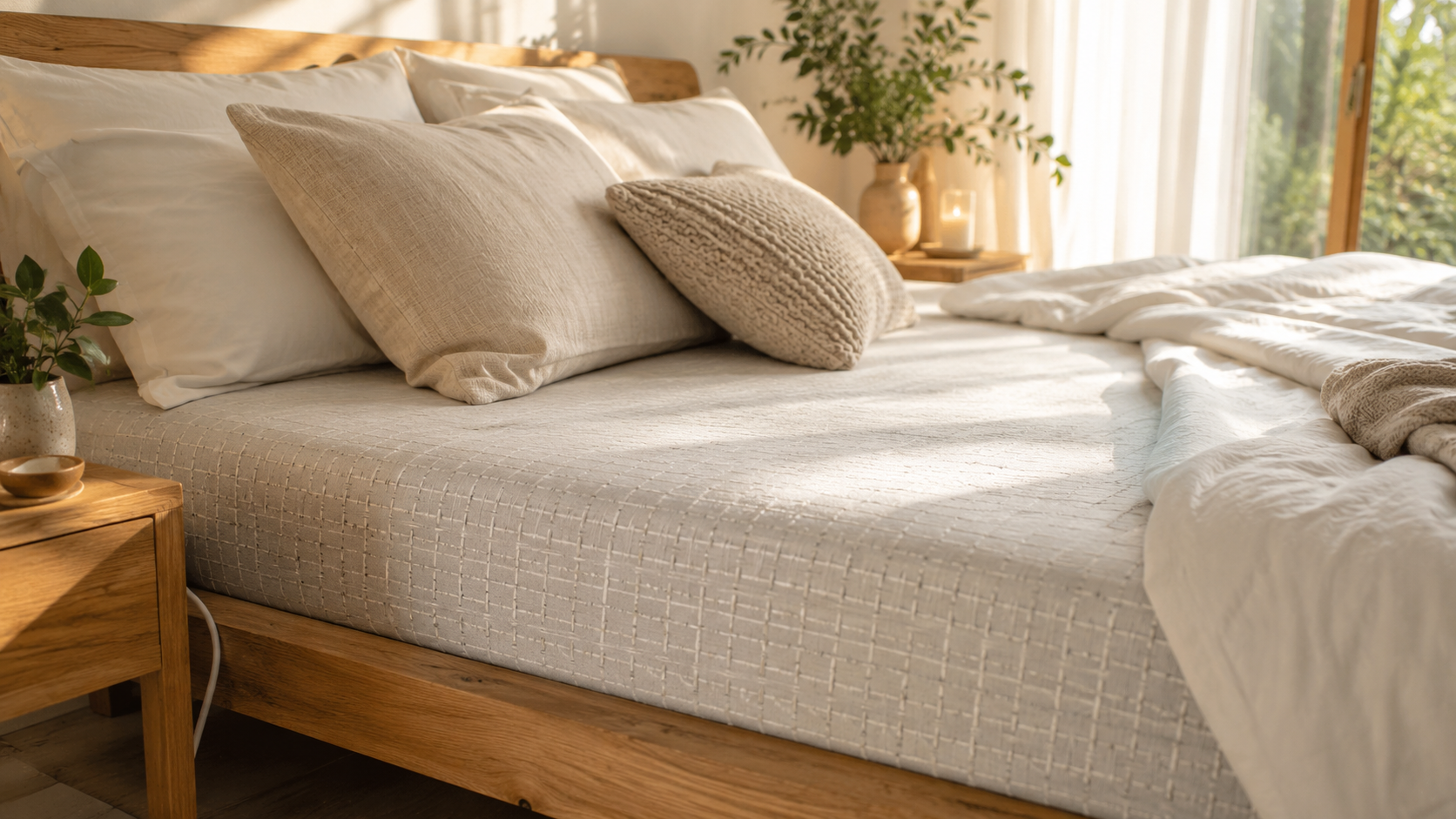
What Are Grounding Sheets?
Grounding sheets are conductive bed sheets designed to connect your body to the Earth’s grounding system while you sleep. They usually contain conductive fibres woven into the fabric and connect to a grounded outlet using a cord.
For people who want to use grounding mainly for sleep and relaxation, a grounding sheet is often the most natural choice. It offers a larger contact area and works while you are already resting.
Organic Earthing’s grounding sheets are designed for daily indoor use and made with certified organic bamboo and conductive silver threading. They are also created with a focus on comfort, safety and a cleaner sleep environment.
What Are Grounding Mats?
A grounding mat is a smaller conductive surface that can be used under your feet, hands or body. It is a popular option for people who want to ground during the day, especially while working at a desk or sitting on the couch.
A mat may be the better starting point if you are not ready to change your bedding or if you want a simple product you can move between spaces.
For example, you might keep a grounding mat under your desk during work hours, then use it again in the evening while reading or watching TV.
Grounding Sheet or Grounding Mat: Which Should You Choose?
The right choice depends on how you want to use grounding.
If your main goal is to build grounding into your sleep routine, a grounding sheet is usually the stronger option. It gives you a simple overnight setup and makes the practice feel effortless.
If your main goal is to try grounding during the day, a grounding mat may be more practical. It is compact, easy to use and ideal for shorter sessions.
If you are completely new to grounding and want a simple way to start, a starter bundle may be worth considering. A bundle can make the buying decision easier because the key pieces are already selected to work together.
Who Is Grounding Best Suited For?
Grounding may be a good fit for people who want a simple, natural wellness ritual that supports a calmer lifestyle. It may appeal to:
- People who feel overstimulated after long screen-heavy days
- Light sleepers looking to improve their sleep environment
- People wanting a more natural nighttime routine
- Wellness-focused shoppers interested in low-tox bedding and organic materials
- Anyone who spends a lot of time indoors and wants to reconnect with nature in a practical way
- People who want a passive wellness habit that does not require extra effort every day
Grounding is not suitable as a replacement for medical advice or treatment. If you are pregnant, nursing, have a medical condition, use prescription medication or take blood thinners, speak with your healthcare professional before beginning grounding.
Why Choose Organic Earthing?
If you are looking to purchase grounding products, quality matters. A grounding product is something you may sleep on, touch daily or make part of your home environment, so the materials, comfort and safety details are important.
Organic Earthing creates premium grounding and organic sleep products designed to support better sleep, relaxation and everyday wellbeing. The range includes grounding sheets, grounding mats, grounding wristbands, sleep bundles and organic silk sleep accessories.
Key reasons to choose Organic Earthing include:
- Certified organic materials: Designed for customers who care about what they sleep on every night.
- OEKO-TEX certification: Supporting a cleaner, safer sleep environment.
- No electricity required: Grounding products connect to the grounding port of a properly grounded outlet and do not use electrical current.
- Designed for daily indoor use: Suitable for sleeping, relaxing or working from home.
- Premium sleep focus: Products are designed to blend grounding with comfort, softness and a calmer nightly routine.
- 90-day risk-free trial: A helpful option if you are new to grounding and want time to experience it for yourself.
Common Mistakes When Starting Grounding
1. Expecting It to Replace Good Sleep Habits
Grounding works best as part of a supportive routine. If you are drinking caffeine late, scrolling in bed and sleeping in a bright room, grounding alone may not be enough to transform your nights.
2. Choosing the Wrong Product for Your Routine
If you want to ground while sleeping, choose a grounding sheet. If you want to ground while working or relaxing during the day, choose a mat. The best product is the one you will actually use consistently.
3. Forgetting to Check the Outlet
Indoor grounding products should be used with a properly grounded outlet. Many grounding products include or recommend an outlet tester so you can check the connection before use.
4. Ignoring Material Quality
Since grounding products often touch your skin for long periods, material quality matters. Organic, breathable and textile-tested materials can make the experience more comfortable and suitable for daily use.
Final Thoughts
Grounding is a simple wellness practice built around reconnecting with the Earth’s natural electrical charge. For some people, that means walking barefoot outside. For others, it means bringing grounding indoors through a sheet, mat or sleep bundle.
If you are new to grounding, the best place to start is with your routine. Ask yourself when you are most likely to use it. If your goal is calmer nights and a more restorative sleep environment, a grounding sheet or sleep bundle may be the best fit. If you want a simple daytime option, a grounding mat may be the easier starting point.
Organic Earthing makes grounding simple with premium, certified organic grounding and sleep products designed for everyday indoor use. Whether you are building a calmer bedtime routine or simply looking for a more natural way to reconnect, grounding can be a gentle place to begin.
Ready to start your grounding journey? Explore Organic Earthing’s grounding sheets, mats and curated sleep bundles designed to support a calmer, more restorative daily routine.
FAQs Answered
What is grounding?
Grounding, also called earthing, is the practice of connecting the body with the Earth’s natural electrical charge. This can be done outdoors through direct skin contact with grass, soil or sand, or indoors using grounding products such as sheets and mats.
Is grounding the same as earthing?
Yes, grounding and earthing usually refer to the same practice. Earthing is often used when talking about direct contact with the Earth outdoors, while grounding is commonly used for indoor products such as grounding sheets and mats.
How do grounding sheets work?
Grounding sheets are made with conductive fibres and connect to the grounding port of a properly grounded outlet. When your skin touches the sheet, your body connects with the grounded surface while you sleep or rest.
Do grounding products use electricity?
No. Grounding products do not use electricity to operate. They connect to the grounding port of a properly grounded outlet, not the live electrical current.
What is the best grounding product for beginners?
If you want to use grounding mainly while sleeping, a grounding sheet is a strong starting point. If you want a simple daytime option for your desk or lounge, a grounding mat may be more practical. Organic Earthing also offers starter bundles for customers who want an easy, ready-to-use option.
Are Organic Earthing grounding sheets worth it?
Organic Earthing grounding sheets are a good option for shoppers who want grounding bedding made with certified organic materials, conductive silver threading and a focus on comfort. They are especially suited to people who want to make grounding part of their nightly sleep routine.
Can I use a grounding sheet every night?
Many people use grounding sheets nightly as part of their sleep routine. If you are new to grounding, you may prefer to start gradually and see how your body responds. If you have a medical condition, are pregnant, nursing or taking medication, speak with a healthcare professional first.
Should I buy a grounding sheet or grounding mat?
Choose a grounding sheet if your main goal is overnight grounding and sleep routine support. Choose a grounding mat if you want a smaller, flexible product for daytime use at your desk, couch or relaxation space.
Where can I buy quality grounding products?
You can shop premium grounding sheets, grounding mats, wristbands and sleep bundles from Organic Earthing. Their range is designed for people who want certified organic materials, simple setup and grounding products that fit naturally into everyday life.
Is grounding medical treatment?
No. Grounding should be viewed as a wellness practice, not a medical treatment. Grounding products are not intended to diagnose, treat, cure or prevent disease. Always seek professional medical advice if you have health concerns.


Leave a comment
This site is protected by hCaptcha and the hCaptcha Privacy Policy and Terms of Service apply.