Grounding · 12 Oct 2026 · 16 min read
Grounding Sheets in Australia: What to Check Before You Buy
Buying grounding sheets in Australia? Use this six-point checklist: fabric, certificate numbers, plug, fit, tester pen and trial terms to judge any sheet.
By Jade Castle, founder. Wellness product, not a medical device.
Before buying grounding sheets in Australia, check six things: what the fabric is and what makes it conductive, certificate numbers you can verify and their scope, a plug that suits Australian sockets, sizes that fit your mattress, a tester to confirm the connection, and clear trial and warranty terms in writing.
Search for grounding sheets in Australia and most pages explain what grounding is, then push a product. Very few teach you how to judge one. That gap matters. You spend about eight hours a night with this fabric against your skin, and it connects to a wall socket. I'm Jade Castle, founder of Organic Earthing, and this is the checklist I would use on any sheet, including our own organic bamboo grounding sheets.
If you already read labels and returns policies before you buy, this is written for you. By the end you will know what to ask about the fabric, how to check a certificate number, what the plug should do, how to measure for fit, how to test the connection and which terms to get in writing. Then run Organic Earthing through the same list. I would rather you question us than believe a badge.
Key Takeaways
- Judge the sheet first on what you are sleeping on: the fibre, the conductive material and what it has been tested for.
- A certificate is only useful with three things attached: the named standard, the number and the scope.
- The grounding plug should use the earth pin only, and you should confirm it suits Australian sockets before you order.
- Measure your mattress, including depth and any topper, and compare it with the listed cm dimensions.
- A tester pen lets you see the connection yourself. Check at setup and again over time.
- Trial length, return conditions and warranty should read the same everywhere: product page, checkout and policy.
Summary Table: The Six Checks at a Glance
| Check | Question to ask | Evidence worth accepting | Warning sign |
|---|---|---|---|
| Fabric | What is it made from, and what conducts? | Fibre content and conductive material named plainly | 'Conductive fabric' with no detail |
| Certificates | Certified to what standard, covering what? | Standard, number and scope you can verify | A logo with no number |
| Plug | How does it connect, and does it suit Australian outlets? | Earth pin only, stated clearly for Australian sockets | Vague or overseas plug photos |
| Fit | Do the cm dimensions match my mattress? | Dimensions listed per size, with depth guidance | Sizes named but not measured |
| Tester | Can I check the connection myself? | A tester included and explained | 'Trust us, it works' |
| Terms | What can I return, and for how long? | One consistent trial and warranty statement | Policy lines that contradict each other |
What is the sheet actually made from?
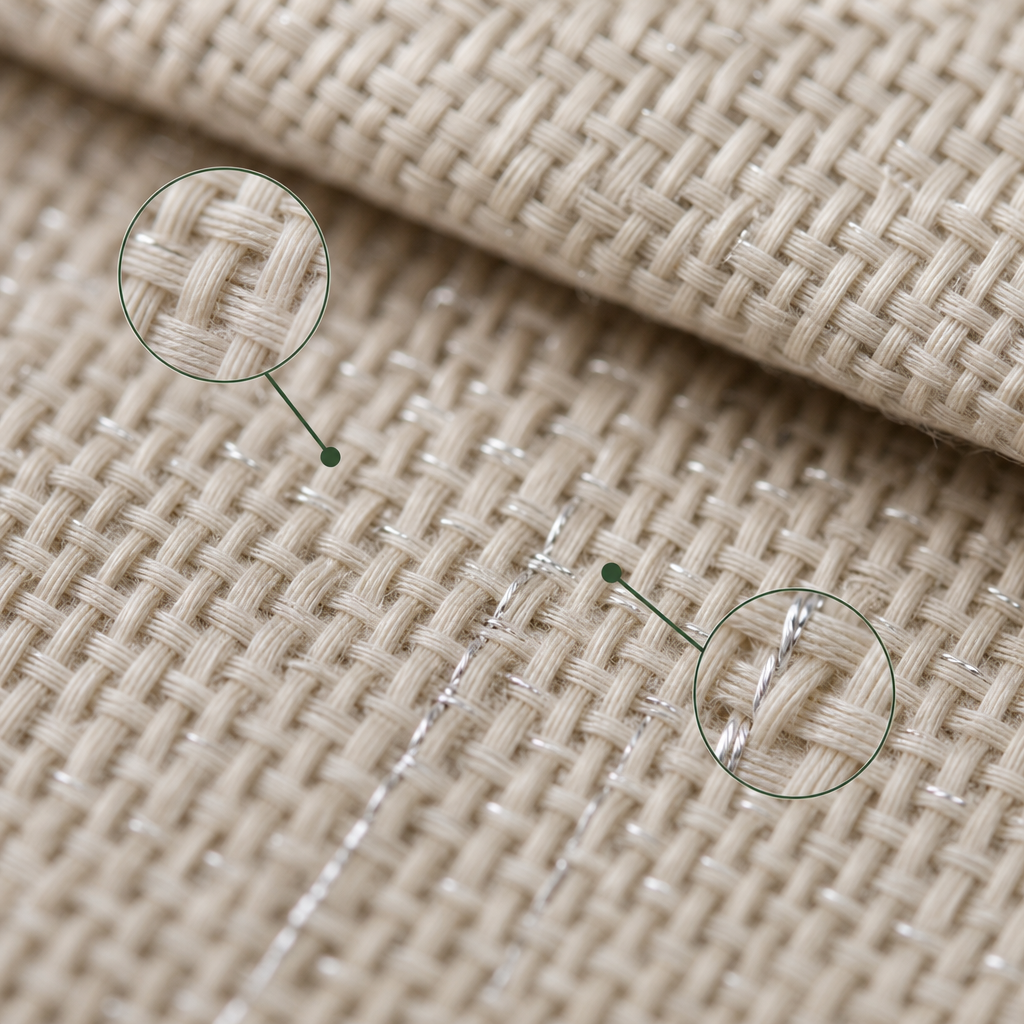
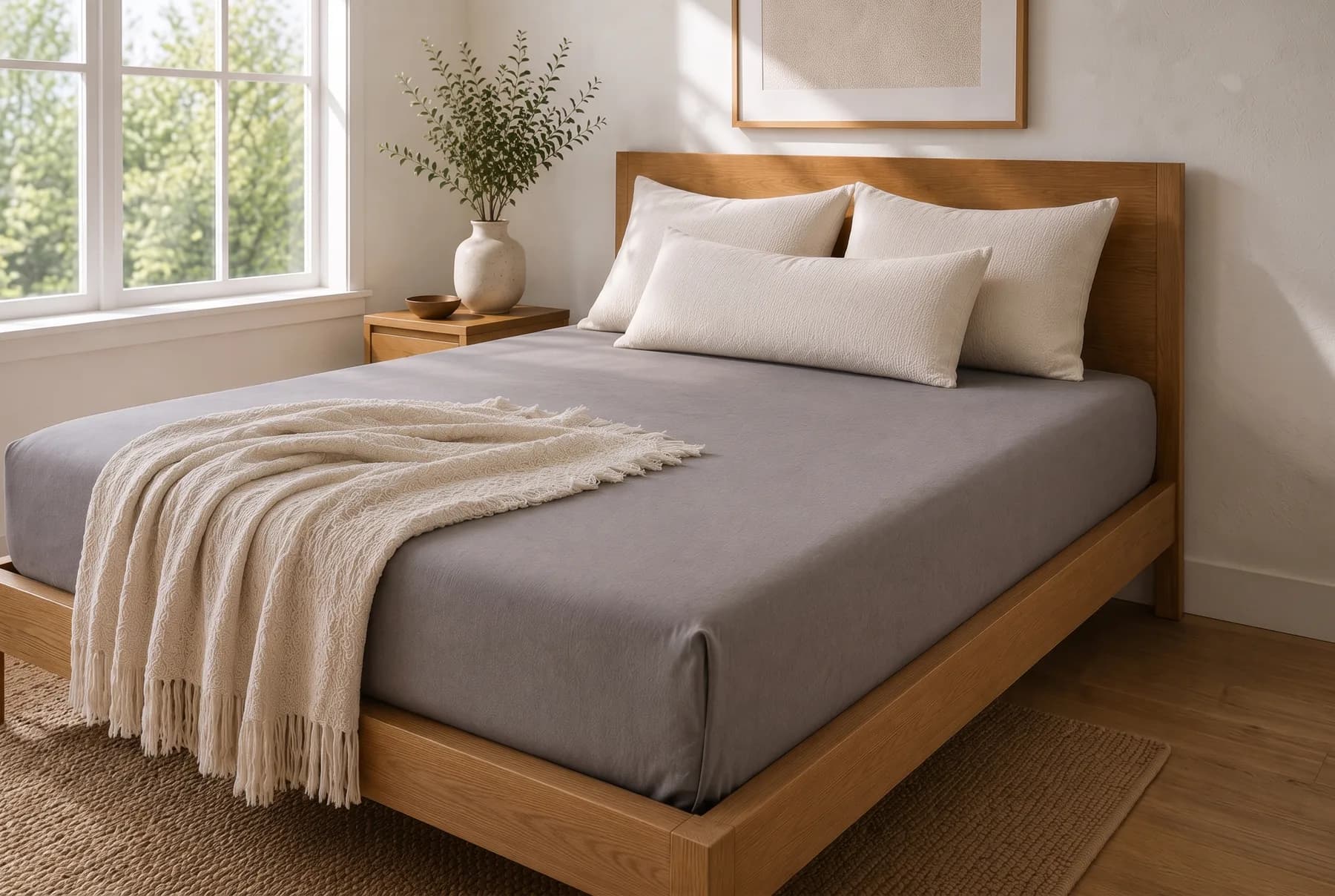
Ask for the fibre content and the conductive material in plain terms. Our sheets are organic bamboo woven with 10% silver thread, connected to ground by a cord. Bamboo is the comfortable base and the silver does the conducting. A product page that only says 'conductive fabric' has not answered the question.
Bamboo on its own is not conductive enough to ground a body. Something has to carry the connection. In our sheets, fine silver fibres are woven through the bamboo rather than coated on top. The silver has a job to do: conduct. The bamboo keeps the softness, breathability and moisture handling that matter to hot sleepers. Neither material is there because it sounds good in marketing.
The silver figure is from our own product specification: 10%. In our notes on competitor listings, the figures stated are 5% or less, and many sheets are cotton or synthetic blends. Treat that as a prompt to ask, not a verdict. Ask any brand: 10% of what, by weight or by fibre? Is the silver woven in or coated on? A coating can wear differently from a woven fibre, so the answer is worth having.
Here is the distinction I hold to, which I call the two kinds of claim. What a fabric is made of and tested for is one claim. What grounding does for sleep is a separate, open question that small studies have not settled. If you want that second question handled on its own terms, read what the research says about whether grounding sheets work. Keep the two apart when you read any product page. We sell a wellness product, not a medical device.
How do you check a grounding sheet certificate?
Ask for the certificate number, the standard it was issued under and its scope. Then confirm it with the issuing body or laboratory. A badge with no number, or a certificate covering a different company or product, proves very little. The question is always: certified to what standard, and what does it cover?
OEKO-TEX Standard 100
Our OEKO-TEX Standard 100 certificate number is SH025 231655. The standard tests textiles for harmful substances. Our manufacturing partner's certification is Product Class I, which is the strictest class in the standard and the one that applies to articles for babies and toddlers.
To check any OEKO-TEX number, use the Label Check tool on the OEKO-TEX website. Confirm four things: who holds the certificate, which articles or materials it lists, which product class it states, and whether it is still valid. One honest caveat: this certificate is held by our manufacturing partner, so check that the listed articles cover the textile you are buying. OEKO-TEX can certify yarn, fabric or finished products, so a certificate for one stage does not automatically cover the finished sheet.
RoHS compliance
Our RoHS compliance certificate number is CHHB26080392392, and it applies to the grounding sheets. RoHS is the restriction on hazardous substances in electrical and electronic equipment, set out in EU Directive 2011/65/EU. We applied it to the grounding bedding because the sheet connects to a wall socket, so it is more than a textile.
A test report is usually verified differently from an OEKO-TEX certificate. Ask for the full document. Check the laboratory name, the date, the sample description and the substances covered. Then contact the issuer if anything looks thin.
I chose both tests knowing they would raise our costs and complicate our supply chain. I wanted to know what was in the products I was selling, at a time when the category only talked about whether grounding worked. I don't want customers to trust us because we've written 'premium' on a website. I want something behind the word.
Scope matters more than the badge
Scope is where certification claims go soft. Our mulberry silk holds a GOTS scope certificate, number USB TEX-4007-GOTS-2509. A scope certificate shows that a facility is approved to process to the Global Organic Textile Standard. It is not a transaction certificate, which ties a specific shipment to the standard. Until transaction certificates arrive, we make no organic certification claim for that silk. The word 'certified' attaches to a named standard and a number, never loosely to 'organic'.
Red flags on a product page
- Adjectives instead of numbers: 'premium', 'chemical-free', 'fully tested'.
- A logo with no certificate number or no way to look it up.
- A certificate in another company's name with no explanation.
- A certificate for the yarn presented as if it covers the finished sheet.
- No mention of which substances or requirements were tested.
Does the plug suit Australian sockets?
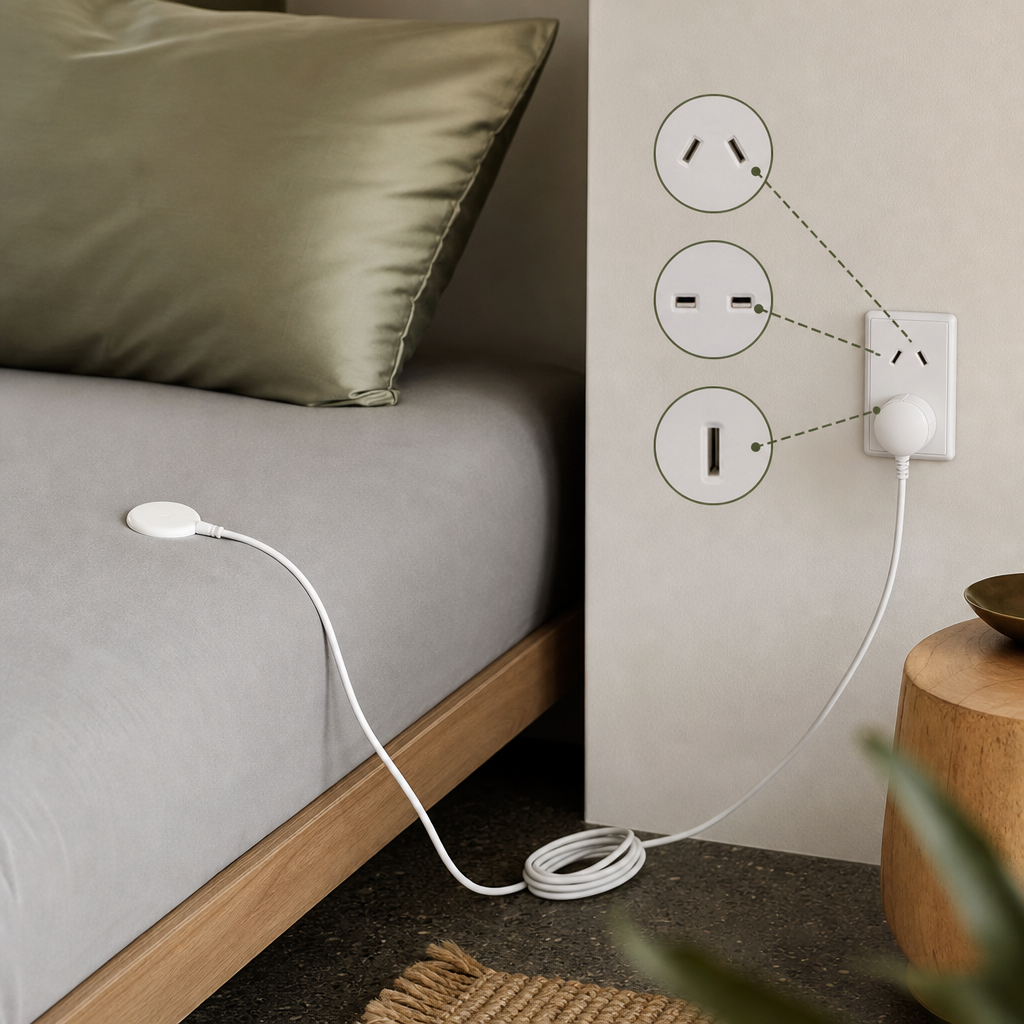
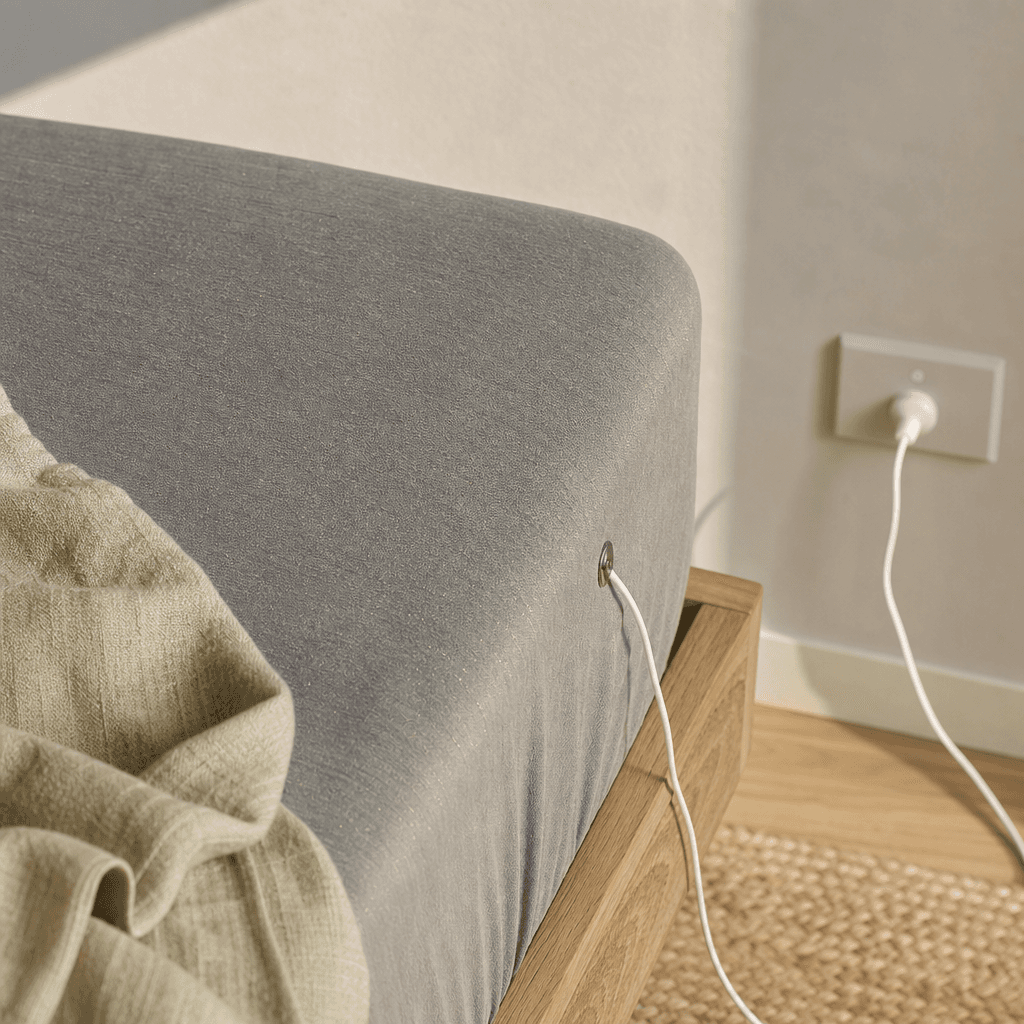
A grounding sheet connects to the earth pin of a wall socket through a safety grounding plug. Only the earth pin is used, so no power flows into the sheet. Confirm the plug suits Australian outlets before you buy, and ask a licensed electrician if you are unsure about your socket.
Australian sockets are Type I, with angled pins, so a plug photographed for another country is not good enough. Ask the seller three things. Is the plug made for Australian outlets? Does the cord connect to the earth pin only? What compliance information exists for the plug? Ask us as well. You should get a direct answer.
Also think about the socket. Many Melbourne homes and rentals have older wiring, and a grounding sheet is only as good as the earth connection behind the wall. If a socket is loose, damaged or has never been checked, leave it alone and have a licensed electrician look at it. Electrical work is not a DIY job in Australia. Energy Safe Victoria's website is a sound starting point for electrical safety guidance in Victoria.
Which grounding sheet size fits an Australian bed?
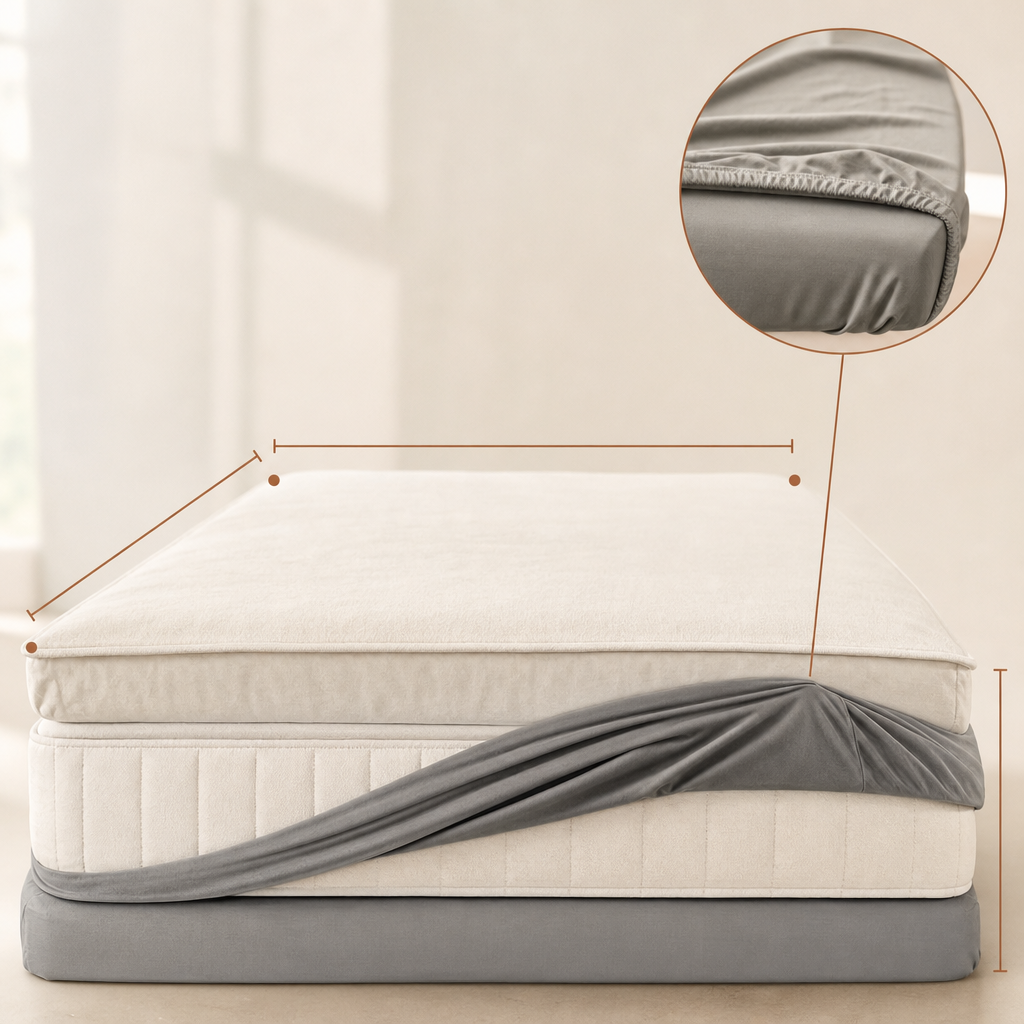
Australian mattresses come in Single, Double, Queen and King. A fitted sheet only works when the pocket matches your mattress. Compare the cm dimensions listed for each size with your own measurements, including mattress depth, before ordering. Overseas sizing can differ from Australian sizing, especially for King.
Our fitted grounding sheets are cut in Single, Double, Queen and King, and the exact cm dimensions for each size are listed on that page. Check them against a tape measure rather than the size name. Beds sold as 'Queen' by different makers can still vary slightly.
Here is the mattress-depth tip. Measure from the top of the sleeping surface, including any mattress topper or protector you keep on, down to the bottom edge of the mattress. That is the depth your fitted sheet has to cover. If you are borderline, ask before you order, because a sheet that pops off the corner at 2am is a sheet you will stop using. Measure length and width at the same time and note them down.
How do you test a grounding sheet connection?
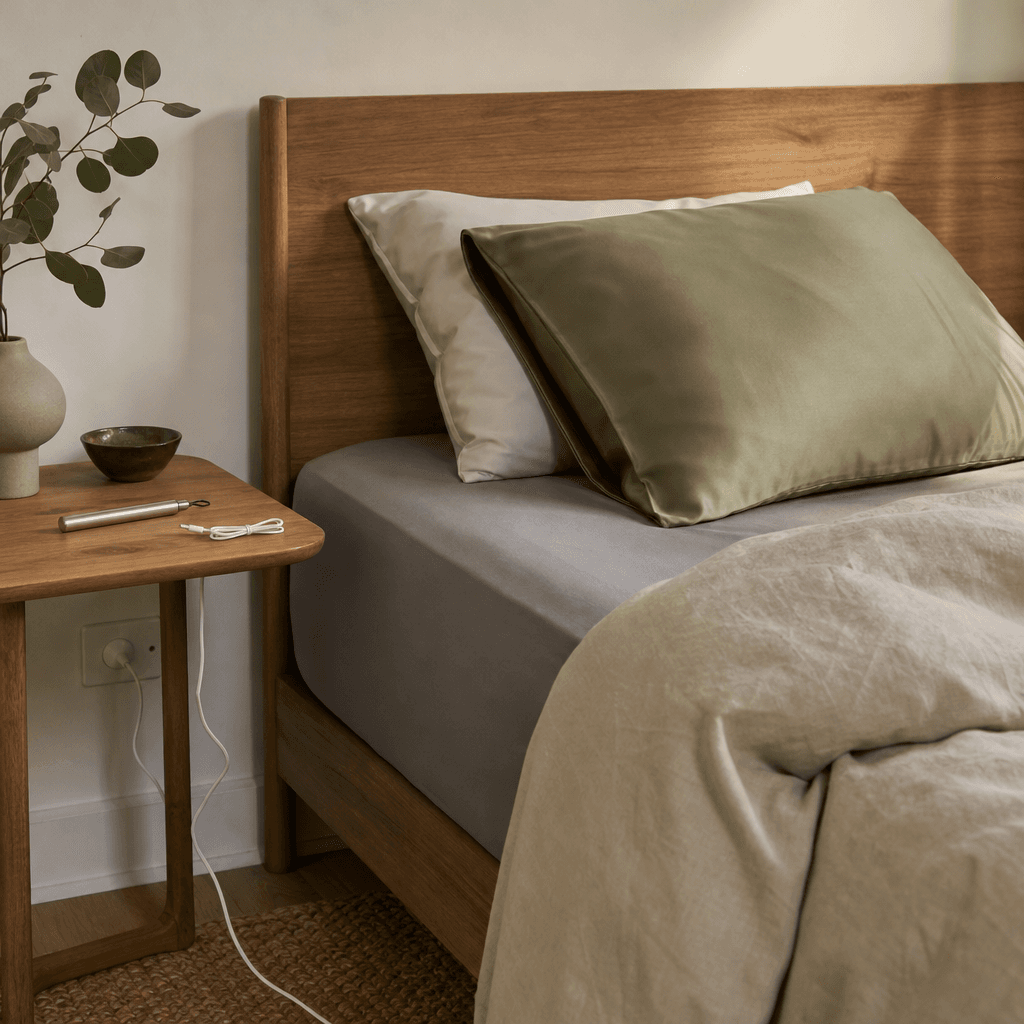
Use the tester pen that comes in every Organic Earthing box. First confirm the wall socket shows an earth connection, then touch the pen to the sheet while it is plugged in to see the sheet conducting. Check when you first set up and again over time.
This is the idea behind test it before you believe it. Follow the instructions in the box, because how a tester pen signals a result depends on the pen. In general the process has two steps:
- Check the socket. Confirm the outlet you plan to use shows a proper earth connection. If it does not, stop and call a licensed electrician.
- Check the sheet. With the sheet connected, touch the pen to the fabric and look for the conductivity indication described in the instructions.
We suggest checking at setup and again from time to time. We do not say 'after every wash', and we do not claim a test result is a durability guarantee. A passing test tells you the connection is working today. If a good socket produces a failed sheet reading, contact us while you are still inside your trial.
What returns and warranty terms should you expect?
Look for a trial measured from delivery, a clear return window, written conditions and a warranty period, all stated consistently. Organic Earthing offers a 90-night trial (90 days from delivery) and a 1-year warranty. Returns need to be in reasonable condition, not damaged through misuse, and return postage is paid by the customer.
We're confident in what we make, so we'd rather you judged it in your own bed than took our word for it. That's what the 90-night trial is for. The same 90 days appear on the product page, in the returns policy and at checkout, so there is one promise to hold us to. Sleep on it, then decide.
The length is deliberate. Some people notice something in the first week, and many notice nothing until the third. Both are normal. I won't promise a timeline, and a trial that ends in two weeks would not give you a fair look. A warranty is separate from the trial, and neither replaces your rights under the Australian Consumer Law, which the ACCC explains on its website.
Australian-designed versus Australian-made
People search for grounding sheets made in Australia, so here is the honest version. Australian-designed means the product was designed here. Australian-made is a different claim, and it is about where the goods were produced. The ACCC sets the tests for 'Made in Australia' claims, which look at where the goods were last substantially made and how much of the production cost was incurred in Australia.
We are an Australian-owned, family-run brand selling globally. We do not describe our sheets as Australian-made. My advice applies to every brand, including us: ask directly where the product is made, and judge the answer by how specific it is. A confident, clear reply tells you something. A dodge tells you something too.
Where should you buy grounding sheets in Australia?
Buy from a seller that publishes certificate numbers, names the plug and conductive material, lists cm dimensions per size and states trial and warranty terms in writing. Where you buy matters less than whether every claim can be checked. The best grounding sheet for you is the one that passes your checks.
I will not rank brands for you, and I would be wary of anyone who claims to be the only or the best option. Use the table near the top of this page on every tab you have open. Put the questions to each seller by email and compare the replies. Sellers who answer in specifics are usually the ones who have the documents. If a brand cannot or will not give a certificate number, you have your answer.
Judge the textile first, then question every claim
I started Organic Earthing before I had heard of grounding. I had become conscious of what I put against my skin, what touches your skin every night, and I was choosing natural materials where I could. Then I found grounding and went down the rabbit hole. What I could not find was a brand that paired it with the quality, materials and look I wanted in my own home. The products were clinical, generic or led with price.
What struck me was the conversation. Everyone argued about whether grounding works. Almost nobody talked about the textile you sleep on for eight hours a night. My position is that you judge the product first on the textile: what it is made of and what it has been tested for. Whether grounding does anything for sleep is a separate question, and the small published studies have not settled it.
My second position is that you should question every word on a product page, including ours. Words like organic, certified, tested and chemical-free are specific terms, and a badge can look impressive with very little behind it. Customers who ask harder questions would be good for the whole category.
Third, we do not lead with discounts. A premium product with certificates behind it can't argue with a clearance voice. Our offer is proof: certificate numbers, a tester pen, 90 days to decide and a year of warranty. That is the premium, transparent end of grounding, and it only works if you check it.
These are the five questions I think you should put to any grounding brand, and to us:
- What is the sheet actually made from?
- What makes it conductive, and what conductive material is used?
- Can you test the conductivity yourself?
- How does it connect to ground?
- What testing or documentation does the company actually have: certified to which standard, covering what?
Your printable six-point checklist
Copy this list, print it and keep it beside your laptop while you compare sheets.
- 1. Fabric: I know the fibre content, the conductive material and its percentage, and whether it is woven in or coated.
- 2. Certificates: I have the standard, the number and the scope, and I have checked them with the issuer.
- 3. Plug: I have confirmed it suits Australian sockets and uses the earth pin only.
- 4. Fit: I have measured length, width and depth (including any topper) against the listed cm dimensions.
- 5. Tester: I can check the socket and the sheet myself, at setup and over time.
- 6. Terms: Trial, returns conditions and warranty are written down and consistent everywhere.
Run Organic Earthing through it. Check the two certificate numbers yourself: OEKO-TEX Standard 100 SH025 231655 and RoHS CHHB26080392392. Then, if the answers satisfy you, begin on the Start page of the Organic Earthing site, knowing a tester pen, a 90-night trial and a 1-year warranty come with every sheet.
References
- OEKO-TEX. STANDARD 100 by OEKO-TEX. https://www.oeko-tex.com/en/our-standards/oeko-tex-standard-100
- OEKO-TEX. Label Check. https://www.oeko-tex.com/en/label-check
- European Union. Directive 2011/65/EU on the restriction of the use of certain hazardous substances in electrical and electronic equipment (RoHS). https://eur-lex.europa.eu/eli/dir/2011/65/oj
- Australian Competition and Consumer Commission (ACCC). Country of origin claims and consumer guarantees. https://www.accc.gov.au
- Energy Safe Victoria. Electrical safety information. https://www.esv.vic.gov.au
Take this with you
Your first 30 nights, in your inbox.
What people usually notice in the first month on a grounding sheet, week by week, and why you get 90 days rather than 14.
Questions people ask
Where can I buy grounding sheets in Australia?
You can buy them from specialist online retailers and brand websites. Choose a seller that publishes certificate numbers, names the plug and conductive material, lists cm dimensions for each size and states its trial and warranty terms in writing. Email questions before you order and compare the replies.
Are there grounding sheets made in Australia?
This varies by brand, so ask each one directly. Australian-designed and Australian-made are different claims. The ACCC sets the tests for Made in Australia claims. Organic Earthing is an Australian-designed, family-run brand and does not describe its sheets as Australian-made.
Do I need a special plug for a grounding sheet in Australia?
The plug must suit Australian Type I sockets. A grounding sheet uses only the earth pin, so no power flows into the sheet. Confirm this with the seller before you buy, and ask a licensed electrician to check the socket if you are unsure about your wiring.
How do I check a grounding sheet certificate?
Get the standard, the certificate number and the scope. For OEKO-TEX Standard 100, enter the number in the Label Check tool on the OEKO-TEX website and confirm the holder, listed articles, product class and validity. For test reports such as RoHS, ask for the full document and check the laboratory and sample description.
How often should I test a grounding sheet?
Test it when you first set it up, and again from time to time. Follow the instructions that come with the tester pen. We do not suggest testing after every wash, and a test result is not a durability guarantee.