Grounding · 29 Sept 2026 · 18 min read
Grounding Fitted Sheets vs Regular Fitted Sheets: What's Actually Different?
A grounding fitted sheet is an electrical device disguised as bedding. Here's what's actually different from a regular fitted sheet, and how to verify the claims.
By Jade Castle, founder. Wellness product, not a medical device.
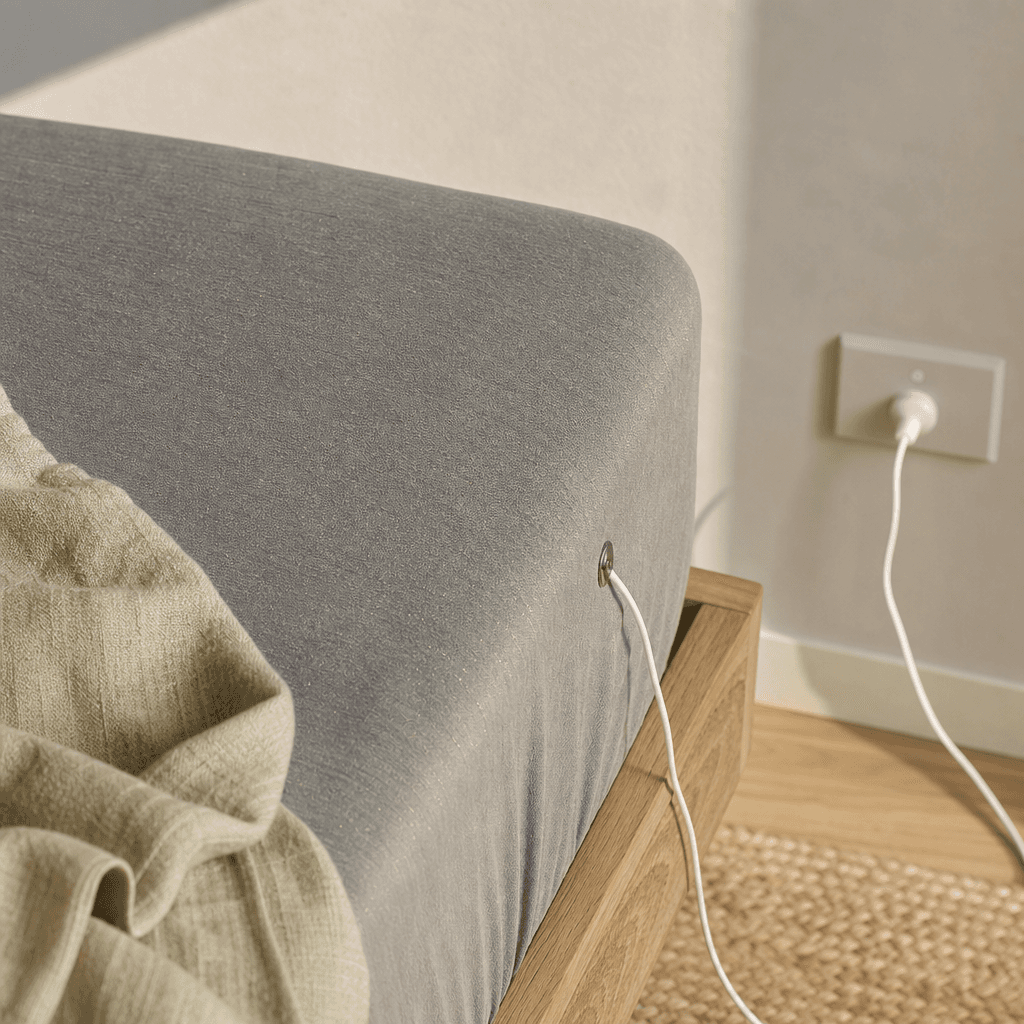
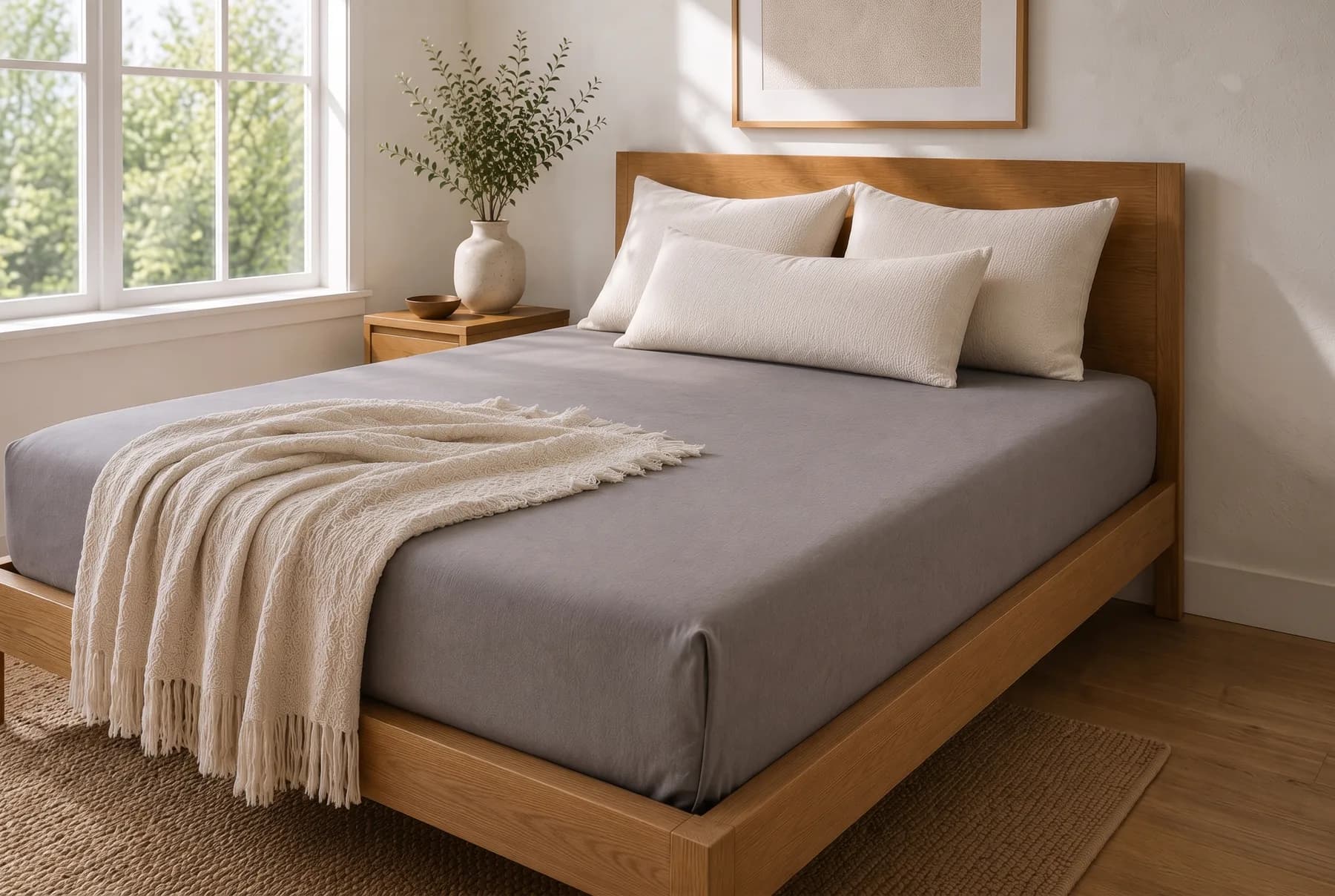
A grounding fitted sheet is a normal fitted sheet with fine silver fibres woven through the fabric, wired to the earth pin of a power point so your body connects to the earth's electrical potential while you sleep. A regular fitted sheet is purely fabric. The difference is conductive material, an earthing cord, and independent certification, not thread count.
Most people shopping for a grounding fitted sheet compare the wrong specs. They look at thread count, colour and price, the same things they'd compare on a normal sheet from a department store. But a grounding sheet is doing a job a regular sheet was never built for. It's carrying a connection from your skin to the earth for eight hours a night. That makes it, in a very real sense, an electrical device that happens to look like bedding.
This article breaks down exactly what changes between a regular fitted sheet and a grounding fitted sheet: the fabric, the conductive thread, the AU-specific wiring requirements, the washing rules that can quietly kill conductivity, and how to verify a brand's claims before you buy. We'll also tell you who shouldn't buy one at all.
At a glance, before we get into it: Organic Earthing's grounding sheets are OEKO-TEX Standard 100 certified (certificate SH025 231655), come with a tester pen in every box so you can check the conductivity yourself, and are covered by a 90-day trial from delivery and a 1-year warranty.
Key Takeaways
- A grounding fitted sheet differs from a regular sheet in one specific way: conductive silver thread woven through the fabric, connected by a cord to an earthed power point.
- Organic Earthing's grounding sheets use organic bamboo with 10% silver thread woven through the weave, not coated on top, so the fabric keeps its softness and breathability.
- The right question isn't "does grounding work", it's "what is this fabric made of, and what has it actually been tested for?"
- Australian power points need a genuine earth pin and an RCD-protected circuit for a grounding sheet to work as intended.
- Washing habits matter more than most buyers realise. Fabric softener and bleach can degrade conductive thread over time.
- Test it before you believe it: use the tester pen at setup, check again over time, and use the 90-day trial to decide for yourself.
Regular Fitted Sheet vs Grounding Fitted Sheet: Summary Table
| Feature | Regular Fitted Sheet | Grounding Fitted Sheet |
|---|---|---|
| Fibre | Cotton, polyester or blends | Natural fibre such as organic bamboo, with conductive thread woven through |
| Conductive content | None | Silver thread woven through the weave, not printed or coated on top |
| Earthing connection | None | Cord connecting the sheet to the earth pin of a power point |
| AU power point compatibility | Not applicable | Requires a genuine three-pin earth and an RCD-protected circuit |
| Washing rules | Standard detergent and fabric softener generally fine | Mild detergent, no fabric softener, no bleach, line drying recommended |
| Lifespan | Depends on fabric quality and washing habits | Depends on fabric quality, washing habits, and how well the conductive thread is cared for |
| Certification | Varies by brand, often nothing independently published | Independent testing available where the brand publishes certificate numbers |
| Cost over time | Lower upfront cost, often replaced more often | Higher upfront cost, no ongoing spend if the sheet is cared for |
How a Grounding Fitted Sheet Is Actually Built
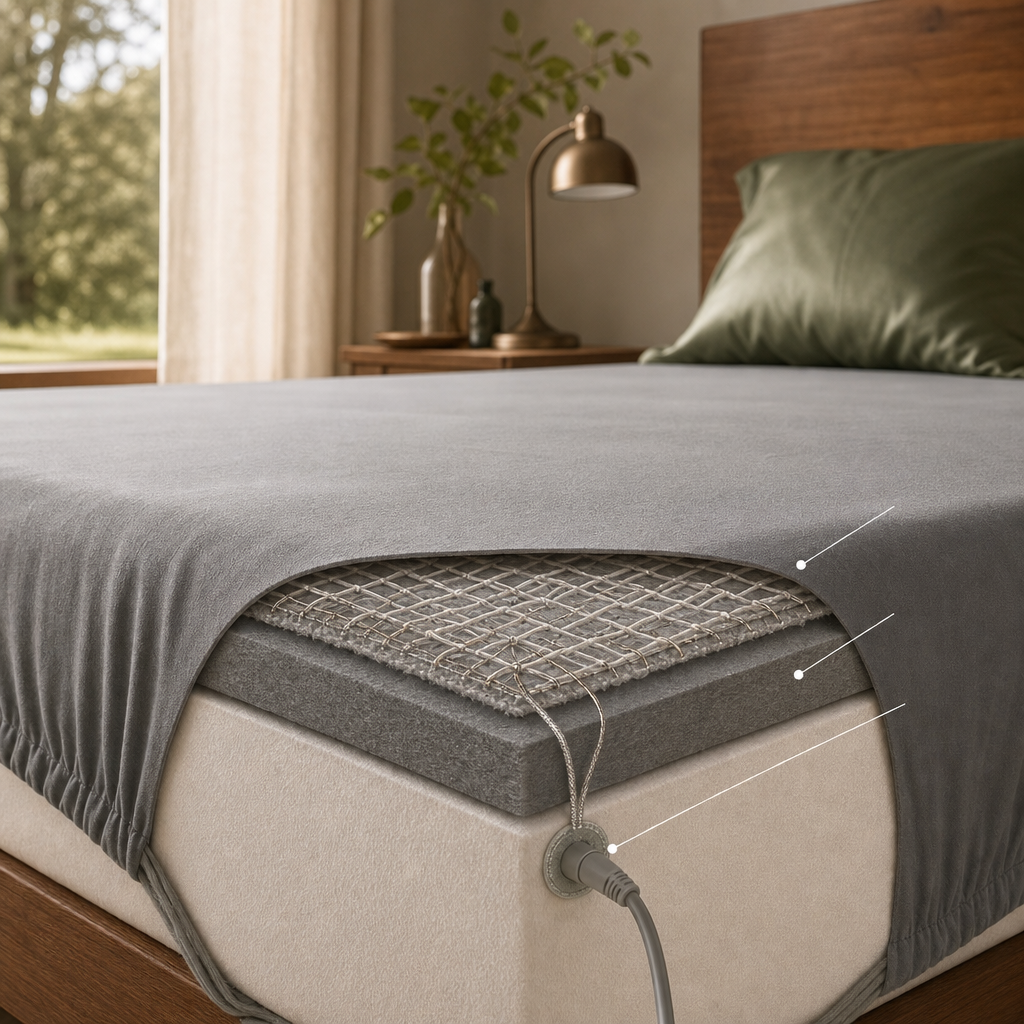
A grounding fitted sheet starts as a normal fitted sheet, with one addition. Fine silver fibres are woven through the fabric itself, not coated on top, then connected by a cord that plugs into the earth pin of a power point. No power flows through it. Only the earthing connection is used.
That distinction, woven through versus coated on top, matters more than most product pages let on. A coating sits on the surface of the fabric and wears off with washing and friction. Thread that's woven into the fabric structure is part of the textile, so it holds its position wash after wash, even as the conductivity itself can still fade over years of use and laundering.
Organic Earthing uses 10% silver thread through its certified fitted grounding sheets, a higher proportion than the 5% or less commonly used elsewhere in the category. The silver has a job to do: conduct. Nothing about the fibre choice or the thread percentage is there because it sounds good in marketing copy. It's there because bamboo alone isn't conductive enough to earth a body, and 10% silver thread is what makes the connection reliable enough to be worth building a sheet around.
The cord itself matters too. It needs a proper connection to a genuine earth pin, not a two-pin adaptor or a power point without a real earth. We'll get into what that means for Australian homes specifically further down.
Why Organic Bamboo Beats Cotton or Polyester Blends for Hot Australian Nights
Organic bamboo outperforms cotton or polyester blends in a grounding sheet for one main reason: it manages heat and moisture better across a long Melbourne summer or a humid Queensland night, while still carrying the conductive thread that does the earthing.
Bamboo alone is not conductive. No natural fibre is, on its own, conductive enough to earth a sleeping body. That's why the silver thread is doing the electrical work, not the bamboo. But the fibre still matters, because you're lying on it for eight hours a night, every night, all year.
Cotton and polyester blends are common in cheaper grounding sheets because they're cheaper to source and easier to manufacture at volume. The trade-off is breathability. Polyester in particular traps heat and moisture against the skin, which is uncomfortable in an Australian summer and can undercut sleep quality regardless of whether the sheet is earthed or not. Organic bamboo is more breathable and handles moisture better, which is why it's the fibre Organic Earthing builds around for its full range in the grounding collection.
This is the tension worth understanding: the fibre choice is about comfort and sleep quality, and the silver thread is about conductivity. They're solving two different problems, and a good grounding sheet needs to get both right, not just one.
Fitted Sheet or Flat Sheet: Who Should Choose Which
A fitted grounding sheet suits people who want full-body contact and a simple, set-and-forget setup on one bed. A flat grounding sheet or underlay suits people who move between beds, share a mattress with a non-grounding partner, or want to use the same sheet on different mattress sizes.
A fitted sheet sits directly against the mattress, the same way a normal fitted sheet does, so skin contact is consistent across the whole surface you sleep on. It's the simplest option if you have one bed and want to earth it properly, once, without thinking about it again.
A flat grounding sheet or underlay gives you more flexibility. You can lay it over an existing fitted sheet, move it between beds, or use it in a share house or rental where you don't want to commit a whole bed setup. It's also a reasonable middle ground for couples where only one person wants to try grounding.
For people who aren't ready to commit to bedding at all, a grounding wristband is a lower-cost way to test the concept during the day, before deciding on bedding. If you're not sure which fits your situation, Organic Earthing's product guide walks through it by lifestyle rather than by price point.
AU-Specific Earthing: RCD-Protected Outlets, Earth Rods and the Tester Pen
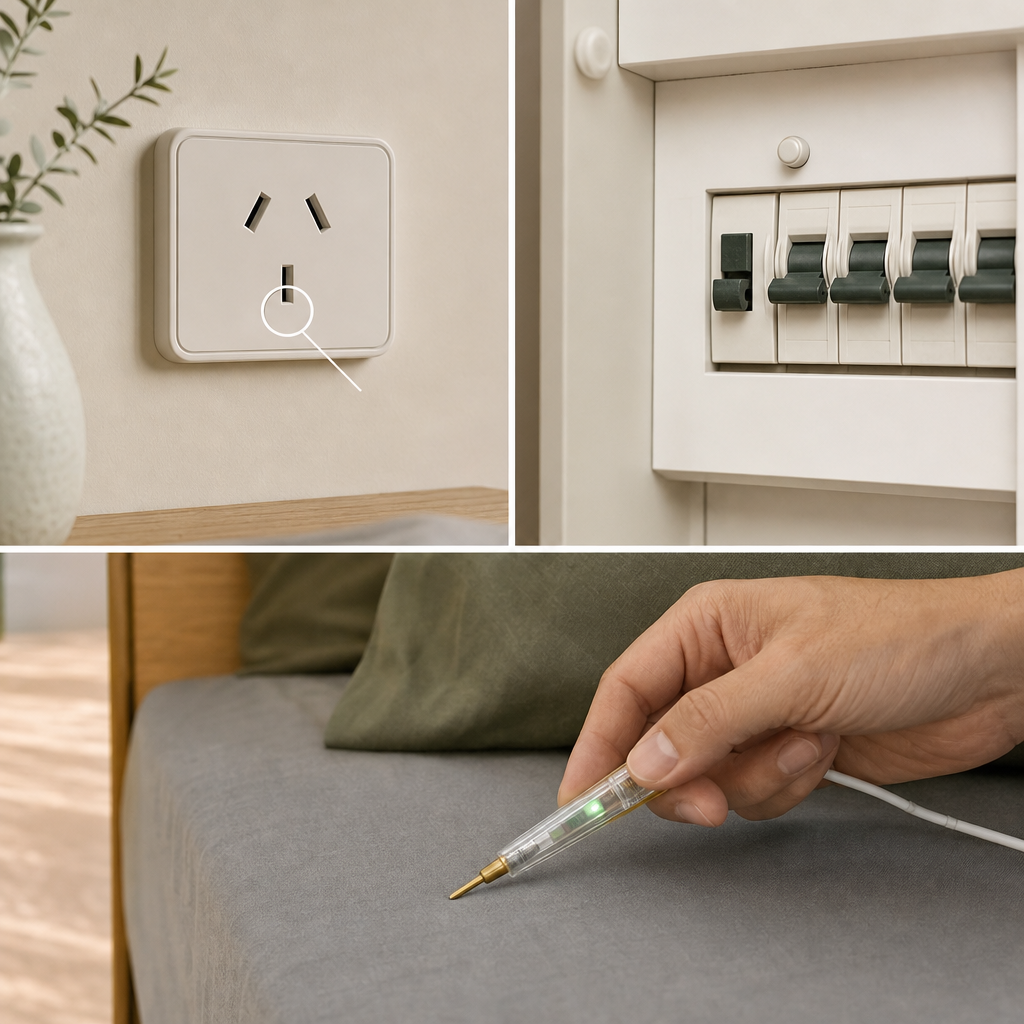
A grounding fitted sheet only works if it's plugged into a power point with a genuine, functioning earth connection. In Australian homes, that means a three-pin power point wired to a proper earth, ideally on a circuit protected by an RCD safety switch, which is standard in most homes built or rewired to current requirements under AS/NZS 3000.
This is the part most grounding product pages skip entirely. The sheet itself doesn't earth you if the power point it's plugged into isn't properly earthed. Older homes, some rental properties, and power boards without a genuine earth pin can all break the connection before the sheet even gets a chance to work.
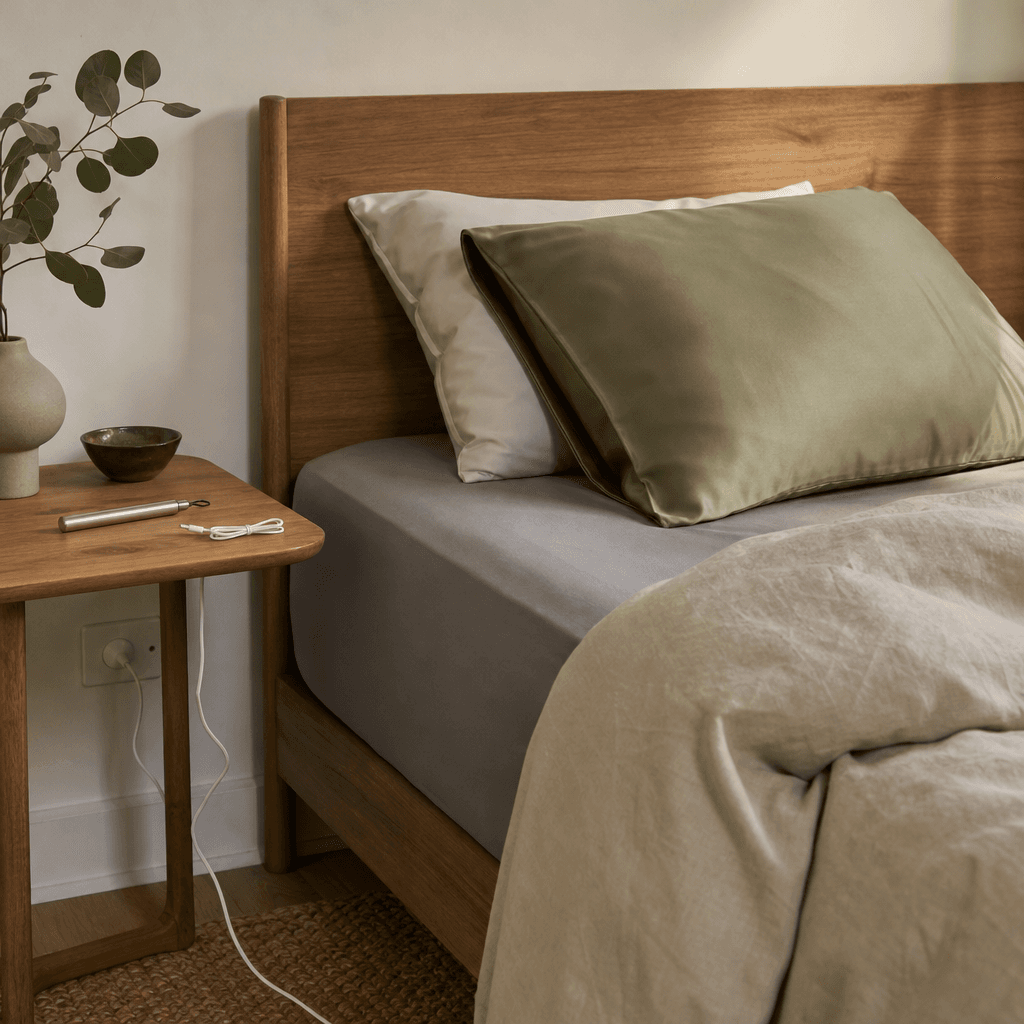
That's exactly why a tester pen matters more than any marketing claim on a box. Plug the sheet in, touch the tester pen to the fabric, and you'll see a visual indicator confirming the connection is live. It's a five-second check that replaces having to trust a brand's word for it. Test it before you believe it, at setup, and then again periodically over time, not after every single wash, and not as a durability guarantee. It's a simple habit that tells you whether the connection is doing what it's meant to do.
If your home doesn't have a reliably earthed power point, for example an older property with two-pin outlets only, a grounding sheet won't function as intended no matter how well it's built. That's worth checking before you buy, not after.
Wash and Care Rules That Can Quietly Kill Conductivity
Fabric softener, bleach and high heat are the three things most likely to degrade a grounding sheet's conductivity over time. None of them will damage a regular fitted sheet the same way, which is exactly why grounding sheets need a different care routine.
Fabric softener works by coating fibres with a thin residue to make them feel smoother. That's fine on a normal sheet. On a grounding sheet, that residue sits on top of the silver thread and can interfere with the electrical contact between the thread and your skin. Bleach and harsh chlorine-based products are worse: they can corrode fine silver fibres directly.
The safer routine is a mild detergent, a cold or warm wash rather than hot, no fabric softener, no bleach, and line drying where practical instead of high-heat tumble drying. None of this is complicated, but it is different from how most people wash bedding, and it's rarely explained clearly on product pages.
Worth being honest about here: no brand can promise a grounding sheet's conductivity will never fade. Textiles wear. What a brand can control is how clearly it explains the care routine that protects conductivity for as long as possible, and how easy it makes it for you to check the connection yourself rather than guess.
How to Verify a Grounding Brand's Claims Before You Buy
The fastest way to separate a genuine grounding brand from marketing is to ask five specific questions and expect specific answers, not adjectives. "Premium", "organic" and "chemical-free" on a product page mean nothing without a named standard and a certificate number behind them.
Here are the questions worth asking any grounding brand, including Organic Earthing:
- What is the sheet actually made from?
- What makes it conductive, and what conductive material is used?
- Can you test the conductivity yourself?
- How does it connect to ground?
- What testing or documentation does the company actually have, certified to which standard, covering what?
This matters because there are two kinds of claim in this category, and they're often blurred into one sentence. The first is what the fabric is made of and what it's been tested for: organic bamboo, 10% silver thread, OEKO-TEX Standard 100 certification (certificate SH025 231655) covering harmful substances, RoHS compliance testing (certificate CHHB26080392392) on the grounding bedding specifically, and a GOTS scope certificate (USB TEX-4007-GOTS-2509) on the mulberry silk range. The second is what grounding does for sleep, which is a separate, open question. The small published studies on grounding, including the widely cited Chevalier and Oschman work, point to interesting physiological effects, but they involve small sample sizes and have real limits. Anyone selling grounding as settled science is overstating the evidence. Organic Earthing's evidence page lays out what the research does and doesn't say, without dressing it up.
Certified should attach to a named standard and a number, not to the word organic on its own. If a brand can't answer these questions specifically, that's the answer.
What a Grounding Fitted Sheet Costs Over 12 Months
A certified grounding fitted sheet typically costs more upfront than a regular sheet, often several hundred dollars, and carries no ongoing cost if it's cared for properly. A cheap, uncertified sheet costs less initially but may need replacing sooner if the conductive thread degrades or the fabric wears out.
This is where the discount culture around bedding works against buyers. A $419 certified product can't compete with a clearance sale on price, and it isn't trying to. The category leaders in grounding don't discount either, because the offer isn't a bargain, it's proof: certificate numbers, a tester pen, a real trial period, and a warranty. A heavily discounted grounding sheet with no published certification is usually cheap because there's nothing behind the price, not because you're getting a deal.
Over 12 months, the more useful comparison isn't sheet against sheet on price. It's whether the brand backs the product with a trial long enough to actually use it, and a warranty that means something if the conductivity fails early. Sleep on it for 90 nights, decide later, is a very different offer to a no-returns clearance sale.
Who Should Not Buy a Grounding Fitted Sheet
A grounding fitted sheet isn't the right purchase for someone expecting guaranteed, immediate results, someone in a home without a genuinely earthed power point, or someone looking for a medical treatment rather than a wellness product.
Grounding is a wellness product, not a medical device, and it shouldn't be marketed or bought as one. If you're managing a diagnosed medical condition, that's a conversation for a GP, not a bedding purchase. If your home's wiring doesn't include a real earth pin on the power points you'd use, a grounding sheet has nothing to connect to, and no amount of thread percentage fixes that. And if you're not willing to give something 30 to 90 nights before judging it, a grounding sheet probably isn't worth the outlay, regardless of the brand.
For everyone else, genuinely curious, willing to test it themselves, comfortable with an open question rather than a guaranteed outcome, it's a reasonable thing to try, provided you're buying from a brand that can show its testing rather than just describe it.
The Textile Question Nobody in Grounding Talks About
Most of the conversation in this category is about whether grounding works. I think that's the wrong place to start. Judge a grounding sheet first on what you're sleeping on: the textile, what it's made of, and what it's actually been tested for. What grounding does for sleep is a separate, genuinely open question the small studies haven't settled.
When I started what became Organic Earthing, I hadn't heard of grounding yet. I'd already become conscious of what touches your skin every night, clothing and bedding, and was choosing natural materials wherever I could. Grounding came later, down a rabbit hole I didn't expect to fall into. What struck me was that nobody in the category was talking about the fabric at all. Everything I found was either clinical, generic, or led with price, and none of it told me what was actually in the product or what it had been tested for.
So I built the other thing. We chose OEKO-TEX Standard 100 at a time when the whole category was arguing about whether grounding worked and nobody was independently testing for harmful substances in the textile itself. It cost more and complicated the supply chain. I did it anyway, because I don't want customers to trust us because we've written "premium" on a website. I want there to be something behind it, a certificate number they can look up themselves.
The silver thread decision came from the same place. Bamboo on its own isn't conductive enough to earth anyone, and I didn't want to sell a sheet people put up with just because, technically, it grounds. We wove fine silver fibres through the bamboo at 10%, not coated on top, connected by a cord to the earth pin of a wall socket. No power flows. Only the earthing connection is used. That keeps the softness and breathability that matters on a hot night, while the silver does the one job it's there for.
The trial comes from the same place. Try it for up to 90 days from delivery, and if it's not for you, return it in reasonable condition (return shipping is on the customer). I'm confident enough in what we make to let you be the judge in your own bed, rather than asking you to take my word for it.
We're an Australian-owned, family-run brand selling globally, and we sit at the premium, transparent end of grounding. That's a deliberate position, not a marketing line. Certified to what standard, and what does it cover, is a question I'd want answered before I bought anything for my own bed, so it's the standard we hold ourselves to.
References
- OEKO-TEX. "STANDARD 100 by OEKO-TEX." oeko-tex.com
- Chevalier, G., Sinatra, S. T., Oschman, J. L., Sokal, K., & Sokal, P. "Earthing: Health Implications of Reconnecting the Human Body to the Earth's Surface Electrons." Journal of Environmental and Public Health, 2012.
- Sleep Health Foundation Australia. sleephealthfoundation.org.au
- Standards Australia. AS/NZS 3000 Wiring Rules.
- Australian Competition and Consumer Commission (ACCC). Consumer guarantees and returns information. accc.gov.au
Have a question about sizing, power point compatibility, or how to check conductivity on your own bed? Get in touch with Organic Earthing and ask us directly, including anything on this list of questions you'd ask any grounding brand.
Take this with you
Your first 30 nights, in your inbox.
What people usually notice in the first month on a grounding sheet, week by week, and why you get 90 days rather than 14.
Questions people ask
Do grounding sheets actually work?
The published research on grounding, including studies by researchers such as Chevalier and Oschman, shows some interesting physiological effects in small trials, but sample sizes are limited and the science is not settled. Treat grounding as a wellness product with an open evidence base, not a guaranteed outcome.
What's the real difference between a grounding sheet and a regular fitted sheet?
A grounding sheet has fine silver thread woven through the fabric and a cord connecting it to the earth pin of a power point. A regular fitted sheet is purely fabric with no conductive material and no earthing function at all.
Can I use a grounding fitted sheet on any Australian power point?
Only on a power point with a genuine three-pin earth connection, ideally on an RCD-protected circuit under AS/NZS 3000 wiring standards. Two-pin outlets or power points without a real earth won't complete the connection.
How do I know if my grounding sheet is still conductive?
Use the tester pen supplied with the sheet. Touch it to the fabric while the sheet is connected and it will show a visual signal confirming conductivity. Check at setup and periodically afterwards, not after every wash.
Can I wash a grounding fitted sheet like a normal sheet?
No. Use a mild detergent, avoid fabric softener and bleach, and wash on a cool or warm cycle rather than hot. Fabric softener residue and chlorine-based products can both degrade the conductive thread over time.
Is organic bamboo better than cotton for grounding sheets?
Bamboo generally handles heat and moisture better than cotton or polyester blends, which matters for comfort on hot Australian nights. Neither fibre is conductive on its own; the silver thread does the earthing regardless of the base fabric.
How much silver thread is actually in a grounding sheet?
This varies by brand. Organic Earthing uses 10% silver thread woven through its organic bamboo grounding sheets, higher than the 5% or less common in some other products on the market.
What happens if a grounding sheet doesn't work for me?
With Organic Earthing, you have a 90-day trial from delivery to decide, and a 1-year warranty on the product. Return it in reasonable condition if it's not for you; return postage is the customer's responsibility.