Grounding · 14 Nov 2026 · 18 min read
Australian Bed Sizes: Single to King, and Which Grounding Sheet Fits
Australian bed sizes explained, from Single to King, with US name matches, how to measure depth and which Organic Earthing grounding sheet fits your bed.
By Jade Castle, founder. Wellness product, not a medical device.
Part ofThe grounding sheet guide
Australian bed sizes run Single, King Single, Double, Queen and King, from narrowest to widest, and the names do not match US sizes one for one. A Single is narrower than a US Twin. A Double matches a US Full, and a Queen matches a US Queen. Measure width, length and depth before you buy fitted bedding.
Most online size charts mix Australian and US names on the same page. That is how people end up ordering a Twin for a Single, or guessing at mattress depth and finding the corners will not stay down at 2am. With a grounding sheet the stakes are a little higher, because the sheet only does its job when it sits flat against your skin.
I'm Jade, the founder of Organic Earthing, and we're an Australian-owned, family-run brand selling globally. This guide gives you the Australian size names, a measuring method that takes five minutes, and a clear way to choose between our fitted and flat sheets. One note on numbers: the exact centimetre dimensions for each sheet live on the product pages, and I have kept them there on purpose. One source of truth means you never compare a figure in a blog post against a figure on a checkout page.
Key Takeaways
- Australian sizes are Single, Long Single, King Single, Double, Queen and King. Match by measurement, not by label.
- A Single is not a Twin. A US Twin is wider, so a Twin sheet will sit loose on a Single mattress.
- Double matches a US Full, Queen matches a US Queen, and a King's width lines up with a California King (the length may not).
- Mattress depth decides whether a fitted sheet stays put. Measure it with your topper and protector on.
- Fitted stays in place through the night. Flat gives you flexibility. Both connect to the earth pin of a wall socket by a cord.
- Judge the textile as well as the size: certified to what standard, and what does it cover?
Summary Table
| Question | Short answer | What to check |
|---|---|---|
| Is a Single the same as a Twin? | No. The Single is narrower. | Measure your mattress width, then compare it with the size selector on the product page. |
| Do Double and Queen match US names? | Double matches a US Full. Queen matches a US Queen. | Confirm with your tape measure, as makers vary slightly. |
| Will a Cali King sheet fit a King? | The width lines up. The length may not. | Check both width and length against the page. |
| What decides fitted sheet fit? | Mattress depth, including any topper. | Measure the full height with all layers on. |
| Fitted or flat? | Fitted for a sheet that stays put. Flat for flexibility. | Think about how much you move and how you make the bed. |
| Can I trust a certificate? | Question it. | Ask which standard, which number, and what was tested. |
Australian bed sizes at a glance
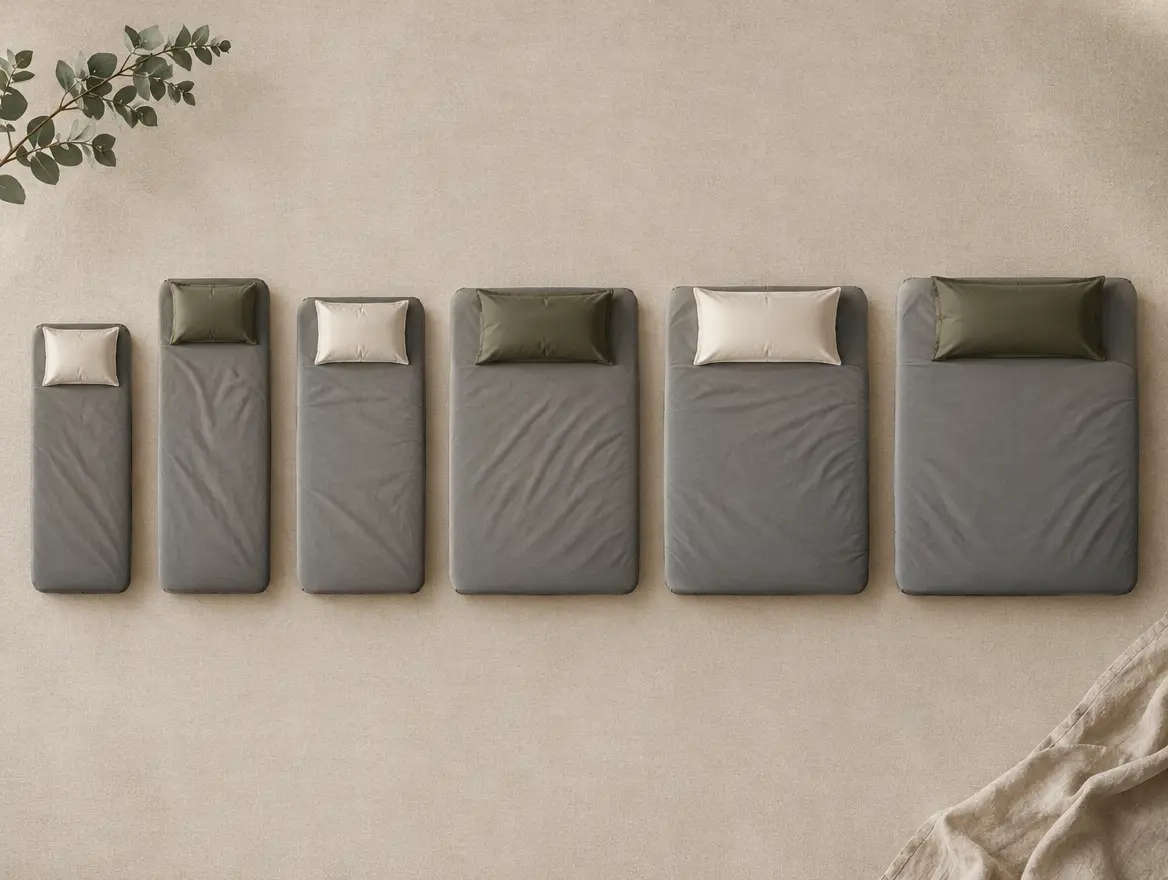
Australia's standard adult mattress sizes run, from narrowest to widest, Single, King Single, Double, Queen and King, with Long Single as a longer version of the Single. The names do not map cleanly to US sizes, so match your bed by measurement, not by label.
The table below compares sizes qualitatively. Makers differ by small margins, which is why your own tape measure outranks any chart, including this one. For the centimetre dimensions of each grounding sheet, use the size selector on the product pages.
| Australian name | Width | Length | Nearest US name | Watch out for |
|---|---|---|---|---|
| Single | Narrowest standard size | Standard (shorter) | None exact. Narrower than a US Twin. | Do not order a Twin. It will be too wide. |
| Long Single | Same width as a Single | Longer than a Single | No direct match | Often sold to taller teens and adults. |
| King Single | Wider than a Single, narrower than a Double | Longer | No direct match stated here | Frequently used for two singles pushed together. |
| Double | Mid-range | Standard (shorter) | US Full | Tight for two adults. Often a spare room bed. |
| Queen | Wider than a Double | Longer | US Queen | The most common couples' size. |
| King | Widest standard size | Longer | Width fits a California King | Length can differ from a US Cali King. |
A Single is not a Twin
This is the mix-up that causes the most wrong orders. US charts list a Twin as the one-person size, and many Australian retailers' search results pull both names into the same listing. They look close on paper. They are not the same bed.
The US Twin is wider than an Australian Single. Put a Twin fitted sheet on a Single mattress and the extra width gathers at the sides. With a grounding sheet that matters, because slack fabric bunches and shifts under you instead of lying flat. If your mattress is a Single, choose the Single option. If you are reading from a US chart, convert the name to the Australian one first.
Long Single and King Single
Long Single and King Single are the sizes people forget to check. A Long Single shares the Single's width but runs longer, which suits taller sleepers. A King Single is wider and longer than a standard Single, and it is common in homes where two King Singles are zipped or pushed together to make a King.
If you own one of these, do not round to the nearest size. Read the name on your mattress label, measure it, and then check whether the size you need appears in the selector on the relevant product page. If it does not, write to us before you order. I would rather answer one email than process one return.
Double, Queen and King
The Double matches a US Full. The Queen matches a US Queen. The King's width fits a California King, but the two beds are not interchangeable end to end, so confirm length before assuming a US sheet will work.
For couples, the Queen is the size most Australians sleep on. The Double is more common in spare rooms and smaller flats, where it is comfortable for one person and snug for two. If you are weighing a Queen against a King for a master bedroom, measure the room as well as the mattress.
How to measure your mattress
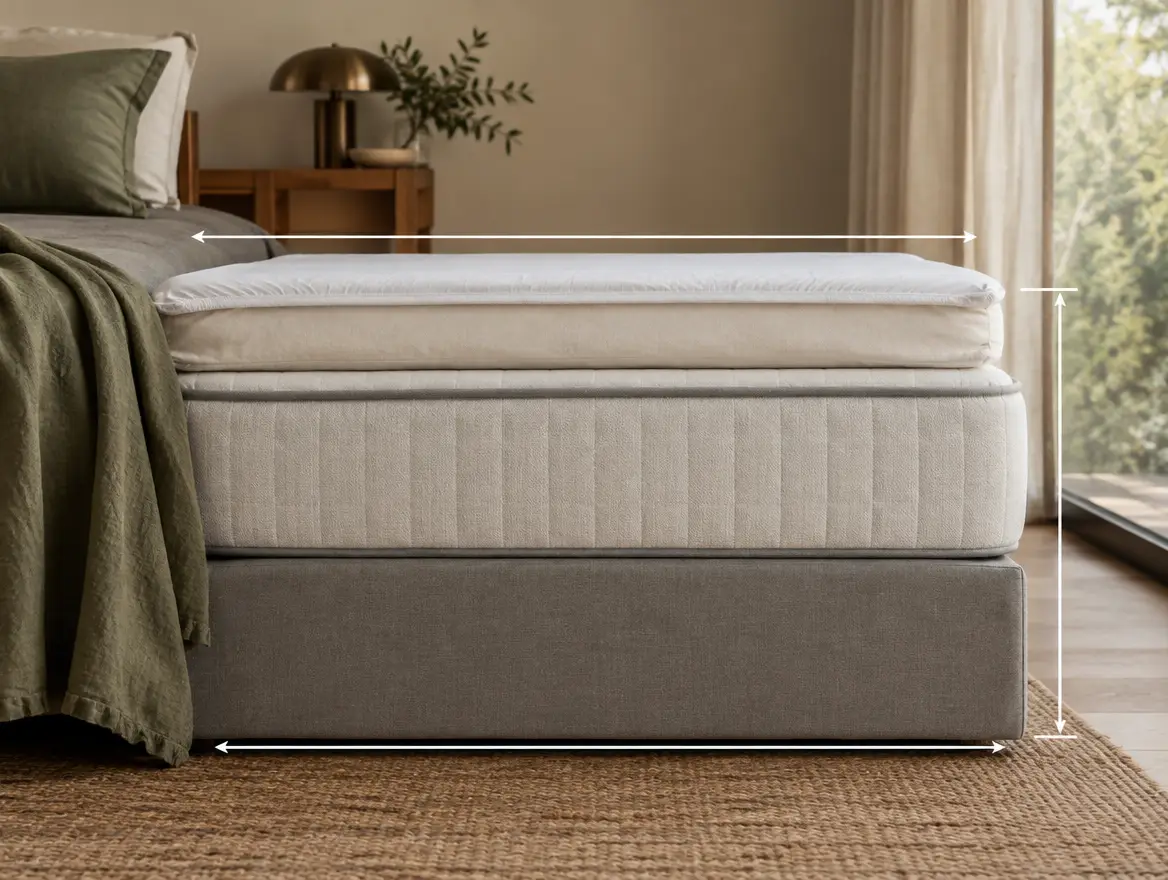
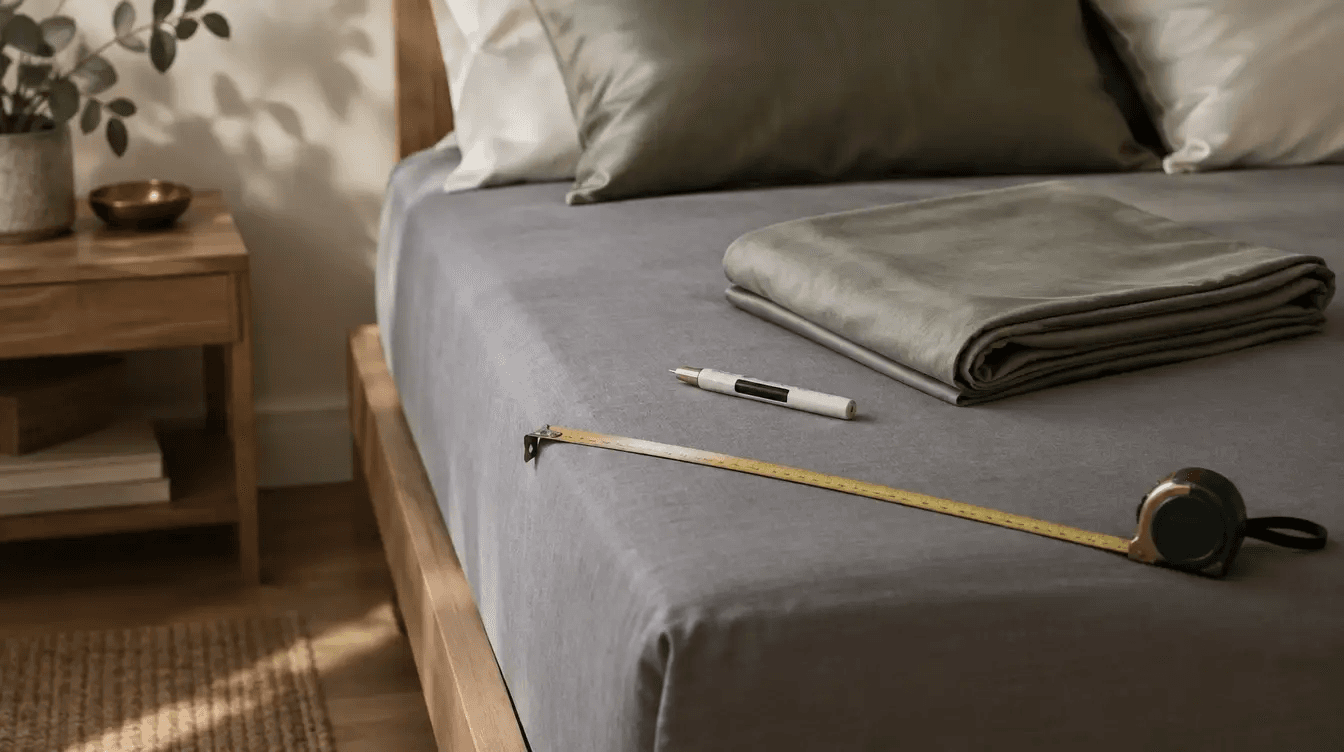
Measure your mattress width, length and depth with a tape measure, with the mattress stripped to its top layer and any topper or protector in place. Record all three numbers. Width and length tell you the size name. Depth tells you whether a fitted sheet will stay anchored.
You only need a tape measure and five minutes. Do it tonight, before you open a browser tab.
- Width. Measure across the mattress at its widest point, side to side. Do not measure the bed frame.
- Length. Measure head to foot along the centre of the mattress.
- Depth. Measure from the base of the mattress to the top of the top surface, at the side. Include a topper if it stays on the bed.
Why depth decides fitted sheet fit
Width and length get you to a size name. Depth decides whether the sheet actually holds. A fitted sheet has a pocket depth, the amount of fabric that tucks under the mattress. If your mattress plus topper is deeper than the pocket, the corners spring off. If it is much shallower, you get loose, wrinkled fabric.
This is the part people guess at. A modern pillow-top or a mattress with a thick topper can be a lot deeper than a plain innerspring. Measure the whole stack, not what the mattress was when you bought it. If the depth figure on the product page is not comfortable against your measurement, choose the flat sheet instead, which does not depend on depth.
Layers: protector and topper
Keep layers brief. A mattress protector adds little depth. A topper can add a lot. Decide what will be on the bed on a normal night and measure that. We have a separate article on mattress protectors and toppers that covers how each layer interacts with bedding, so check it if you sleep on a stack.
One more point for hot sleepers. If you are upgrading bedding because you run warm at night, a very thick topper can work against you. It is worth looking at the whole bed before you only change the sheet.
Fitted or flat: what each does in a grounding setup
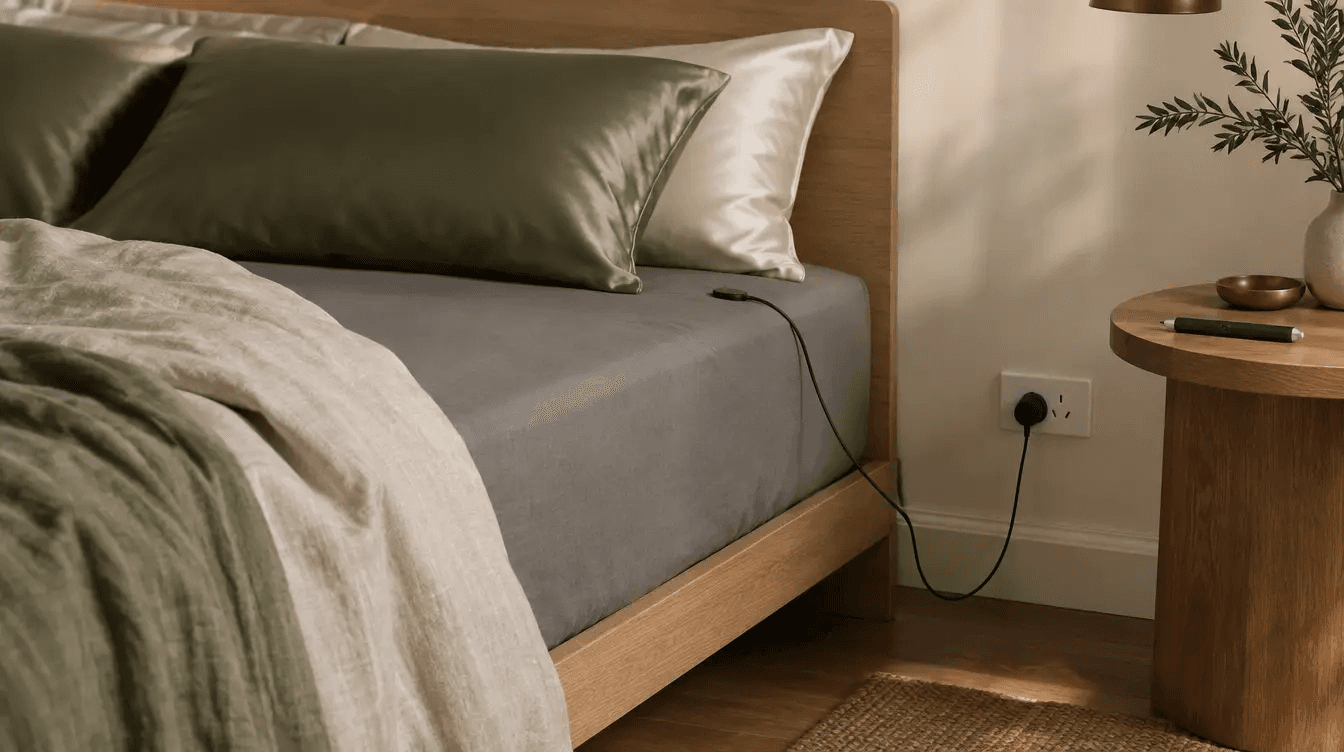
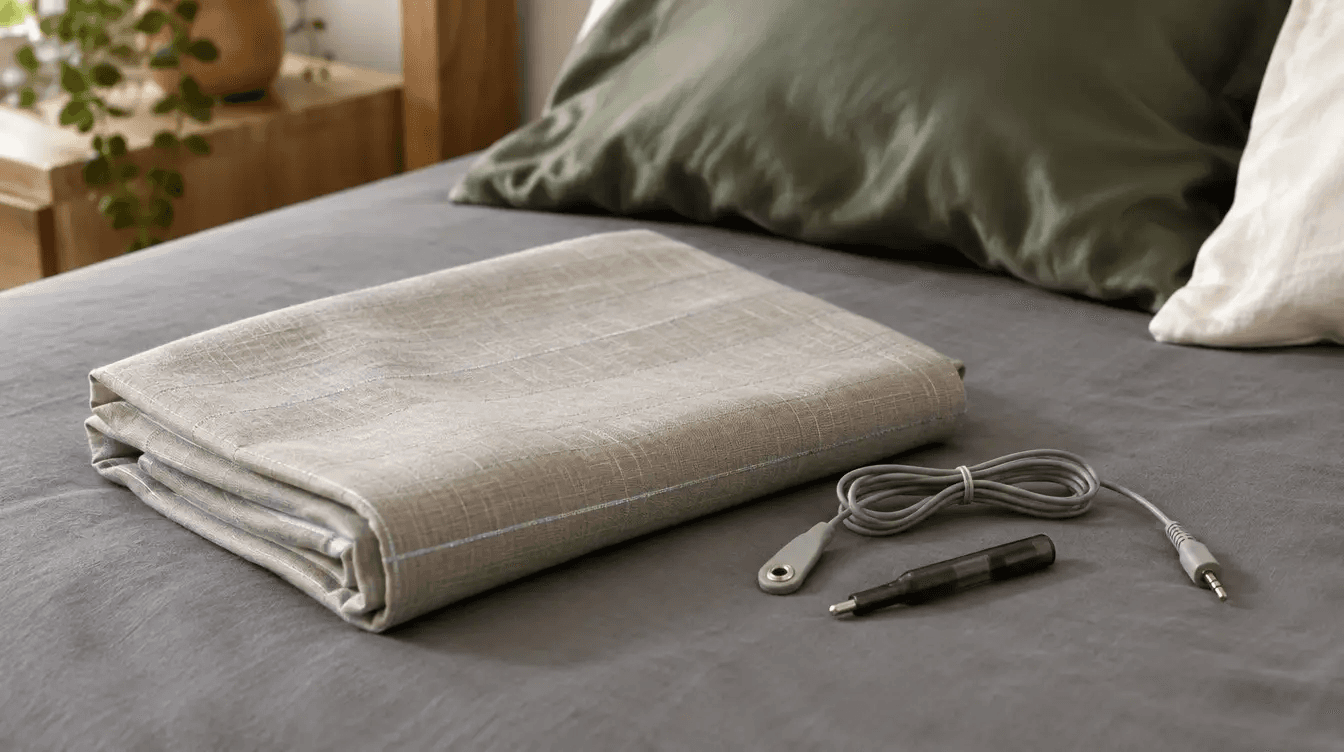
A fitted grounding sheet wraps the mattress corners and stays in place through the night. A flat grounding sheet is a rectangle you lay on the bed, so it does not rely on mattress depth. In both, the silver thread woven through the bamboo carries the connection, which runs by cord to the earth pin of a wall socket.
The sheet works as a grounding product only when your bare skin touches it, so what matters is how well the sheet stays where you sleep. Our fitted grounding sheets suit people who want to make the bed once and forget it. Our flat grounding sheets suit people with a deep mattress, an unusual mattress, or a habit of tucking their own sheets.
How the connection works
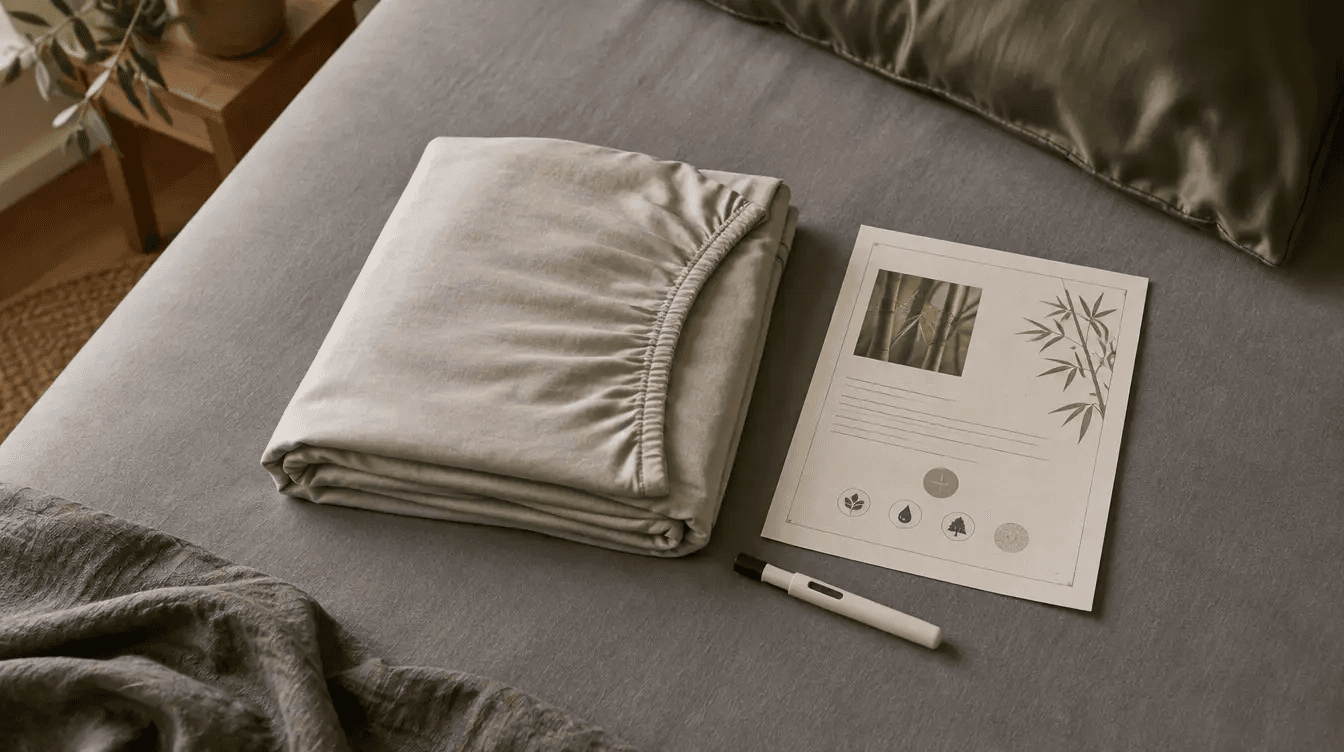
Bamboo on its own is not conductive enough to ground a body. So fine silver fibres are woven through the bamboo (10% silver thread), not coated on top, and the sheet connects by a cord to the earth pin of a wall socket. No power flows. Only the grounding connection is used. The silver has a job to do, and the bamboo does the rest: softness, breathability and moisture handling, which matters if you sleep hot.
Please follow the setup guide in the box. If you are unsure whether a socket is correctly earthed, ask a licensed electrician. This is a wellness product, not a medical device.
Choosing between them
Use this rule of thumb:
- Choose fitted if your mattress depth is within the page's range, you move a lot, or you want the least fuss.
- Choose flat if your mattress with topper is deep, your bed is an unusual size, or you prefer to tuck and layer your own bedding.
Neither is better. They are two answers to the same question of how to keep a conductive layer against your skin. Pick the one that matches the three numbers you measured.
Which grounding sheet fits your bed, size by size
Match the size name on your mattress label to the same name in the size selector, then check the centimetre dimensions on the product page against your own measurements. Never substitute a US name for an Australian one. If your size is not in the selector, ask us before ordering.
The selectors on the fitted and flat pages are the only place I take dimensions from. Below is how to read each size against your measurements.
Single
Choose the Single option and ignore the Twin label on any chart. Compare your measured width and length with the selector. For a fitted sheet, check depth too. If you are between sizes or your mattress is deeper than the page allows, the flat option avoids the problem.
Long Single and King Single
Be strict here. Read your mattress label, measure, and look for the same name in the selector. If the name is not listed for the style you want, do not choose the nearest size and hope. Email us with your measurements and we will tell you honestly whether it will work.
Double
The Double matches a US Full, so if you have read a US guide on grounding sheet sizes, the Full information carries across. Still, measure. Choose the Double option, check depth for a fitted sheet, and consider a flat sheet if you use a thick topper.
Queen
The Queen matches a US Queen in size, which is why Queen is the easiest name to get right across both systems. It is also the size where depth is the usual problem, because couples tend to add toppers. Measure the full stack before choosing fitted.
King
The King's width fits a California King. Length is the thing to confirm. If you are a US reader choosing for a US bed, our journal article on grounding sheet sizes for US beds covers the American names in detail, so start there instead of translating the Australian chart.
For a wider look at what to prioritise beyond size, read how to choose an organic grounding sheet.
Beyond size: how to judge the textile
A sheet that fits but is made of something you know nothing about is a poor purchase. Ask any grounding brand five questions: what is it made from, what makes it conductive, can I test it, how does it connect to ground, and certified to what standard, and what does it cover? Ask them of us too.
Most of the grounding conversation is about whether grounding works. Almost nobody talks about the textile you spend eight hours a night on. That is what touches your skin every night, and it is where I started. I wanted to know what was in the products I was selling, with independent testing behind it, particularly for harmful or restricted substances.
Two kinds of claim
I keep two kinds of claim apart, and you should too.
- What the fabric is and what it has been tested for. Organic bamboo woven with 10% silver thread. OEKO-TEX Standard 100 certificate SH025 231655, where our manufacturing partner is certified at Product Class I, the strictest class. RoHS compliance certificate CHHB26080392392 on the grounding sheets. Those are documents you can look up.
- What grounding does for sleep. This is a separate, open question. The published studies are small, and they have not settled it. Sleepers tell us different things, and I describe what they report, never what grounding does to the body.
The word "certified" attaches to a named standard and a number. That is why I will not use it loosely. Our silk has a GOTS scope certificate (USB TEX-4007-GOTS-2509), which is a scope certificate and not a transaction certificate, and I describe it exactly that way.
Questions to ask any grounding brand
- What is the sheet actually made from? Ours is organic bamboo with 10% silver thread. Most competitors sell cotton, and the silver content they state is lower.
- What makes it conductive? Silver fibres woven through the fabric, not coated on top.
- Can you test it yourself? Every box includes a tester pen so you can check conductivity when you first set it up and again over time.
- How does it connect to ground? By a cord to the earth pin of a wall socket.
- What documentation exists? Certified to what standard, and what does it cover? Certificate numbers are published on each product page.
I don't want customers to trust us because we've written "premium" on a website. I want there to be something behind it. Question every claim, including ours. A better-informed buyer is good for the whole category.
Test it before you believe it
A grounding sheet is a $419 decision, as I put it to myself when I built the offer, made online by someone who cannot feel the fabric or know how they will sleep until it is on their own bed. So the offer is proof, not price cuts: the tester pen, the certificate numbers, a 90-night trial from delivery and a 1-year warranty. Returns need to be in reasonable condition, and return postage is on the customer. That last point is a reason to measure first.
The first 30 nights
Some people notice something in the first week. Many notice nothing until the third. Both are normal, which is why the trial runs 90 nights. I cannot promise a timeline of results, and I will not. Sleep on it for 90 nights, decide later.
A wrong size can ruin that trial. A fitted sheet that pops off at the corners every night tells you about the size, not the textile, and your trial is spent on the wrong question.
Why a wrong size is a trust problem, not a sizing problem
Here is a position I hold that I do not see in the size guides ranking for this topic. Most pages handle bed sizes as a conversion table. I think the real issue is that Australian buyers are reading mixed-up charts built for other markets, and then acting on the one number they can easily find, which is the name.
Consider a buyer in Melbourne, a careful person who reads labels and the returns policy. She searches for a bed size chart, lands on a page that lists Twin, Full and Queen, and sees her mattress listed as a Single. She orders the Twin because the listing says it is the nearest. The sheet arrives and it is wider than her mattress. Now she has a return she has to post at her own cost, a trial clock running, and a first impression of the product built on a name, not a measurement.
That is a hypothetical, but it is exactly the failure I want to prevent. So my advice differs from the usual chart:
- Measure three numbers, not one name. Width, length and depth, in that order.
- Use the product page as the source of truth. Compare your numbers to the dimensions published there.
- Do the maths before you order. If any of your three numbers sits uncomfortably against the page, choose the flat sheet or write to us.
The same logic applies to the textile. A name on a label, whether it is "Queen" or "premium" or "certified", is a starting point for a question. The tape measure and the certificate number are where you find the answer.
Measure tonight, then choose your size
Take your tape measure to the bed tonight and write down width, length and depth with your topper on. Then open the fitted grounding sheet page or the flat grounding sheet page and choose your size. The tester pen and the 90-night trial are there so you do not have to take my word for any of it.
References
- OEKO-TEX, STANDARD 100 by OEKO-TEX
- European Commission, Restriction of Hazardous Substances in Electrical and Electronic Equipment (RoHS)
- Global Organic Textile Standard (GOTS), Global Organic Textile Standard
Take this with you
Your first 30 nights, in your inbox.
What people usually notice in the first month on a grounding sheet, week by week, and why you get 90 days rather than 14.
Questions people ask
Is an Australian Single the same as a US Twin?
No. An Australian Single is narrower than a US Twin. If you order a Twin fitted sheet for a Single mattress, it will be too wide and will gather at the sides. Choose the Single option in the size selector, and check the dimensions on the product page against your own measurements.
Is an Australian Queen the same as a US Queen?
The two are a match, which makes Queen the easiest size name to use across both systems. Mattress makers still vary slightly, so measure your own mattress, including depth, before you choose a fitted grounding sheet.
Will a California King sheet fit an Australian King?
The King's width fits a California King, but the length may differ. Do not assume a US sheet will fit end to end. Measure your Australian King and compare it with the dimensions on the product page.
How do I know if my mattress is too deep for a fitted grounding sheet?
Measure from the base of the mattress to the top surface, with your topper and protector on. Compare that depth with the depth information on the fitted sheet page. If your stack is deeper than the page allows, choose a flat grounding sheet, which does not depend on mattress depth.
Should I choose a fitted or flat grounding sheet?
Choose fitted if you want a sheet that stays in place through the night and your mattress depth suits the page. Choose flat if your mattress is deep, your bed is unusual, or you prefer to layer and tuck your own bedding. Both connect by a cord to the earth pin of a wall socket.
What if I order the wrong size?
Every grounding product comes with a 90-night trial from delivery and a 1-year warranty. Returns need to be in reasonable condition, and return postage is on the customer. Measuring first avoids that cost. If your size is not clear, email us with your measurements before you order.