Grounding · 6 Nov 2026 · 19 min read
Grounding Sheets in Rentals, Apartments and Older Houses: Check Your Socket First
Renting or in an older home? Check your socket before you buy a grounding sheet. Learn the tester steps, who to call, and how the 90-night trial protects you.
By Jade Castle, founder. Wellness product, not a medical device.
Part ofThe setup and care guide
Yes, you can use a grounding sheet in a rental or apartment, but only if the socket you plug into has a working earth. Test it first with a plug-in socket tester from a hardware store. If the tester shows a fault, stop and ask a licensed electrician, arranged through your landlord or property manager if you rent.
Most grounding sheet advice starts with the sheet. I think it should start with the wall. A grounding sheet connects to the earth pin of a power point, and in a rental, an apartment or an older house you cannot assume that earth is working. Renters also cannot simply have a wall rewired.
I'm Jade Castle, founder of Organic Earthing, an Australian-owned, family-run brand selling globally. This guide is for people who read the returns policy first. It covers how to check your socket, what the tester pen shows on night one, who to ask if you rent, how apartments change the practical setup, and what happens if the socket fails. Question everything here, including us. Our grounding sheet is a wellness product, not a medical device, and I describe what people report, never what grounding does to the body.
Key Takeaways
- A grounding sheet connects through the earth pin of a wall socket. No working earth means nothing for the sheet to connect to.
- A three-hole socket is not proof of an earth. Test the socket you will actually use with a plug-in socket tester.
- Any fault reading, or any doubt, means stop and ask a licensed electrician. Do not open or alter a socket yourself.
- Renters and strata owners should put the request in writing and ask the landlord, property manager or strata manager to arrange the electrician.
- Adaptors, travel converters and some power boards can drop the earth. Plug into a tested wall socket where you can.
- If the socket fails, the 90-night trial and 1-year warranty mean you are not stuck, but tell us early because the trial runs from delivery.
Summary Table
| Situation | What can go wrong | First step | Who acts |
|---|---|---|---|
| Rented apartment | Layout, a missing earth, or a landlord-controlled wall | Test the nearest sockets, then ask in writing if any fault shows | You test, a licensed electrician fixes |
| Older house | Original wiring, or a newer faceplate over old wiring | Test every socket you might use | Licensed electrician for any fault or doubt |
| Strata lot | Unclear who is responsible for the wiring | Ask the strata manager whether the wiring is lot or common property | Strata manager and a licensed electrician |
| Overseas two-prong outlet | No earth pin to connect to | Do not buy until an earthed socket is available | Licensed electrician in your country |
| Power board or extension lead | The earth is dropped or the board is faulty | Test the board's socket, or plug into the wall instead | You test, replace the board if it fails |
| Travel adaptor or converter | The earth connection is dropped | Assume no earth until a tester says otherwise | You |
Why does the socket matter more in rentals and older homes?
A grounding sheet connects to earth through the earth pin of a wall socket. If that earth is missing, damaged or dropped by an adaptor, the sheet has nothing to connect to. Rentals and older homes carry more of that risk because wiring is older, has been altered over the years, and is often not yours to change.
How the sheet connects
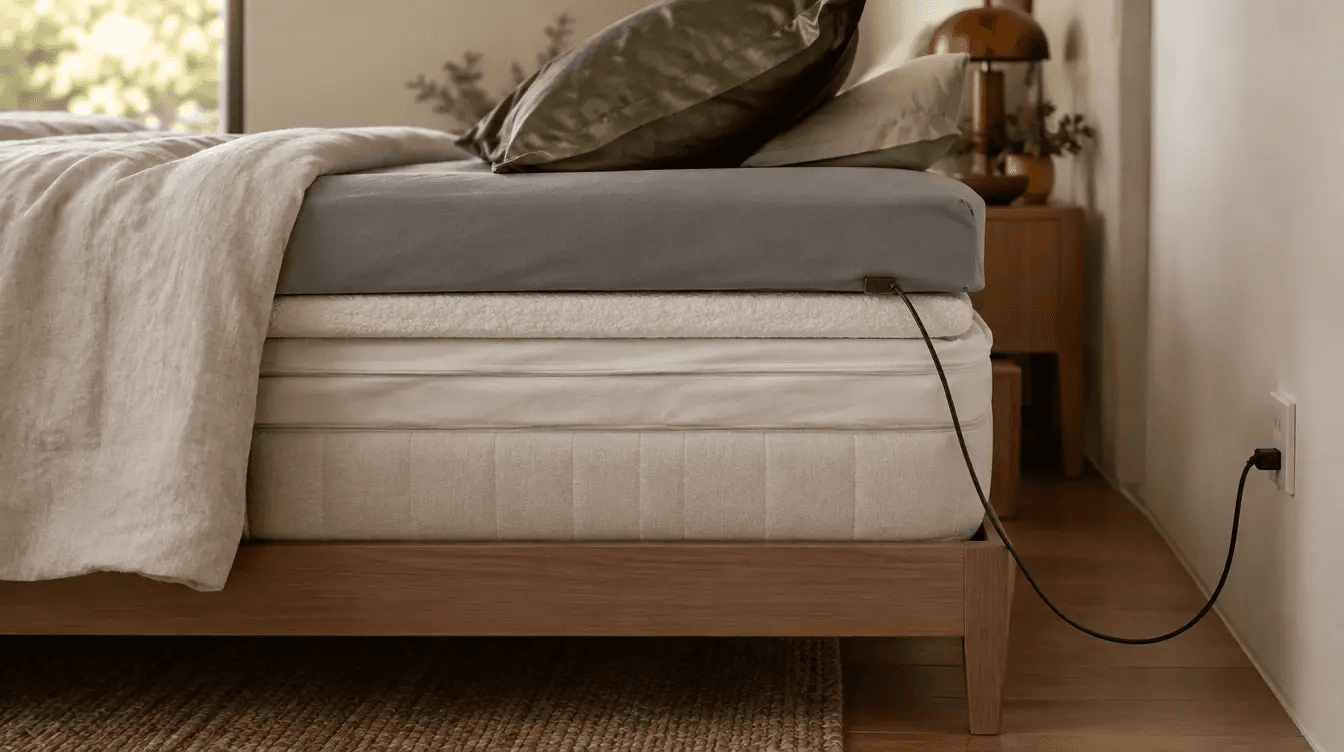
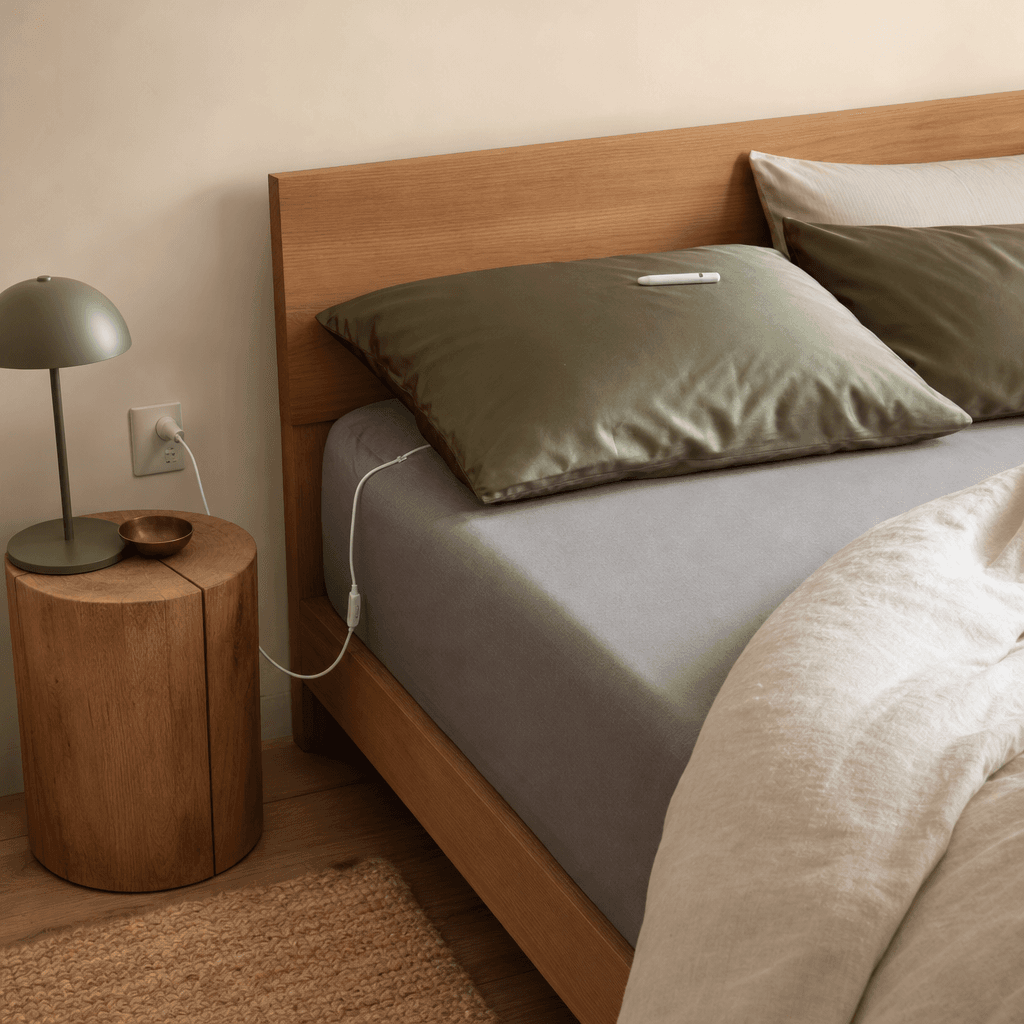
The sheet has fine silver fibres woven through organic bamboo, 10% silver thread in total. The silver has a job to do: conduct. Bamboo alone is not conductive enough to ground a body, so the silver is woven through rather than coated on top. A cord runs from the sheet to the earth pin of a wall socket. No power flows through it. Only the earth connection is used. Our separate post, Are Grounding Sheets Safe to Plug In?, covers the electrical detail, so I won't repeat it here.
The point for this article is simple. The sheet is only as good as what sits on the other end of the cord. Silver cannot conduct to an earth that does not exist.
Three holes are not proof
Australian power points have three openings: active, neutral and earth. Many people assume a three-hole socket must be an earthed socket. It does not follow. The third hole shows the faceplate was designed to take an earth pin. It does not show that an earth conductor is connected behind it.
Why older homes carry more uncertainty
Some older homes, including some built before the 1970s, may still have original wiring that was never fitted with an earth conductor. Over decades, sockets get replaced, circuits get extended and rooms get renovated. Sometimes a licensed electrician did the work. Sometimes not. One bedroom can be fine while the next is not.
I can't tell you how common this is in your suburb, and I won't guess. That is the reason to test. If you are searching for a grounding sheet for an older house, the honest answer is this: it can suit an older house if the socket you use has a working earth. You find that out by testing, not by assuming.
Overseas outlets, adaptors and the no earth pin problem
We sell globally, so this matters beyond Australia. In many countries two-prong outlets are common, and there is no earth pin at all. A grounding sheet with no earth pin to connect to has nothing to ground to. Travel adaptors and cheap converters can also drop the earth even when the wall socket has one. If your setup involves an adaptor, assume the earth is lost until a tester shows otherwise.
Why renters feel it most
An owner can call an electrician on a Tuesday. A renter needs permission, and the landlord decides what happens to the wall. That is why renters should know the socket result before spending $419, not after.
How do you check if your socket is earthed before you buy?
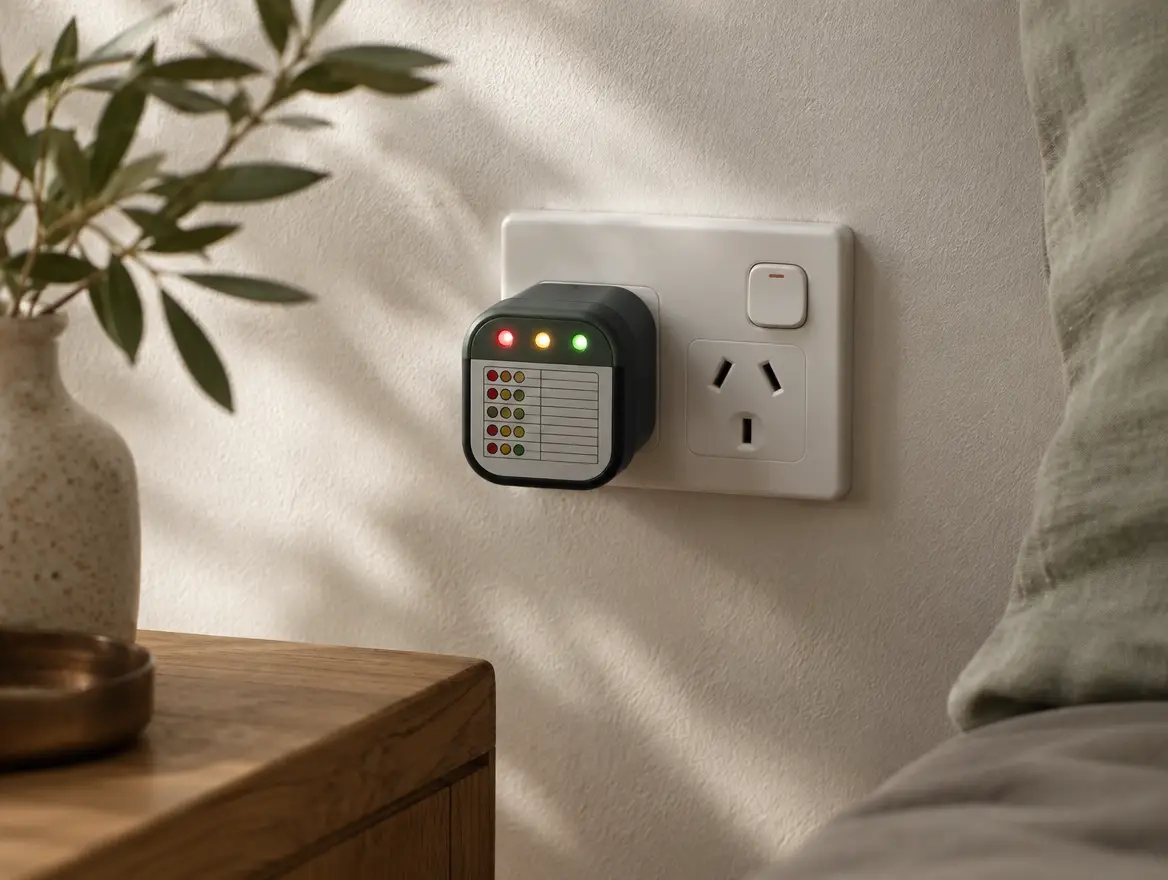
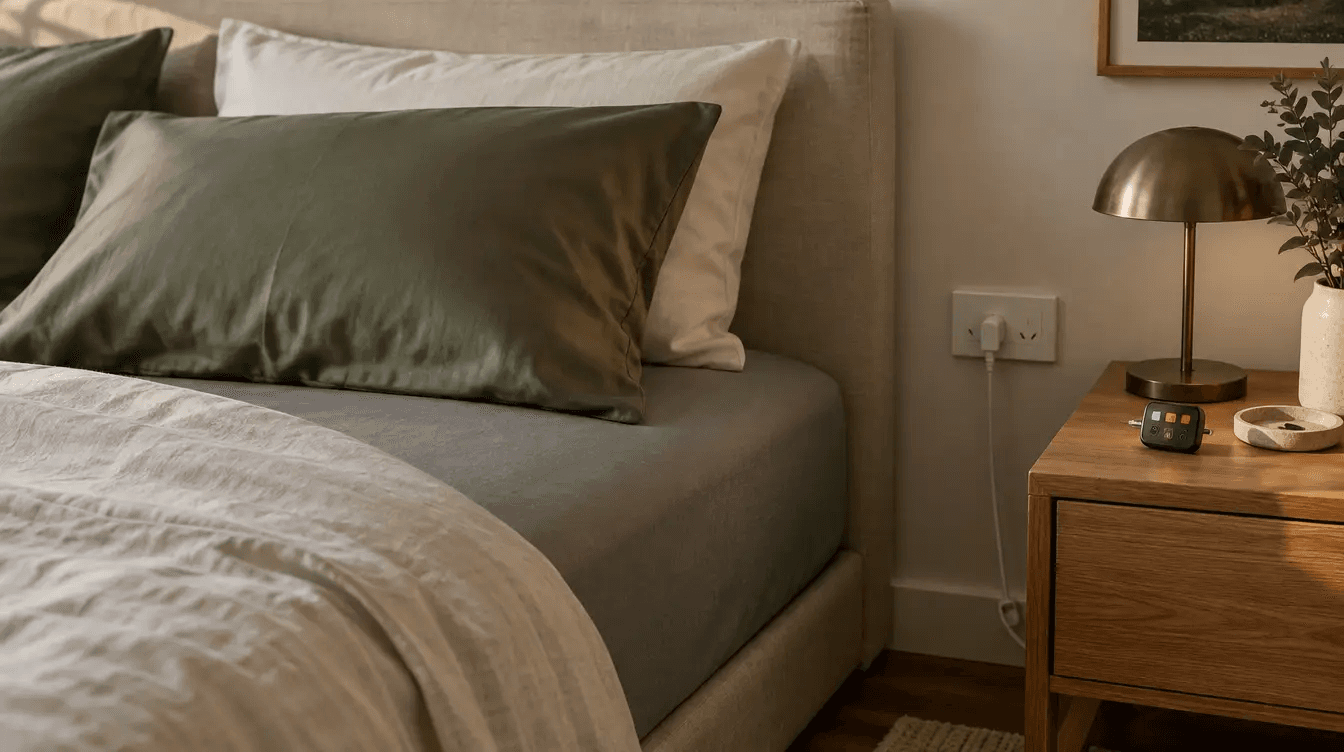
Buy a plug-in socket tester from a hardware store, plug it into the socket you plan to use, and read its lights against the chart printed on the tester. A correct reading suggests the earth is present. Any fault reading means stop and call a licensed electrician before you plug in anything else.
What a plug-in socket tester is
It is a small unit with a three-pin plug and a few indicator lights. Hardware stores sell them, and they cost little next to the price of a grounding sheet. It takes about a minute per socket. If you have ever wondered 'is my socket earthed', this is the cheapest way to get a first answer.
How to use it
- Pick the socket you would actually use, usually the one closest to the head of the bed.
- Plug the tester straight into the wall socket. No adaptor, no power board.
- Read the lights against the chart on the tester. Patterns differ between models, so go by your chart, not a rule of thumb from a blog.
- Repeat on every socket you might use, including the other side of the bed.
- Take a photo of each result. It helps if you need to show a property manager.
What the lights tell you
Most testers report a handful of conditions: correct wiring, a missing or open earth, active and neutral reversed, and other faults. Your chart lists exactly which. For a grounding sheet, the only result that counts is the one your chart labels as correct.
A missing earth reading answers the grounding sheet no earth pin question for that socket: stop. A reversed or other fault reading is not a sheet problem, but it is a wiring problem, and a licensed electrician should look at it.
When to stop and ask an electrician
Stop and ask a licensed electrician if any of these apply:
- The tester shows anything other than the correct reading.
- The tester shows no lights, or the lights flicker or behave oddly.
- The socket is cracked, discoloured, loose in the wall, warm to touch, buzzing or smells of burning.
- The plug sits loosely in the socket.
- The reading is correct but something about the wiring still worries you.
In Australia, most electrical work must be done by a licensed electrician. Energy Safe Victoria, the Victorian electrical safety regulator, publishes guidance on this. Do not open a socket, swap a faceplate or move wires yourself. If in doubt, ask an electrician. That is the full extent of the advice I will give on wiring, because it is the only advice that is safe to give.
What a socket tester cannot tell you
A tester is a quick screening check, not an inspection. It cannot assess the condition of wiring inside the wall, and it does not replace an electrician's assessment. Take a good reading as a green light to try the setup, not a guarantee about the building.
What does the tester pen in the box show on night one?
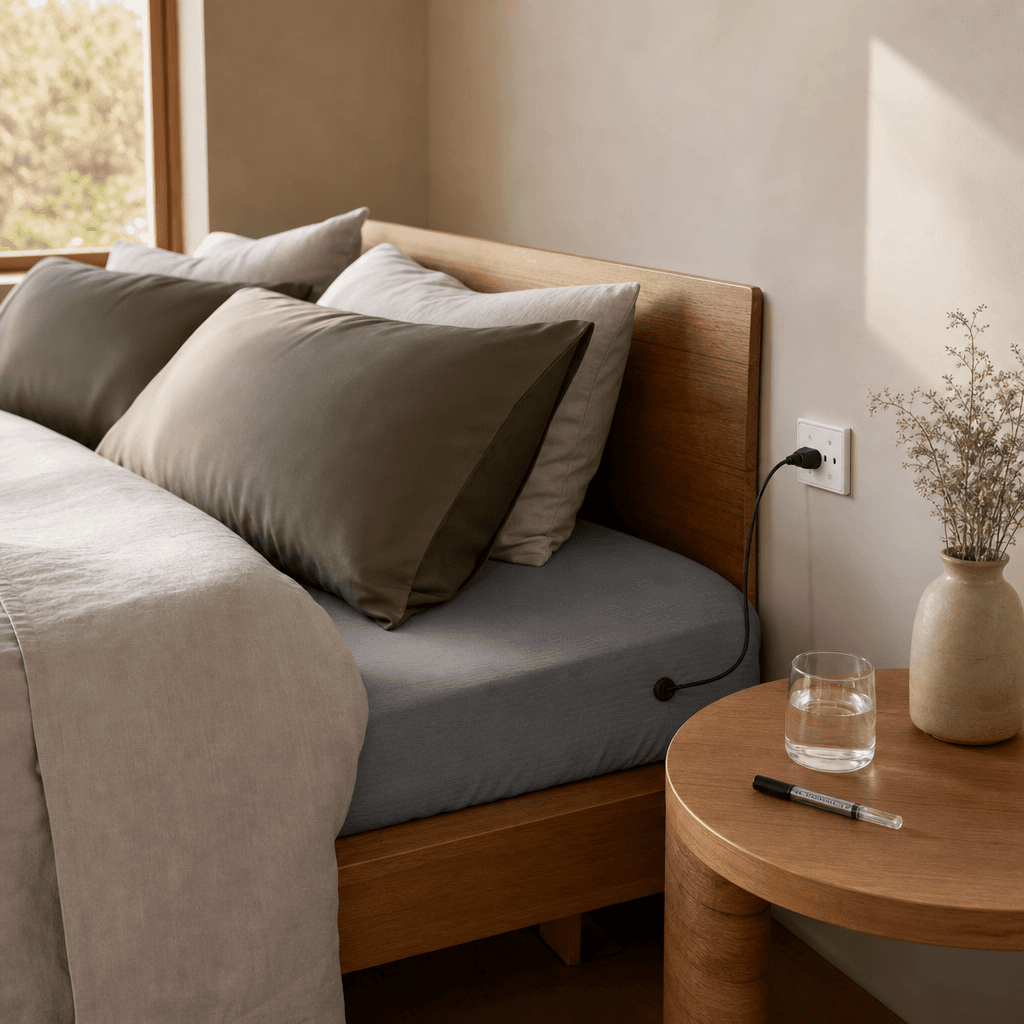
Every Organic Earthing grounding box includes a tester pen. On night one you plug the cord into your checked socket, set up the sheet and use the pen to see whether the sheet is conducting. It tests your whole setup, so it complements the socket tester rather than replacing it.
Two checks, two different questions
The socket tester asks whether the wall has a working earth. The tester pen asks whether the sheet and cord, connected to that socket, are conducting. Together they separate the variables. If the socket tester passed and the pen shows nothing, the question moves to the sheet or the connection, and you can contact us. If the socket tester failed, the pen result is not worth trusting until an electrician has looked.
We wrote a full walkthrough, How to Test a Grounding Sheet With a Tester Pen, so I will not repeat every step here.
Test it before you believe it
This is the principle behind the whole offer. Do not trust a product page, including ours. Check conductivity when you first set the sheet up, and check it again over time. I will not tell you to test after every wash, and I will not offer a durability guarantee, because I would be making up a number.
The first 30 nights
Expect nothing dramatic from the sheet itself. Some people notice something in the first week. Many notice nothing until the third. Both are normal, which is why the trial runs 90 nights. What grounding does for sleep is an open question: the small published studies have limits in sample size and design, and they have not settled it. So I describe what people report, and I do not promise a timeline.
Renting or in strata: who arranges the electrician?
If you rent, ask your landlord or property manager to arrange a licensed electrician. Do not open a socket, swap a faceplate or rewire anything yourself. In strata, the same applies, and responsibility may depend on whether the wiring is inside your lot or common property. Put the request in writing and keep a copy.
How to ask
Frame it as a safety check, because that is what it is. Landlords generally respond better to a fault report than to a product request. A short message is enough:
Hi [name], I tested the power point in the main bedroom with a plug-in socket tester and it did not show a correct reading. Could you please arrange for a licensed electrician to check it? I have attached a photo of the result.
If you want to use a grounding sheet, you do not need to make that the headline of the request. The fault is the issue.
What rental rules say
Rules differ by state. In Victoria, for example, Consumer Affairs Victoria sets out the electrical safety obligations of rental providers, including periodic safety checks. A periodic check is not the same as testing the specific socket beside your bed, so a test of your own is still worth doing. Check your own state's consumer affairs or fair trading body for current requirements.
In strata
In an apartment building, ask your strata manager whether the wiring behind the socket is within your lot or is common property. The answer decides who arranges the electrician. If you own the lot and the wiring is yours, you arrange a licensed electrician directly.
If the answer is no
Consider a renter in a 1960s brick flat whose bedroom socket shows a fault and whose landlord declines to act. The options are limited, and none involve a screwdriver. Try another socket that tests correctly, wait, or decide not to buy. You do not have to make the wall fit the product. It is fine to leave the sheet for a later home.
Apartments in practice: socket placement, cord reach and power boards
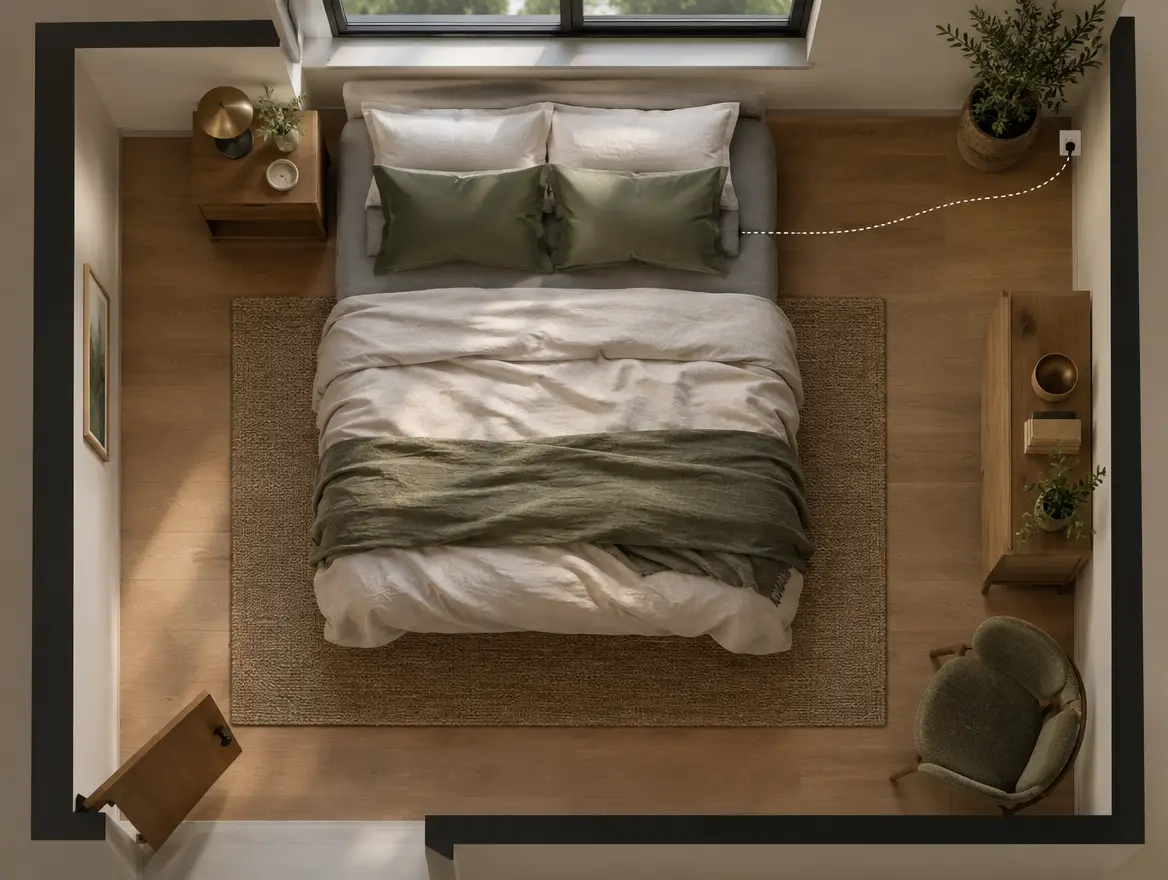
In an apartment, the practical problems are usually layout, not wiring. The socket may be across the room, behind the bed or already shared by a lamp and phone charger. Plan the cord path first, test the socket you will actually use, and keep any power board's earth connection intact.
Socket placement
Walk the bedroom before you order. Where does the bed sit, and which socket is closest to the head? Apartments often have one socket per wall and sometimes only one near the bed. Test every candidate socket, including the less convenient ones, so you have options if your first choice fails.
Also check whether the bed can move. Rentals often have fixed wardrobes and tight rooms, so the bed may not be able to shift closer to a good socket.
Cord reach
Measure from the bed to the socket along the route the cord will actually take, not in a straight line. Then compare that with the cord length listed on the product page. The cord should reach without pulling tight and should not sit where someone will trip on it. Do not run it under rugs or trap it behind furniture.
If the cord does not reach, the answer is not to improvise. Move the bed, choose a different socket, or reconsider.
Power boards and extension leads
The cleanest setup is the cord plugged straight into a tested wall socket. If you must use a power board or extension lead, three things matter:
- It should be an Australian-standard three-pin board or lead with an earth connection, not a two-pin adaptor.
- Test the board's socket with your plug-in socket tester, the same way you tested the wall.
- Avoid chaining boards together. Each link is one more place for the earth to drop out.
Surge-protected boards vary. Some keep the earth connection and some do not, so the tester result is the only thing worth believing. If a board fails the test, plug into the wall instead or replace the board.
Adaptors
Avoid travel adaptors and two-pin converters. They are a common way to lose the earth. Our post Are Grounding Sheets Safe to Plug In? covers plug-in safety, and Grounding Sheet With a Mattress Protector, Topper or on the Road covers layering and travel setups.
What happens if your socket fails the test?
If your socket fails, you are not stuck. Every Organic Earthing grounding product has a 90-night trial from delivery and a 1-year warranty. Ideally you test the socket before ordering. If you find a fault afterwards, you can arrange an electrician or use another socket, and the trial clock runs from delivery.
Your options
If the socket fails, you have three realistic paths:
- Use a different socket. Another socket in the room may test correctly. Try them all before deciding anything.
- Arrange an electrician. In a rental, ask the landlord or property manager. In strata, ask the strata manager. If you own the home, book a licensed electrician.
- Return the sheet. Returns are accepted in reasonable condition, and return postage is on the customer.
What the trial does and does not do
The trial gives you 90 nights to decide, so you can sleep on it for 90 nights, decide later. It does not fix a socket. If an electrician visit takes a few weeks, the clock is still running, so message us early. Questions about returns go straight to me.
The 1-year warranty is separate. It covers the product, not your wiring. Check the warranty terms on the site for exactly what it covers.
The order I would do it in
Check your socket, then try the certified fitted grounding sheet for 90 nights with the tester pen in the box. That order protects your $419 from a problem you could have found for the price of a socket tester.
Why I'd rather you question the sheet than trust the badge
The grounding category argues about whether grounding works. Almost nobody tells you that the connection depends on a socket you probably have not tested, or talks about the textile you will sleep on for eight hours a night. My position is that you should judge a grounding sheet first on what you are sleeping on, and ask what was actually tested.
Two kinds of claim
I keep two kinds of claim apart. The first is what the fabric is and what it has been tested for. The sheet is organic bamboo with 10% silver thread, OEKO-TEX Standard 100 certified under certificate SH025 231655 (our manufacturing partner is certified at Product Class I, the strictest class). The grounding bedding also has RoHS compliance certificate CHHB26080392392. These are our own published numbers, and the word certified attaches to a named standard and number, not to an adjective.
The second is what grounding does for sleep. That is a separate, open question. The small studies have not settled it, and a certificate cannot answer it. Neither certificate tells you your socket is earthed, either. Our post OEKO-TEX Standard 100 and RoHS on a Grounding Sheet explains what each one actually covers.
Why I chose testing over adjectives
When I started, I wanted to know what was in the products I was selling, and I wanted independent testing behind it, especially for harmful and restricted substances. At the time, the category talked only about whether grounding worked. I chose OEKO-TEX Standard 100 and separate RoHS testing, and accepted higher cost and a more complicated supply chain. I don't want customers to trust us because we've written 'premium' on a website. I want something behind the word.
Questions to ask any grounding brand, including us
- What is the sheet actually made from?
- What makes it conductive, and what conductive material is used?
- Can you test the conductivity yourself?
- How does it connect to ground?
- What testing or documentation does the company actually have: certified to which standard, and what does it cover?
Add one more for renters: does the brand tell you to check your socket before you buy? A $419 decision made online, by someone who cannot feel the fabric or know how they will sleep, should come with checks you can do at home. That is why the trial and the tester pen lead every product page, and why the certificate numbers sit on every product page too.
I would rather you question us than believe a badge. Certified to what standard, and what does it cover? Ask it of us. Ask it of everyone.
References
- Energy Safe Victoria, electrical safety information
- Consumer Affairs Victoria, renting and electrical safety
- ACCC, consumer rights and guarantees
- OEKO-TEX, STANDARD 100
- European Commission, RoHS Directive
Take this with you
Your first 30 nights, in your inbox.
What people usually notice in the first month on a grounding sheet, week by week, and why you get 90 days rather than 14.
Questions people ask
Can I use a grounding sheet in a rental apartment?
Yes, if the socket you plug into has a working earth. Test the socket with a plug-in socket tester first. If it shows a fault, ask your landlord or property manager to arrange a licensed electrician. Do not alter the wiring yourself.
How do I know if my socket is earthed?
A three-hole socket is not proof. Plug a socket tester from a hardware store straight into the wall, then read its lights against the chart on the tester. For any fault or doubt, ask a licensed electrician.
Can a grounding sheet work with no earth pin?
No. A grounding sheet connects through the earth pin of a socket, so with no earth pin there is nothing for it to connect to. Do not use an adaptor to get around this, because adaptors can drop the earth. Ask a licensed electrician about your options.
Can I use a grounding sheet in an older house?
It can suit an older house if the socket you use has a working earth. Some older homes have original wiring, so test every socket you might use. If any socket shows a fault, ask a licensed electrician before going further.
Can I plug a grounding sheet into a power board or extension lead?
Plug into a tested wall socket where you can. If you need a board or lead, use an Australian-standard three-pin one with an earth connection, test its socket with your socket tester, and avoid chaining boards together. Do not use two-pin adaptors.
What if my landlord will not arrange an electrician?
Try another socket that tests correctly, or wait until you move. Do not open or alter the socket yourself. You can also check your state's consumer affairs or fair trading body for rental electrical safety rules. If the socket never passes, you can return the sheet within the 90-night trial.