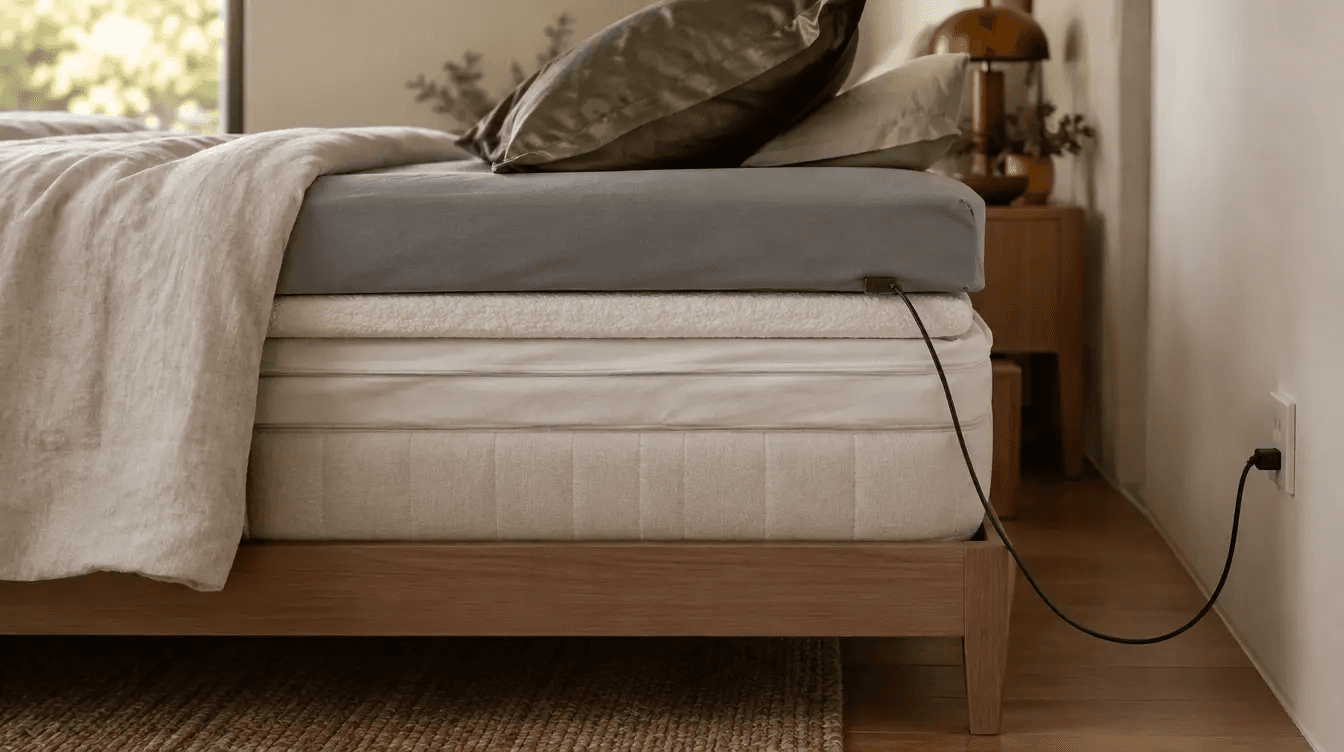
Grounding · 7 Nov 2026 · 21 min read
Grounding Sheet Not Working? No Light on the Pen, Extension Cords and Power Boards Fixed
Grounding sheet tester pen showing no light? Work through the pen, socket, power board, cord and connector in order to find the break. Australian guide.
By Jade Castle, founder. Wellness product, not a medical device.
Part ofThe setup and care guide
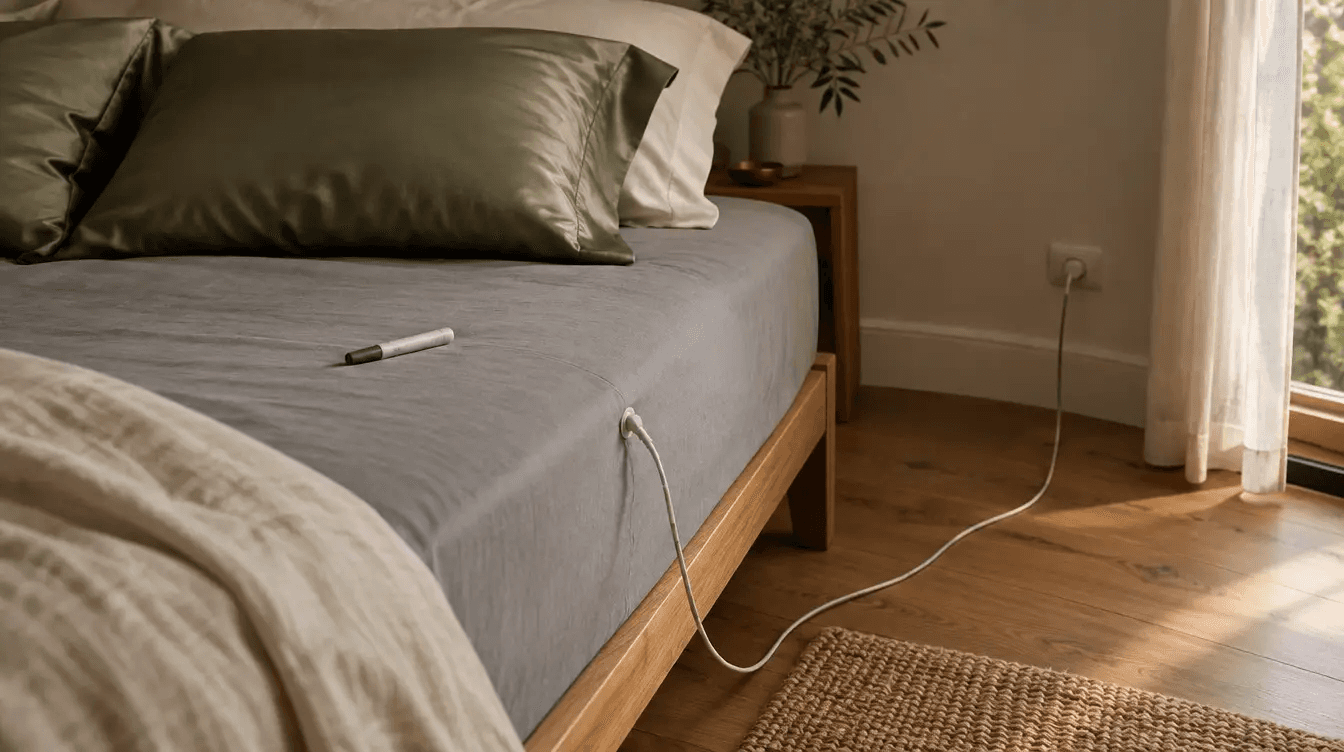
A grounding sheet that gives no light on the tester pen usually has a break somewhere in the chain, not a faulty sheet. Check in order: your pen technique on the woven surface, the wall socket on its own, any power board or extension cord, then the cord and snap connector. Test after each change.
You have unboxed a $419 sheet, followed the instructions and the pen stays dark. Being sceptical at this point is sensible. I'd rather you were methodical than hopeful, because a dark pen is information, and it can be read.
This guide works through the setup one link at a time, so you know where the break is before you contact us. It covers pen technique, the wall socket, power boards and extension cords, the cord and connector, and the layers on your bed. If you still have no light after all of it, the last section tells you exactly what to photograph and send.
Key Takeaways
- The pen tests the whole chain at once: socket, board or lead, cord, connector and sheet. A dark pen tells you the chain is open, not where.
- Start with the shortest chain possible: bare sheet, cord straight into a wall socket, pen touched to the silver-woven surface, not a seam.
- Change one thing at a time and re-test. If you change three things at once, you will not know which one fixed it.
- Any suspicion of old wiring or a non-earthed socket goes to a licensed electrician. Never a DIY fix.
- Power boards and leads need a proper earth pin. Two-pin travel adaptors cannot carry the grounding connection.
- Still dark after every step? Send photos through our contact page. A faulty sheet is covered by the 1-year warranty, and the 90-night trial runs from delivery.
Summary: Where the Break Usually Is
This table is qualitative. It shows the order to work in and who handles each fix.
| Step | What you check | What a dark pen suggests here | Who fixes it |
|---|---|---|---|
| 1. Pen and technique | Pen on the woven surface, not a seam, on the bare sheet | Reading mistake, not a fault | You |
| 2. Wall socket | Cord plugged straight into the wall, then a second socket | Socket may not be earthed or wired correctly | Licensed electrician |
| 3. Board or extension lead | Earth pin present, no two-pin adaptor, one link removed at a time | Board, lead or adaptor is breaking the earth path | You, or replace the board or lead |
| 4. Cord and connector | Snap fully closed, no kinks, nothing pinched under the mattress | Loose or interrupted connection | You |
| 5. Layers and contact | Pen reads on the bare sheet, then check what sits between skin and sheet | Chain is fine, contact is the question | You |
| 6. Still dark | Photos of every link | Possible product fault | Organic Earthing, under warranty |
Why the Pen Stays Dark: How the Chain Works
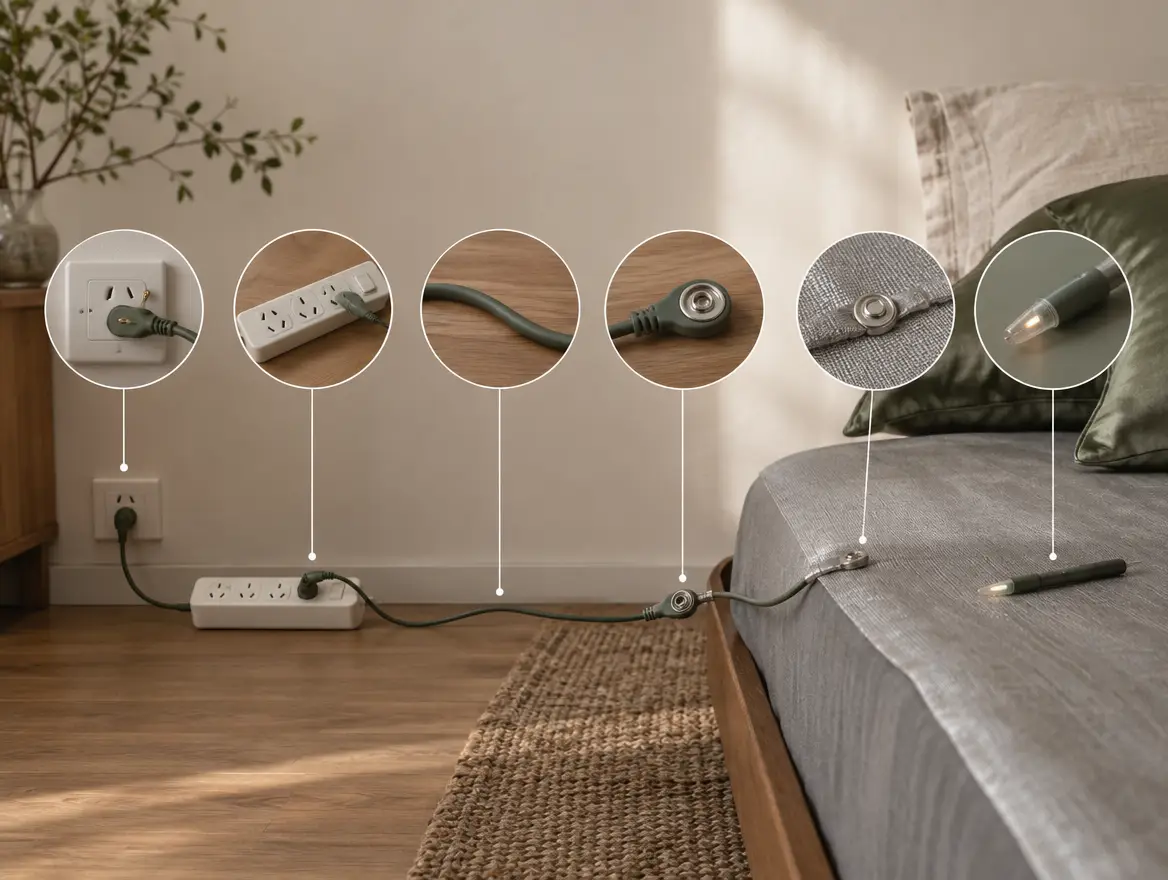
A grounding sheet is a chain of links: the wall socket's earth pin, any board or lead, the cord, the snap connector and the silver-woven surface your skin touches. The pen reads the whole chain at once. Dark means one link is open. It does not say which one.
Here is what the product actually is. Bamboo on its own is not conductive enough to ground a body. So fine silver fibres are woven through the bamboo (10% silver thread) rather than coated on top. A cord connects the sheet to the earth pin of a wall socket. No power flows through it. Only the grounding connection is used. The silver has a job to do, and that job is to conduct.
That design tells you two things about fault-finding. First, because the silver is woven in, the pen should read on the woven surface of the sheet. Second, every other link in the chain is something you can see, touch and swap. That is good news. It means most of this diagnosis happens with your own hands.
There is one more thing worth separating. The certificates we publish (OEKO-TEX Standard 100 certificate SH025 231655 and RoHS compliance certificate CHHB26080392392 for the grounding sheets) cover what the fabric is tested for: harmful and restricted substances. They say nothing about whether the socket behind your bed is earthed. A certificate and a working chain are two different claims, and only the pen can speak to the second one.
The method is simple. Use the shortest chain first. Change one thing. Test. Then change the next thing. Write down what you did if it helps, because the notes are useful if you end up contacting us.
Step 1: Check the Pen and Your Technique
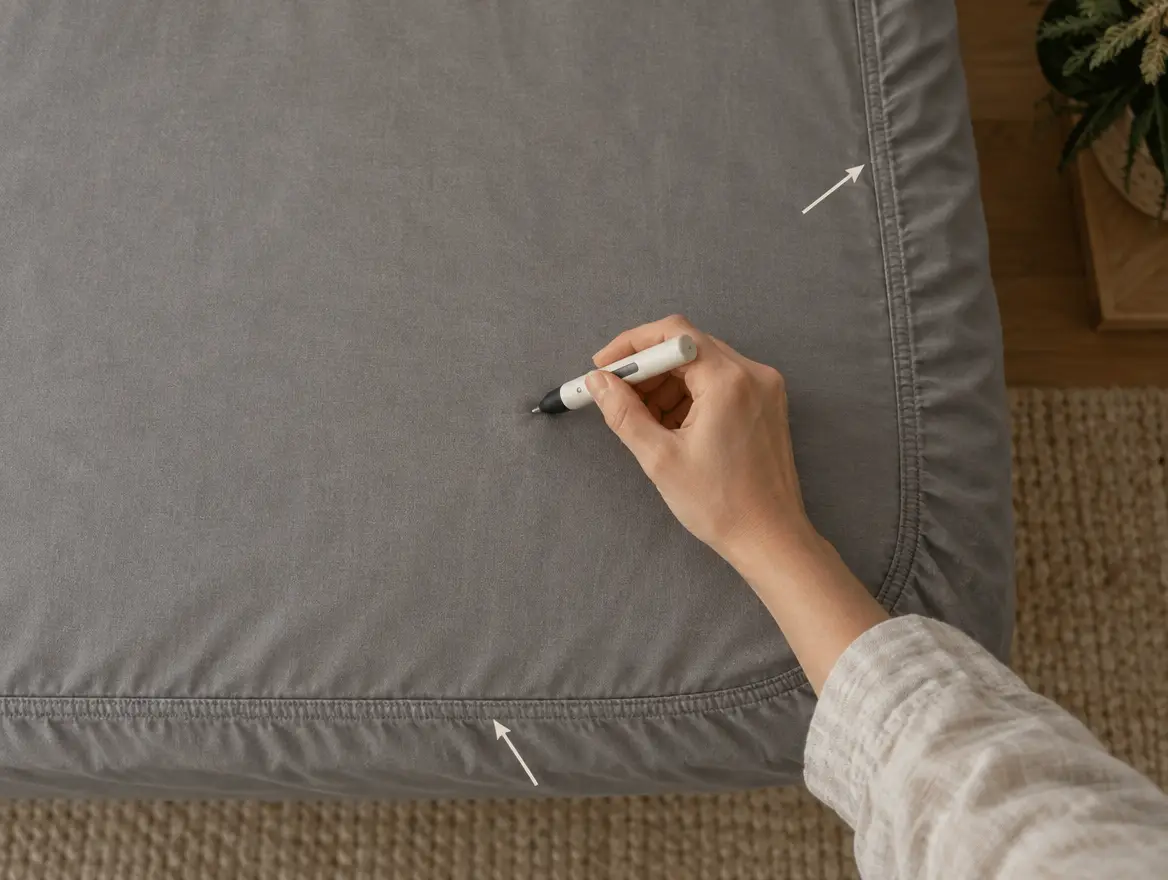
Most no-light results start with technique. Test on the bare sheet, touch the pen to the silver-woven surface rather than a seam or hem, and hold the pen as the card in the box describes. Do it before the doona and pillows go on, so nothing else is in the way.
Every grounding box includes a tester pen, so you can see conductivity for yourself instead of taking our word for it. That only works if the test is done properly. These are the mistakes that come up most often.
Touch the woven surface, not a seam
The silver is in the woven fabric. Seams, hems and stitching use ordinary thread, and the corners with elastic are not the place to test either. Lay the sheet flat on the mattress and press the pen tip to the open, woven surface in the middle of the bed. If you tested on a seam or the edge of the fitted corner, test again on the flat surface.
Test the bare sheet first
Set up the sheet on its own: fitted on the mattress, cord connected, nothing on top. Test it in that state. Adding the doona, pillows and a topper before you have a reading makes it impossible to know which link is the problem. A clean first reading on the bare sheet is also the reference point for everything else in this guide.
Hold the pen the way the card says
Tester pens need a complete path to work. In general that means a finger on the contact end of the pen while the tip touches the sheet. Holding the pen through a sleeve or glove, or by the plastic body only, can leave the path open. Follow the instruction card in the box exactly. If you have lost the card, our contact page will get you a copy.
Check the obvious links too
Before moving on, confirm the cord is pushed fully into the wall socket and the connector is closed on the sheet. It sounds basic, but a plug that is sitting a few millimetres proud of a socket is a common reason for a dark pen. If the pen itself looks cracked, damaged or dead, note it, because we will want to see it in your photos.
We have a separate how-to on using the tester pen. This section is only about the mistakes that look like faults.
Step 2: Check the Socket on Its Own
Plug the grounding cord straight into a wall socket with nothing else between, then test. If the pen stays dark, try a different wall socket in the same room. If it lights at one and not the other, the first socket is the suspect. Anything wiring-related goes to a licensed electrician.
Taking boards and leads out of the picture is the fastest way to shorten the chain. The wall socket is the starting link: the cord connects to its earth pin, and that earth is what the whole setup relies on.
Why the socket matters
Older wiring, a socket that was never connected to earth, or a fault behind the plate can all leave the earth pin dead. You cannot see this by looking at the socket. A three-pin socket looks identical whether or not the earth is properly connected behind it. That is why the second-socket test is useful. It checks a different part of the house's wiring with the same cord and the same pen.
What to do if two sockets give different results
If one socket lights the pen and another does not, use the one that works for now, and have the other checked. Some people use a plug-in socket tester from a hardware store as a first look. Regard that as a pointer only. If it shows anything that looks wrong, call a licensed electrician. Do not open the socket, move wires or try to fix the earth yourself.
If you are in Victoria, Energy Safe Victoria publishes electrical safety guidance for householders. Product Safety Australia is the national source for consumer product safety information. Both are worth a look if you are unsure what is normal.
When to stop and call someone
Stop using a socket and call a licensed electrician if you see any of the following: scorch marks, a cracked plate, a plug that feels warm, a socket that is loose in the wall, or a plug that will not sit firmly in the socket. None of those are grounding-sheet problems. They are electrical problems, and they are not DIY jobs.
Renters and older houses
If you rent, or live in an older home, a non-earthed socket is more likely than you would expect. In a rental, the fix is a request to your landlord or agent to have a licensed electrician check the socket. We have a separate guide on rentals and older houses that covers how to raise it.
Step 3: Extension Cords and Power Boards
Plug the sheet into the wall first. If the pen lights there but not through a board or lead, the board or lead is the break. Confirm it has a three-pin earth connection, avoid two-pin travel adaptors, then add links back one at a time, testing after each.
This is where the secondary reader often lives. If you sleep with a lamp, a fan and the sheet all running from one power board, there are more links in the chain and more places for the earth to drop out. That is not a reason to give up on the board. It is a reason to test it properly.
Confirm the earth pin
Look at the plug end of the board or lead. It should have three pins, including the earth pin. Look at the sockets on the board too. A board or lead that only carries two pins cannot carry the earth connection, so the cord from your sheet has nothing to connect to. If the board is old, cracked, or has a loose plug, replace it rather than try to rescue it.
Skip two-pin travel adaptors and double adaptors
A two-pin travel adaptor is a common culprit. If you have any adaptor between the sheet's cord and the wall, take it out. The same goes for double adaptors that turn one wall socket into two. Each extra connector is another place for the earth path to be interrupted. We cover plug safety in more detail in our separate plug safety guide.
Isolate the fault one link at a time
Use this order, and re-test the pen on the bare sheet after every step:
- Plug the sheet's cord straight into the wall. Test.
- If it lights, plug the board or lead into the same wall socket, then plug the sheet's cord into the board with nothing else on the board. Test.
- If it still lights, add the lamp, then the fan, one at a time. Test after each.
- If the pen goes dark at a particular step, the link you just added is the problem. Swap it, or replace it.
The reason to go in this order is that it answers one question per step. If you change the socket, the board and the cord all at once and the pen lights, you do not know which one it was.
Leads can fail inside
Extension leads can fail internally. A lead that powers a lamp perfectly well can still have a broken earth core inside, because the lamp does not need the earth to work and the sheet does. If a lead is the only thing different between a lit pen and a dark pen, replace the lead. Do not use a lead that is warm, frayed, kinked hard or has damaged insulation.
A hypothetical to make it concrete
Consider a sleeper who runs a lamp, a bedside fan and the grounding sheet from one power board that sits behind the bed. The pen is dark. They plug the sheet's cord into the wall socket directly and it lights. The board is the problem, not the sheet, and not the wall. They replace the board, plug in the lamp and fan again, test once more, and the light stays on. That whole process takes a few minutes, and it avoids a return that was never needed.
Step 4: Cord and Connector
Check the cord along its full length and check the snap connector at the sheet. A loose snap, a kinked lead or a connector sitting under a heavy mattress can each break the connection. Fix the snap, straighten the lead, move the connector out from under weight, then re-test the bare sheet.
This link is physical, which makes it the easiest to fix and the easiest to miss. The cord has moved around with the bed, with the person in it, and maybe with a pet.
A loose or half-closed snap
Press the snap connector fully closed on the sheet. You should feel it seat. If it only sits loosely, or sits at an angle, the contact surfaces are not meeting. Check that nothing is trapped between the two metal faces, such as lint or a loose thread. If the snap will not close properly even when it is clean, note that, and photograph it.
Kinked, pinched or pulled cords
Follow the cord from the sheet to the wall by hand. Look for hard kinks, places where the cord has been bent sharply, and any spot where it passes under a bed leg, a bed frame rail or a heavy piece of furniture. A pinched cord can look fine on the outside and still have a break inside. Straighten the lead, give it a clear run, and keep it away from foot traffic.
A connector under the mattress
If the snap connector sits between the sheet and a heavy mattress, the weight can pull it sideways or flatten it against the frame. Reposition it so it sits in a spot where it is not under direct load, and where the cord can come away from the bed without being tugged. Re-test the bare sheet once it is in its new position.
A bed that has been moved
If you moved the bed, changed the sheets or rearranged the room before the pen went dark, start here. The cord is the first thing to be dragged or stretched during a change of linen. Check the plug is still fully in the wall, then walk the lead back to the sheet one more time.
Step 5: Layers and Contact
The pen tests the sheet as made, so layers matter less for the pen and more for sleeping. Anything non-conductive between your skin and the silver-woven surface, such as a thick protector or topper, can get in the way. If the pen reads on the bare sheet, the chain is working and contact becomes the question.
This is the point where the diagnosis shifts. If the pen lights on the bare sheet but you are not sure about the finished bed, you have already found out something useful: the sheet, the cord and the socket are all fine.
From there, think about what sits between you and the silver-woven surface. The sheet is designed for skin contact. A mattress protector or topper placed on top of the sheet, rather than under it, puts a layer between you and the conductive surface. We cover which layers suit and where they go in our separate guide on mattress protectors and toppers.
A wellness product, not a medical device, needs to be set up so it can do its one job. That includes keeping the conductive surface where your skin actually lies.
A note on expectations, because it comes up in the same conversations. A lit pen tells you the connection is working. It does not tell you how you will sleep. Some people notice something in the first week, and many notice nothing until the third. Both are normal, which is why the trial runs 90 days. Do not confuse a quiet first few nights with a dark pen. They are different questions.
Step 6: Still Dark? What to Photograph and Send
If every step leaves the pen dark, send us photos through our contact page. Include the wall socket with the plug in, any board or lead, the connector, the pen on the sheet's surface, and the whole bed. A faulty sheet is covered by the 1-year warranty.
Photos let us find the break without a week of emails. This is the list that helps most:
- The wall socket with the grounding plug in it. Show the whole plate and the plug seated.
- Any power board or extension lead. Show the plug end, the sockets and the markings.
- The snap connector. Show it closed on the sheet, and then open.
- The cord's full run. One photo from the sheet to the wall, so we can see kinks and pinch points.
- The pen in use. Show the tip on the woven surface of the bare sheet and where your finger is.
- The whole bed. Show the layers, so we can see what sits where.
- Your order details and what you tried. A short note listing each step and the result is enough.
If a second wall socket also gave a dark pen, say so. That points towards the house wiring, and we will tell you to have it checked by a licensed electrician before we look at the sheet.
What the trial and warranty cover
Every grounding product comes with a 90-night trial from delivery and a 1-year warranty. Returns need to be in reasonable condition, and return postage is on the customer. If the sheet itself is faulty, the warranty covers it. Sleep on it for 90 nights, decide later.
If you are still working through the steps, you are not wasting the trial. The point of the pen is that you can check this at home. For anyone still choosing a sheet, the organic bamboo grounding fitted sheet page has the specification, certificate numbers and trial terms in one place.
Question Every Link, Including Ours
My line on the category is simple: question every claim, including ours. That applies to troubleshooting as much as marketing. When the pen stays dark, you are entitled to ask whether it is your setup or our product, and a good process answers that with evidence, not reassurance.
I started Organic Earthing because I wanted to know what sat against my skin, and I could not find a grounding brand that showed its working. A grounding sheet is a $419 decision made online, by people who cannot feel the fabric or know how they will sleep on it until it is on their own bed. So the offer is built around things you can check at home: a tester pen in every grounding box, a 90-night trial from delivery and certificate numbers on every product page. Test it before you believe it.
That is also why I think of fault-finding as part of the product, not an afterthought. Most of the category argues about whether grounding works, and almost none of it talks about the practical question you are facing right now: is the connection actually there? A brand that tells you to take it on trust has no good answer to a dark pen. A brand that gave you the pen does.
Here is the part I think most guides miss. The pen is a test of the whole chain, which means it can be wrong about the sheet in one specific way. A dark pen does not prove the sheet is faulty, and a lit pen at one socket does not prove every socket is fine. Think of it as a continuity check that you narrow down by shortening the chain. The common mistake is to read the dark pen as a verdict on the sheet. In my experience of how this product is built, the sheet is one link of several, and it is the one you cannot easily inspect. The rest you can.
The same discipline applies to the claims on a product page. I keep two kinds of claim apart. What the fabric is made of and tested for is one thing: organic bamboo with 10% silver thread, OEKO-TEX Standard 100 certificate SH025 231655, RoHS compliance certificate CHHB26080392392 on the grounding sheets. What grounding does for sleep is a separate, open question that the small published studies have not settled. Neither claim should be blurred into the other. And ask of any badge, ours included: certified to what standard, and what does it cover?
Those are the questions I would put to any grounding brand:
- What is the sheet actually made from?
- What makes it conductive, and what conductive material is used?
- Can you test the conductivity yourself?
- How does it connect to ground?
- What testing or documentation does the company actually have, certified to which standard, covering what?
If a brand cannot answer the third one, you cannot fault-find its product at all. That is the difference I care about. I don't want customers to trust us because we've written "premium" on a website. I want you to be able to find the break yourself, and, if it is ours, to have a year of warranty behind you. We are an Australian-owned, family-run brand selling globally, and questions about returns go straight to me.
Still No Light After Every Step?
Send your photos and notes through our contact page and we will work out where the break is. If you are still choosing a sheet, start with the organic bamboo grounding fitted sheet, where the specification and certificate numbers sit alongside the trial terms.
References
- Energy Safe Victoria, electrical safety information for householders
- Product Safety Australia, consumer product safety information
- OEKO-TEX, STANDARD 100 by OEKO-TEX
Take this with you
Your first 30 nights, in your inbox.
What people usually notice in the first month on a grounding sheet, week by week, and why you get 90 days rather than 14.
Questions people ask
Why is my grounding sheet tester pen not lighting up?
The pen reads the whole chain: socket, board or lead, cord, connector and sheet. A dark pen means one link is open. Start with technique on the bare sheet's woven surface, then test the cord straight into a wall socket, then try a second socket, then check any board, lead, snap and cord run.
Can I use a power board or extension cord with a grounding sheet?
Yes, provided the board or lead has a proper three-pin earth connection and nothing between it and the sheet's cord breaks the earth path. Avoid two-pin travel adaptors and double adaptors. If the pen is dark through a board but lights at the wall, the board or lead is the break, and it should be replaced.
Should the pen touch a seam or the woven surface?
The woven surface. The silver is woven through the fabric (10% silver thread), while seams, hems and stitching use ordinary thread. Lay the sheet flat on the mattress and touch the pen to the open, woven surface in the middle of the bed, with the bed bare.
How do I know if my wall socket is earthed?
You cannot tell by looking. A socket looks the same whether or not the earth is connected behind the plate. Try a second wall socket as a first check. If the result is dark in both, or you suspect older wiring, have a licensed electrician check it. Do not open or repair a socket yourself.
What if the pen lights in one socket but not another?
That points to the second socket, not the sheet. Use the one that works for now, and ask a licensed electrician to check the other. If you rent, ask your landlord or agent to arrange it.
Is a sheet that will not light the pen covered by the warranty?
If you have worked through the steps and the pen is still dark, send us photos through our contact page. A faulty sheet is covered by the 1-year warranty. There is also a 90-night trial from delivery. Returns need to be in reasonable condition, and return postage is on the customer.